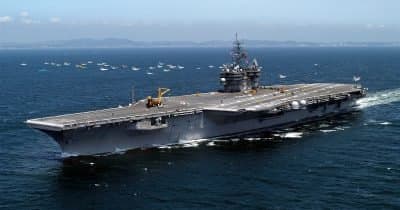
The United States has increased its military forces in the Middle East by deploying more than 120 aircraft and two carrier strike groups, marking the largest buildup in the region since the 2003 Iraq invasion. This move aims to counter perceived threats from Iran amid concerns about diminished air-defense capabilities and shortages of long-range munitions.
Strategic Context and Market Impact
The expanded U.S. presence reflects worries that depleted defense systems could restrict sustained military operations in the Middle East. The buildup shows the potential for heightened tensions with Iran, as the deployment aligns with scenarios in which conflict escalation remains a possibility.
Market analysts have responded to these developments by pricing in increased risks of Houthi attacks on shipping routes. The U.S. military's limited capacity to maintain a prolonged campaign due to supply constraints on key munitions contributes to uncertainty in the geopolitical risk environment.
Monitoring statements from the U.S. Department of Defense regarding munitions replenishment will be critical to assessing the sustainability of the military campaign. also any notable activity from Iranian leadership or shifts in U.S. military positioning could further influence market reactions.
The deployment involves over 120 aircraft and two carrier strike groups, the largest concentration since the height of the Iraq conflict nearly two decades ago.
This article is for informational purposes and is not financial advice.