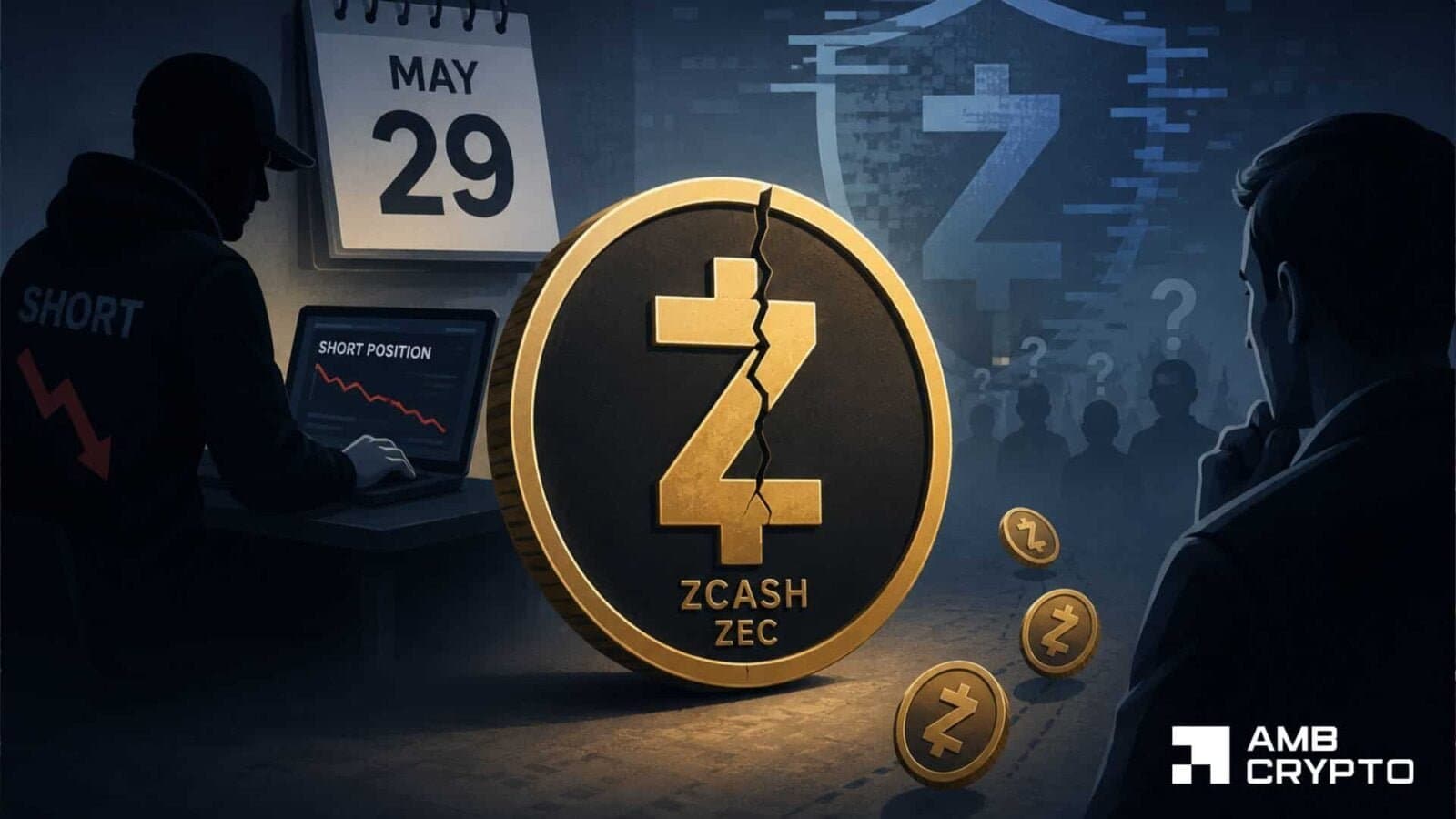
Recent revelations have brought to light a significant vulnerability in Zcash's Orchard, potentially allowing for unlimited counterfeit ZEC until a patch was issued. This incident has led to a spike in market scrutiny, particularly regarding trading behaviors prior to the flaw's disclosure.
Surge in Trading Volume Precedes Discovery
Allium Labs reported that on May 26, Zcash's trading volume increased dramatically, surging 12 to 13 times its usual levels. This spike occurred just before researchers privately identified the defect on May 29. During this period, ZEC's price fell from around $660 to $530, indicating a significant sell-off in the market.
Despite the developers disabling Orchard on June 2 and releasing a patch the following day, market confidence continued to decline. By June 5, ZEC's price plummeted to $247, marking a staggering 64 percent drop from its earlier price of $685. This decline coincided with a trading volume of approximately $560 million per hour.
Market Speculation on Pre-Disclosure Trading
Following the revelation of the vulnerability, Allium Labs conducted a thorough review of trading behaviors leading up to the disclosure. They noted that several traders had initiated substantial short positions on May 25 and 26, just days before researchers found the flaw. One notable trader established a short position valued at $34.5 million, resulting in profits nearing $998,000. Another position worth $17.7 million yielded approximately $724,000 in profits.
These lucrative trades have raised suspicions regarding whether these traders had advance knowledge of the impending market downturn. However, the data available does not conclusively demonstrate this, as in futures markets, shorts are balanced by longs. Therefore, merely having profitable positions does not imply foreknowledge of the flaw.
The complexity of Zcash's privacy model adds another layer of uncertainty, as it prevents verification of whether the vulnerability was exploited. Consequently, market participants are left to speculate based on probabilities rather than certainties, leading to ongoing fragility in investor confidence despite the patch being in place.
This material is for informational purposes only and should not be considered financial advice.