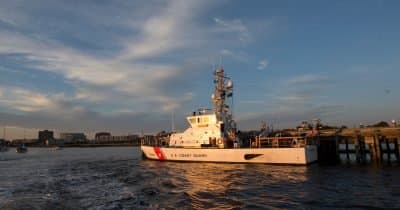
The U.S. Coast Guard has ramped up its operations in the South China Sea in response to intensified patrols by Chinese forces, particularly near the disputed Scarborough Shoal. This increase occurs against a backdrop of rising tensions as China has augmented its coast guard and military presence to bolster its territorial claims over the region, contested by the Philippines, with whom the U.S. maintains a mutual defense treaty.
The presence of U.S. Coast Guard vessels aims to reinforce freedom of navigation and compliance with maritime law, while carefully avoiding direct military confrontation. The commitment of the U.S. to partner with Philippine forces illustrates a strategic effort to support allies while managing the complex regional dynamics.
Recent market behavior indicates that participants perceive the situation as indicative of potential military escalation, reflecting a heightened perception of conflict risks in the South China Sea. Observers are keenly monitoring developments from key stakeholders, including the Chinese Communist Party and the U.S. Department of Defense, to gauge possible shifts in diplomatic and military strategies.
Any significant alterations in military positioning or communications could significantly impact regional stability. The involvement of neighboring allies, such as Japan, will be key to understanding how security conditions evolve during this period of increased vigilance.
This article is for informational purposes only and does not constitute financial advice.