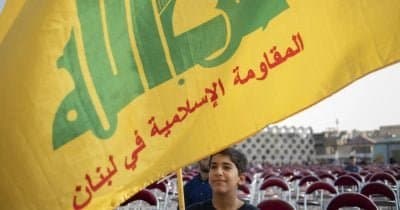
Former President Donald Trump made a direct approach to Hezbollah seeking face-to-face negotiations, but the group rejected the proposal outright. The failed diplomatic bid, first reported by Middle East Eye, shows how fractured U.S. mediation efforts remain in the Israel-Hezbollah standoff playing out across Lebanon's border.
Going straight to a U.S.-designated terrorist organization would have been a sharp break from how Washington typically handles such conflicts. Instead of backdoor channels and third-party intermediaries, Trump apparently wanted to sit down directly. That gambit fell flat. The denial signals Hezbollah's unwillingness to engage with the former president, or perhaps a calculation that direct talks serve no purpose while ceasefire negotiations between Israel and Lebanon continue without the group at the table.
The timing matters. Ceasefire discussions between Israel and Lebanon are ongoing, yet Hezbollah stays excluded from those talks entirely. Bringing Trump into bilateral negotiations would have created a parallel track that could either accelerate a broader settlement or muddy waters already murky with competing interests. Either way, Hezbollah said no.
Markets have priced in what this means: the odds of a U.S.-Iran effective ceasefire have ticked downward. Diplomacy moves on signals, and a rejected overture signals weakness, not momentum. The breakdown suggests that traditional mediation routes through Qatar, Pakistan, or other regional players remain the only viable paths forward, assuming any path exists at all. Observers will be watching whether Washington attempts a different angle or whether this attempt closes the door on direct engagement for now.
This article is informational only and should not be construed as investment or policy advice.