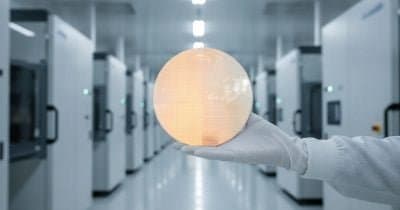
Tower Semiconductor has announced a significant investment of approximately $3 billion aimed at enhancing chip manufacturing capabilities in Japan. This initiative is supported by a $1 billion grant from the Japanese government, focusing on the production of silicon photonics and advanced packaging technologies essential for AI data centers.
The Israel-based company, listed on NASDAQ as TSEM, revealed the expansion plans on July 14. The strategy involves developing 300mm silicon photonics production facilities in Uozu, Japan, utilizing a former Arai facility and an adjacent site designated as Fab 7. The first phase of this dual-track plan aims for production readiness by the fourth quarter of 2027.
As part of its preparations, Tower Semiconductor has secured over 70% of the anticipated new capacity through 2028. Revenue contracts for silicon photonics alone are projected to reach $1.3 billion for 2027, with customer prepayments totaling $290 million already received.
Government Support and Industry Impact
The funding provided by Japan’s Ministry of Economy, Trade and Industry (METI) reinforces the government's commitment to semiconductor advancements. CEO Russell Ellwanger expressed gratitude towards the government for selecting Tower to lead this technological expansion. This move complements other initiatives in Japan, including TSMC's new fab in Kumamoto and Rapidus' efforts to manufacture cutting-edge 2nm chips, contributing to the country's semiconductor resurgence, particularly in optical connectivity critical for AI workloads.
Following the announcement, Tower Semiconductor adjusted its financial forecasts, projecting $3.6 billion in revenue and $1.2 billion in net profit by 2028. Additionally, the company's capital expenditure guidance for 2026 was revised upward to $920 million. Market response has been favorable, with shares experiencing a rise in premarket trading.
This material is informational and not financial advice.