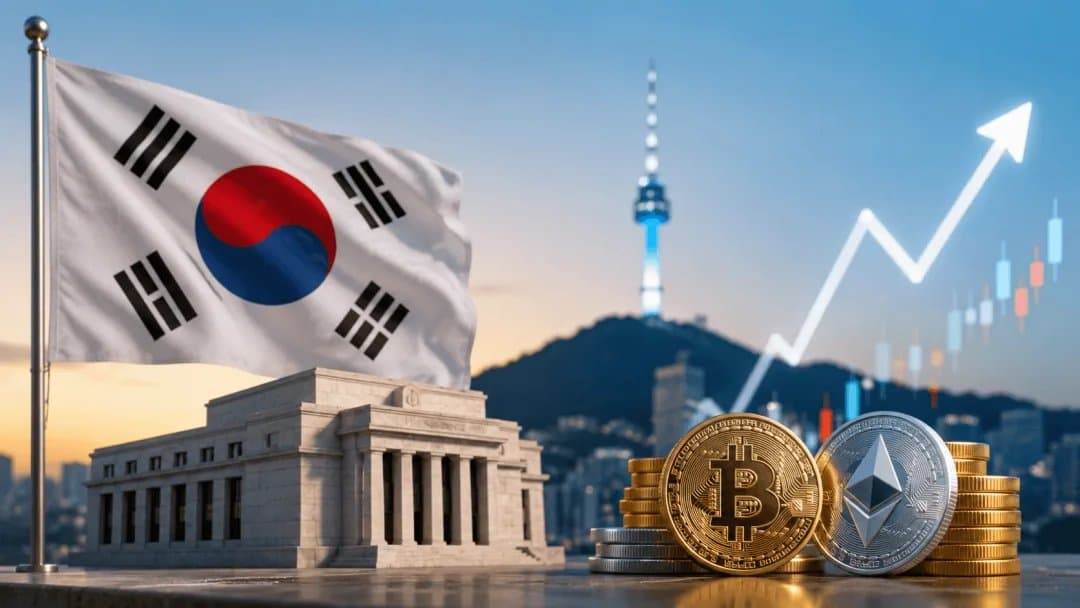
The recent increase of South Korea's benchmark interest rate marks a significant shift in the nation's monetary policy. On July 16, the Bank of Korea raised the rate by 25 basis points, bringing it to 2.75%, the first hike since January 2023. Governor Hyun Song Shin emphasized that the decision was influenced by growth, inflation, and financial stability conditions. This policy change is expected to tighten borrowing conditions in a market that has already seen a decline in crypto trading activity.
The increase is set against a backdrop of a struggling local crypto market. Investor holdings decreased sharply from approximately $83.3 billion in January 2025 to about $41.4 billion by February 2026. Additionally, the daily trading volume across five major exchanges fell from around $11.6 billion in December 2024 to approximately $3 billion two months later. Such a decline reflects reduced retail participation in speculative markets.
Higher interest rates typically lead to increased borrowing costs, prompting households and businesses to favor safer yield-bearing investments like bank deposits and bonds over cryptocurrency trading. As a result, the funds available for short-term crypto trading may diminish, particularly among retail investors who often utilize borrowed capital. The interplay between local trading conditions and global monetary policies will play a key role in determining the market's response to this rate hike.
Despite the downturn, South Korea remains key in certain altcoin markets, with notable activity seen in platforms like Upbit and Bithumb. For instance, XRP emerged as a leading asset with daily trading volumes reaching about $110.9 million in May. In an effort to attract local traders, Upbit has recently listed new tokens, including Derive’s DRV, on its trading platforms. Such developments indicate that while trading may have weakened, the competition for market share remains intense.
This material is for informational purposes only and should not be considered financial advice.