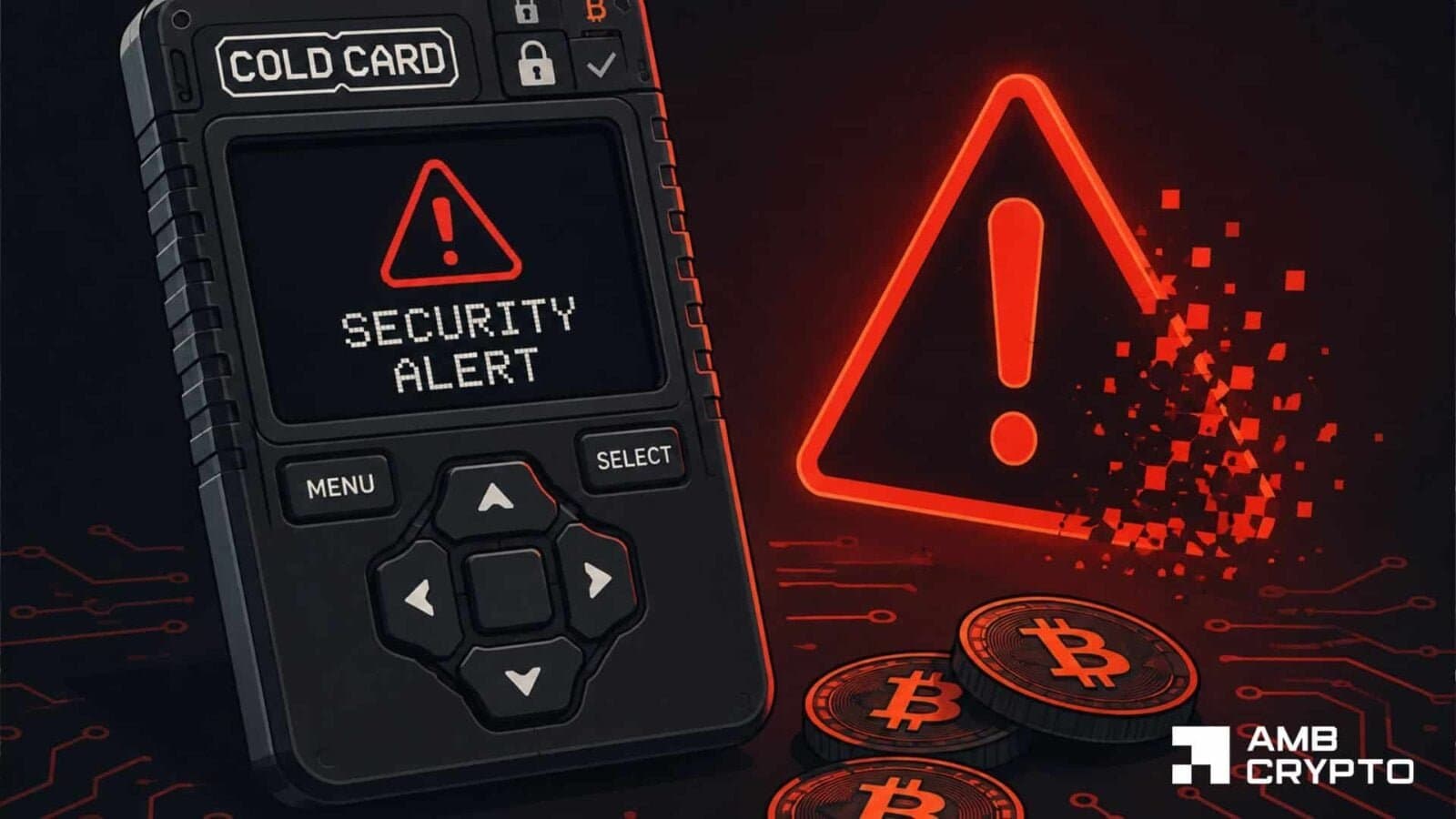
David Schwartz, Ripple's former chief technology officer, has weighed in on the Coldcard Bitcoin wallet vulnerability that exposed customers to massive losses. The breach, which stemmed from a firmware flaw discovered in March 2021, allowed attackers to pre-compute wallet seeds and drain funds across thousands of addresses. Confirmed losses have already surpassed $100 million, with Galaxy Research projecting the total could reach $130 million if a suspected fourth wave of attacks materializes.
The vulnerability centered on weakened seed entropy in Coldcard's firmware during that period. Attackers exploited this weakness to systematically predict and compromise wallet seeds, then sweep approximately 1,596 Bitcoin across roughly 7,300 addresses. This wasn't a single coordinated theft but rather a series of attacks that unfolded over time, making the full scope of the damage difficult to assess immediately.
Patching Arrives Too Late for Many
Coinkite, the company behind Coldcard, released a firmware patch to address the flaw, but the fix came after years of exposure. Users who generated their wallet seeds on vulnerable versions remain at risk, creating a lingering security headache for the Bitcoin community. The incident shows a critical problem in hardware wallet design: firmware vulnerabilities can persist undetected for extended periods before surfacing in public.
Schwartz's involvement in analyzing the breach reflects broader industry concern about hardware wallet security. His technical expertise proved valuable in breaking down exactly how the attackers managed to compromise so many wallets. The incident has reignited discussions about the importance of regular security audits and transparent vulnerability disclosure in the cryptocurrency hardware space.
Bitcoin markets absorbed the news with relative calm, as traders already factored in the scale of the losses.
This article is informational and does not constitute financial advice or investment guidance.