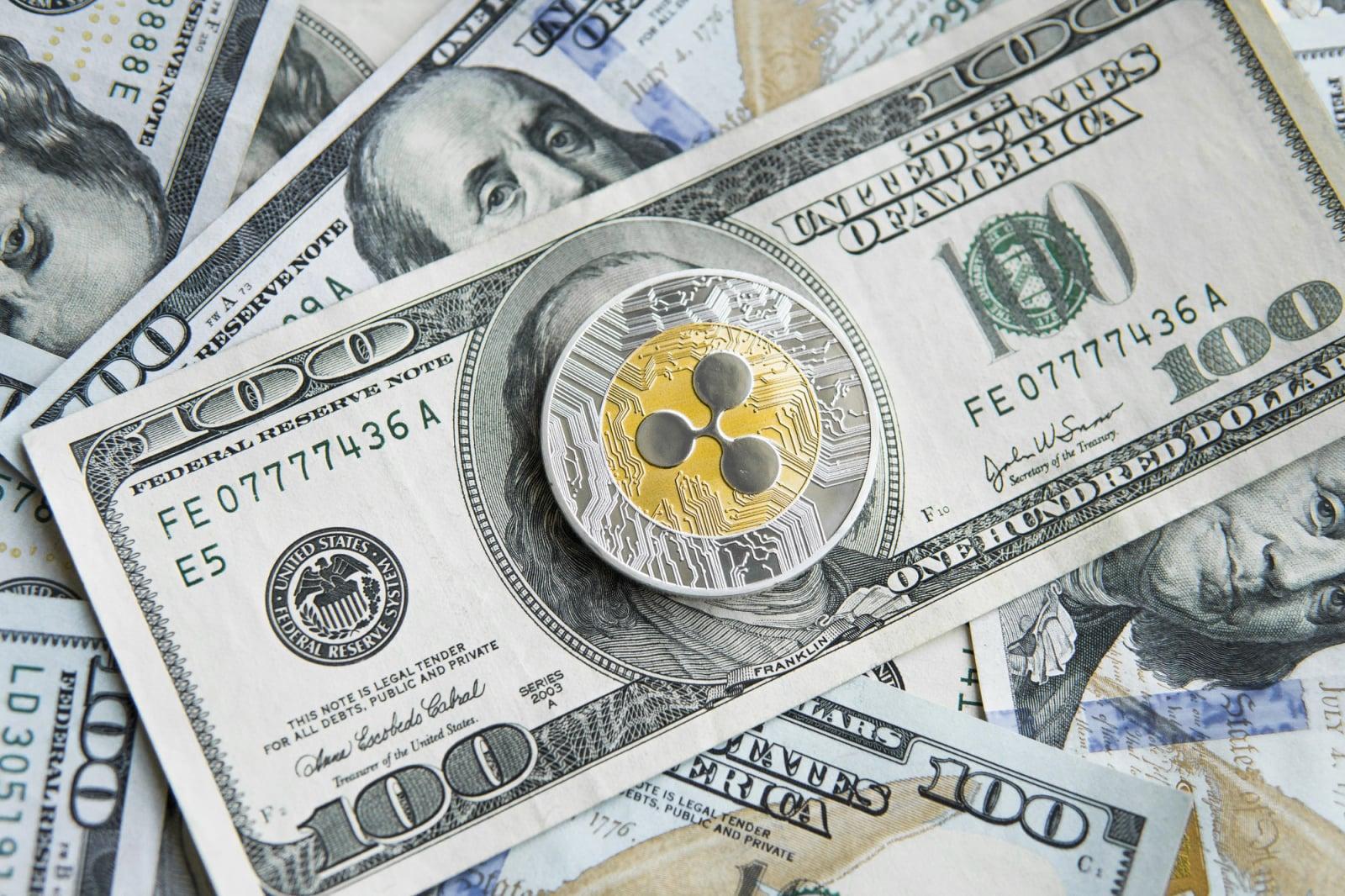
Ripple Joins 140-Member Consortium Behind 'Open USD' Stablecoin Supported by BlackRock, Mastercard, and Google

Ripple has become one of more than 140 financial institutions, technology giants, and crypto firms that have committed to adopting a newly launched stablecoin initiative known as 'Open USD.' The project has drawn support from some of the most influential names across multiple industries, including BlackRock, Mastercard, Google, Visa, and Stripe.
The stablecoin is designed to tackle persistent structural problems that have long constrained the broader stablecoin market — among them scalability limitations, fragmented governance, and a lack of neutral oversight. Unlike most existing stablecoins, Open USD will not be controlled by any single corporate entity. Instead, an independent organization called Open Standard will handle both issuance and day-to-day operations, ensuring that no single stakeholder can unilaterally alter the protocol's rules.
One of the central pain points Open USD seeks to resolve is the cost burden placed on large-scale businesses operating in the current stablecoin ecosystem. At present, companies routinely face steep minting and redemption fees, while the yield generated from underlying cash reserves typically flows exclusively to third-party issuers. Under the Open USD model, participating businesses will be able to mint and redeem the stablecoin at zero cost, and the revenue produced by reserve assets will be distributed across all consortium members.
The coalition bridging traditional finance, big technology, and digital assets is notably broad. On the traditional finance side, Ripple finds itself alongside payment processors such as Mastercard, Visa, and American Express, as well as major institutional players including BlackRock and BNY. The technology sector is represented by Google, DoorDash, and Shopify, while crypto-native participants include Coinbase, Fireblocks, and Solana.
For Ripple specifically, participation in Open USD opens access to a highly liquid settlement rail that could prove valuable for cross-border transactions and decentralized finance operations. However, questions remain about how this fits alongside RLUSD — Ripple's own regulated stablecoin, which currently carries a market capitalization of approximately $1.4 billion. Whether the two assets will coexist, compete, or complement each other within Ripple's broader strategy has yet to be clarified.
Mastercard has publicly emphasized that the success of any such initiative will depend on 'trusted networks, broad participation, and collaboration across the industry' — a sentiment that appears central to the Open USD consortium's founding philosophy.
The launch of Open USD represents one of the most ambitious cross-sector stablecoin efforts to date, bringing together a coalition that spans Wall Street, Silicon Valley, and the crypto industry under a shared, governance-neutral framework. Whether this collaborative approach can deliver where single-issuer models have fallen short remains to be seen, but the scale of institutional backing suggests that the project has earned serious attention from across the financial world.