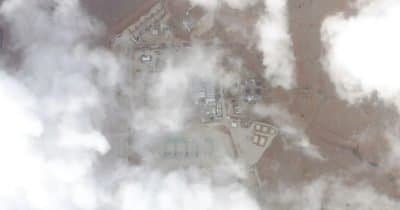
Iran fired missiles at American military installations located in Bahrain, Jordan, and Kuwait, escalating tensions in the Middle East conflict that intensified following the June 2026 ceasefire breakdown. State-linked Iranian media sources confirmed the attacks, which involved ballistic missiles and drones aimed at US bases within these Gulf countries.
In response, the United States launched counterstrikes against more than 80 positions connected to Iran's Islamic Revolutionary Guard Corps (IRGC). Targets included missile launch sites and air defense systems deep inside Iranian territory, signaling a significant retaliation effort.
Implications for Regional Security and Digital Finance
The ongoing hostilities have raised concerns about further Iranian military action against Gulf states. This outlook is supported by prediction markets, which currently factor in the increased risk of expanded conflict.
Meanwhile, Washington monitors Iran’s crypto networks closely. In 2025, Iran's digital asset ecosystem was valued at $7.8 billion, with roughly half of all transactions tied to IRGC activities. During the last quarter of 2025, IRGC-linked crypto wallets received inflows exceeding $3 billion, much of which has been connected to sanctions evasion and ransomware campaigns.
This financial data has prompted the US Treasury to sanction Iranian crypto platforms such as Nobitex, one of the country’s largest exchanges, for facilitating IRGC transactions. The military escalation coincides with growing calls in the US Congress for wider regulation of digital assets, as lawmakers cite figures like the $3 billion IRGC inflow when advocating stricter oversight.
The conflict’s impact is tangible: Bahrain activated civil defense sirens amid rising tensions, and Kuwait has increased its air defense readiness to counter the Iranian drone threat.
This article is for informational purposes only and does not constitute financial advice.