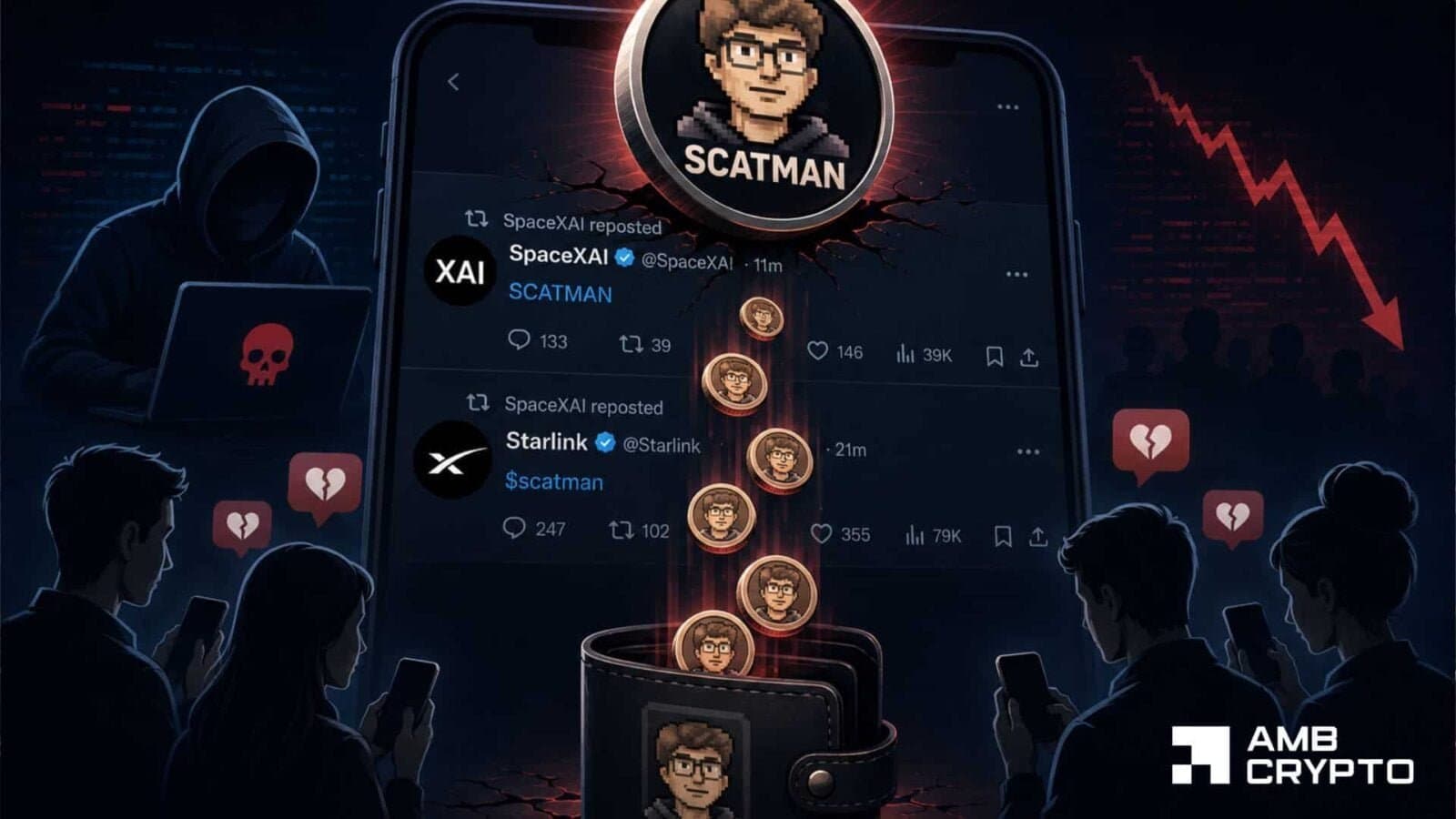
On July 13, malicious actors took to social media to manipulate the digital currency market by exploiting verified accounts linked to SpaceXAI and Starlink X. This incident involved hackers promoting the SCATMAN memecoin, which attracted significant attention and led to a surge in speculative buying.
One tweet related to the fraudulent campaign quickly garnered over 72,000 views, leading many potential investors to mistakenly believe in the token's legitimacy. This perception created a buying frenzy, momentarily pushing SCATMAN's market capitalization close to $2 million.
Prior to this scheme, the attackers minted 10 trillion SCATMAN tokens. Following the promotion, they executed a dump of their holdings, receiving about 73.7 ETH, equivalent to roughly $135,000. The sudden influx of interest and trading activity caused SCATMAN to reach a trading volume of $5.7 million across nearly 44,925 transactions.
Rapid Surge and Collapse
Despite the initial success of the scheme, the liquidity that supported the price increase quickly evaporated. After the attackers sold their holdings back into the market, SCATMAN's value plummeted by over 98%. Within 24 hours, liquidity dwindled to just $3,900.
While buyers initially outnumbered sellers, the market was unable to sustain the inflated price levels when concentrated selling occurred. This rapid collapse highlights the vulnerability of cryptocurrency markets to coordinated scams leveraging the social credibility of verified accounts.
Implications for the Crypto Market
The SCATMAN incident serves as a stark reminder of how high-profile social media accounts can be misused to create fraudulent hype around tokens. Such scams not only result in financial losses for unsuspecting investors but also threaten the overall integrity of the cryptocurrency ecosystem.
As the market evolves, it is essential that potential investors remain vigilant and conduct thorough research before engaging in trades. This incident also raises questions about the security measures in place to protect verified accounts from being compromised.
This material is informational and not financial advice.