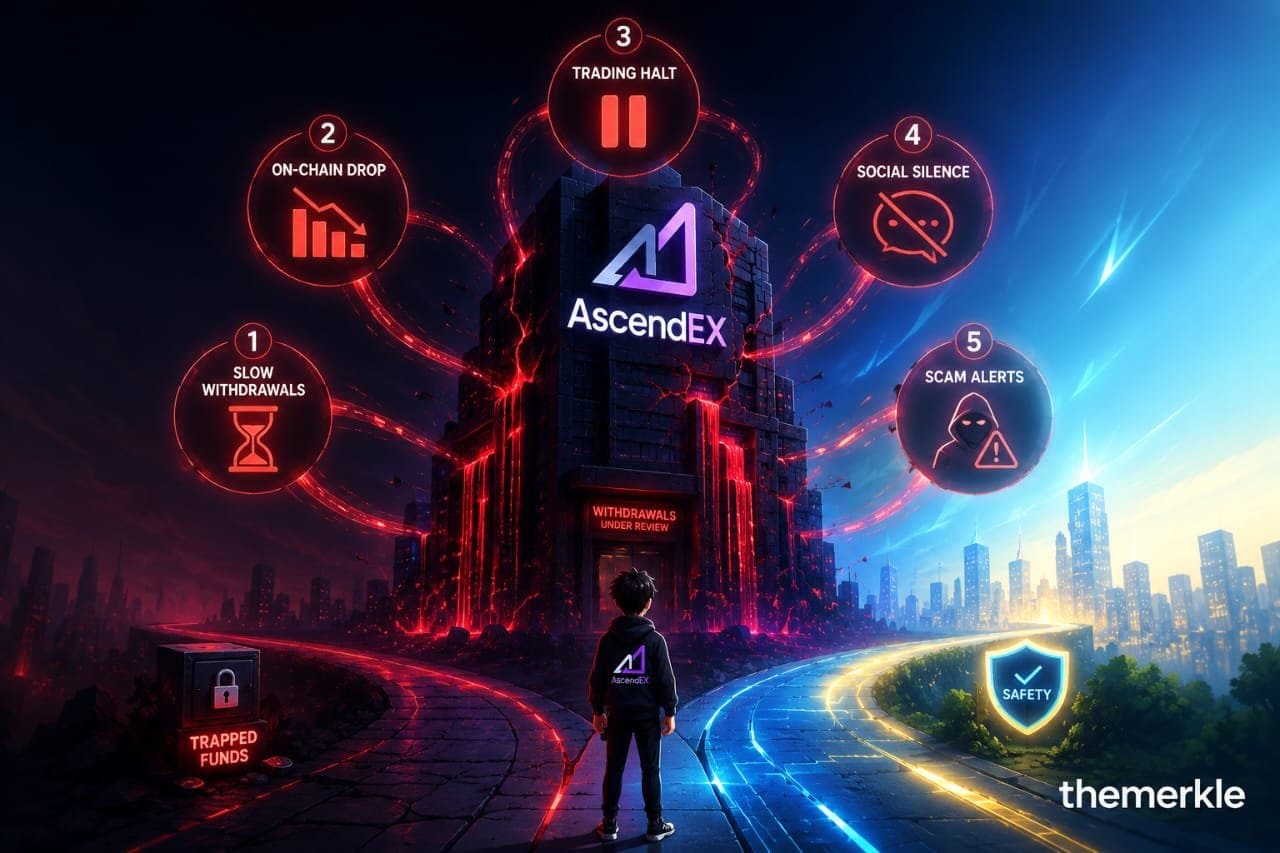
AscendEX announced it would shut down on July 1, 2026, citing EU regulatory requirements. Four days later came the real message: all withdrawals would require manual review. That single sentence, buried in the fine print, told customers everything. "Withdrawals may be delayed, or may not be processed during the review period. The timing or amount of withdrawals cannot be guaranteed at this time." An exchange that cannot guarantee it will give you your money back is already insolvent.
Most exchange collapses arrive dressed as routine compliance updates, mentioning "regulatory considerations" or "market conditions" in the opening lines. By the time you finish reading, the platform has usually been gasping for weeks. AscendEX offers a clean, well-documented roadmap of what to watch for, and it's worth learning the pattern before your capital gets stuck inside the next one.
The Manual Withdrawal Trap
When an exchange shifts from automated to manual withdrawal processing, something fundamental has broken. It signals one of two things: either the company no longer has enough liquid assets to cover redemptions at speed, or it's trying to buy time while negotiating with creditors or regulators. AscendEX didn't even pretend it would prioritize speed. The review period had no defined endpoint, no guaranteed amounts, no timeline. That's not caution. That's a platform acknowledging it might not be able to pay you.
Automated withdrawals exist for a reason. They're cheap to operate and they work. When an exchange disables them, it's because the cost of automation (instant processing to anyone, anytime) has become unbearable. Watch for this shift in real time. It's often the last warning before funds vanish into a black hole of "processing delays" that stretch into months.
Sudden Regulatory Compliance Rebranding
AscendEX framed its shutdown around MiCA, the EU's Markets in Crypto-Assets Regulation. The company claimed it held no authorization under the new rules. This is the language exchanges use when they need to exit without admitting failure. Regulatory pressure might be real, but when a platform suddenly emphasizes compliance as the reason for ceasing operations, ask yourself why it didn't pursue authorization months earlier. Regulators don't move overnight. If MiCA requirements just now became impossible to meet, the exchange was either ignoring them for years or financially unable to adapt.
On-chain data and operational shifts often reveal insolvency weeks before an official notice arrives. Reserve wallets that spike and then collapse, sudden pauses on specific token withdrawals, or vague announcements about "temporary restrictions" are all pieces of the same story. Survival depends on recognizing these overlapping red flags early, before the lawyers draft the shutdown notice.
- Manual withdrawal delays replacing automated processing
- No guaranteed timing or amount for redemptions
- Regulatory compliance cited as the primary reason for shutdown
- Sudden account restrictions on core functions like trading and deposits
- Total silence from executives on social media and public channels
The AscendEX collapse doesn't teach us anything new about crypto exchanges, it just confirms what we've seen before. Platforms that are solvent don't need to tell you they might not be able to process your withdrawal. They don't disable automated systems. They don't go quiet. The shape of failure is always the same. Learn to see it early.
This article is for informational purposes only and should not be construed as financial advice. Always conduct your own research before using any exchange or platform.