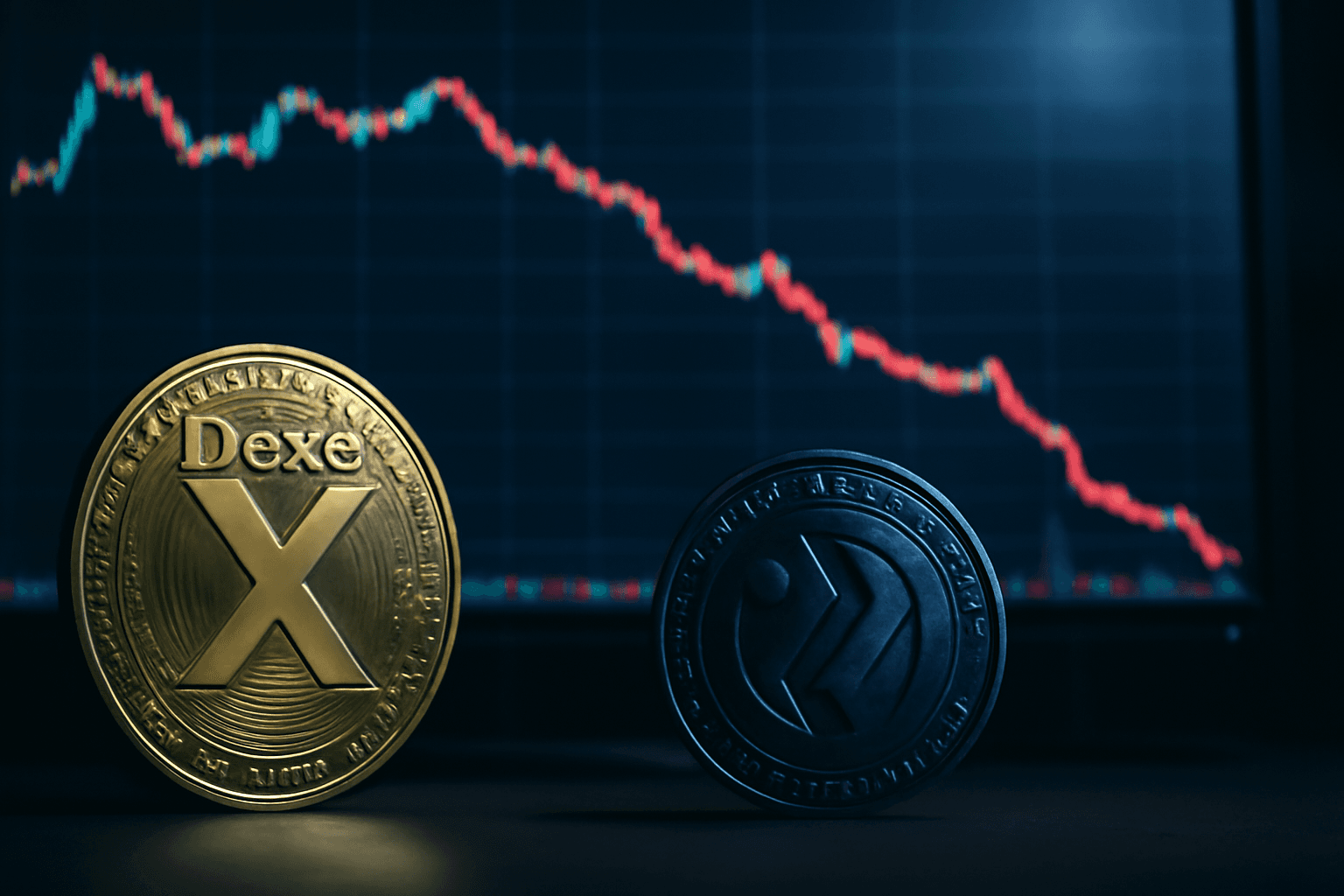
Market participant Jack Liu commented, «After DeXe’s 85% drop, traders watch Injective closely for similar moves.» The DeXe token plunged more than 85% following a strong rally that saw it jump over 115% in early July. This severe reversal has puzzled investors who recently witnessed one of the most solid rebounds in the crypto sector. The sudden sell-off signals a rapid rotation of liquidity within decentralized finance assets.
On Tuesday, DeXe's decline accelerated, wiping out most gains from its earlier rally. Data from Santiment suggests shifting on-chain activity and investor sentiment are driving this volatility. The analytics platform notes that the decrease in DeXe’s engagement metrics may foreshadow trouble for similar projects. Injective, another DeFi token, has drawn attention due to these trends, with some traders fearing it could face a comparable drop if liquidity continues migrating away.
Within the DeFi ecosystem, liquidity flows are becoming more dynamic as investors seek safer or more promising alternatives. DeXe’s dramatic fall exemplifies this trend, illustrating the heightened sensitivity of DeFi tokens to market rotations. The move highlights challenges for projects relying heavily on sustained liquidity and user participation. Such shifts shows the importance of monitoring on-chain signals to anticipate potential corrections or liquidity squeezes.
The recent developments echo broader market conditions where tokens that once surged rapidly are now correcting sharply. Investors are advised to exercise caution, particularly with assets showing signs of weakening fundamentals or declining community activity. For context, other sectors in crypto have experienced regulatory hearings like government discussions on prediction markets, but DeFi’s liquidity swings remain a direct driver of token price volatility.
This content is for informational purposes only and does not constitute financial advice.