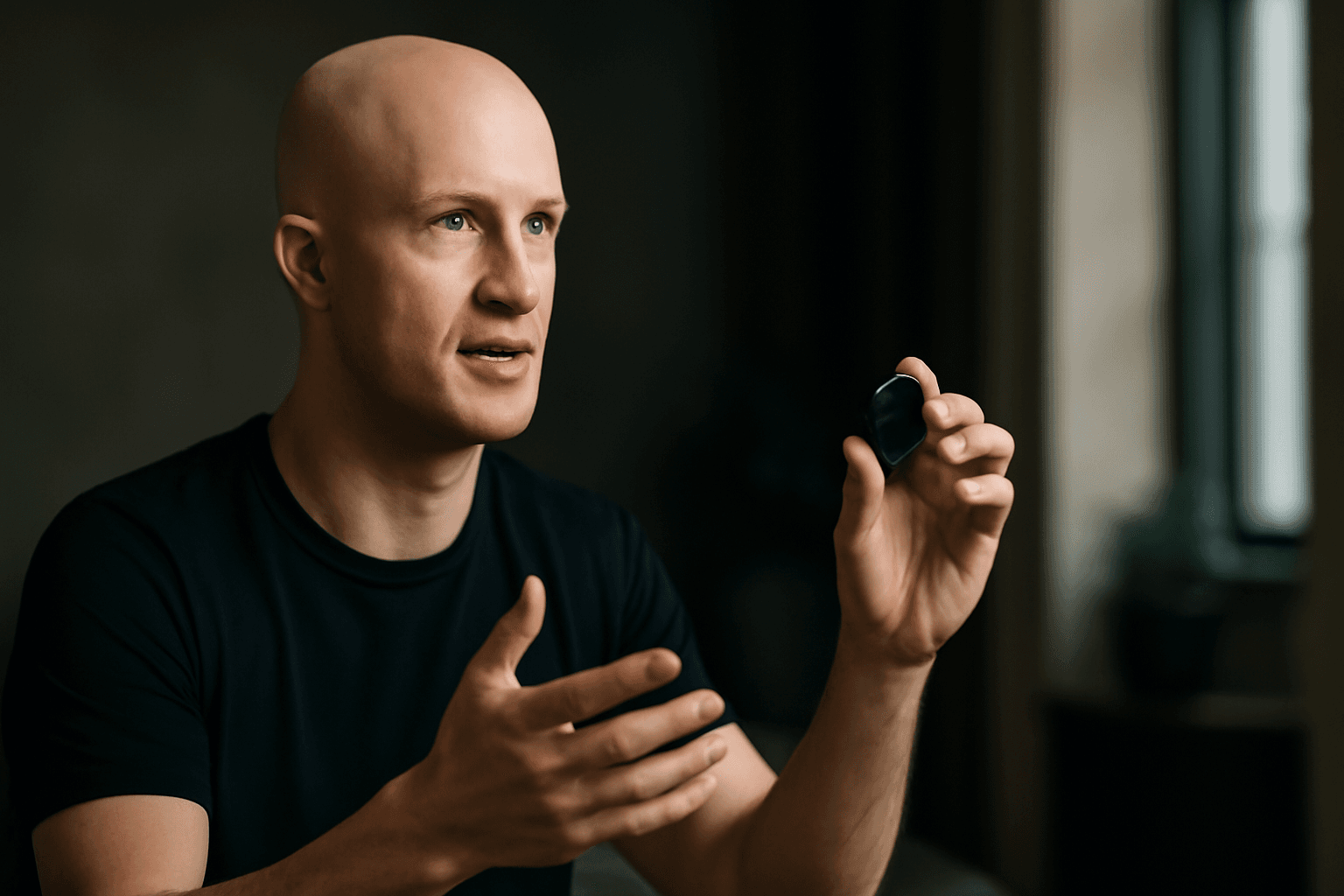
Brian Armstrong, the CEO of Coinbase, emphasized that self-custody wallets are key for scaling cryptocurrency adoption to over a billion users globally. He argued that self-custody provides lower friction onboarding and bypasses regulatory complexities, making it accessible worldwide compared to centralized solutions.
Self-Custody and Global Adoption
Armstrong noted that while Coinbase’s app functions well in developed countries, such as the U.S., these regions represent just 4% of the global population. He explained that to bring the open financial system to more than a billion people, self-custody remains the only viable method. This approach scales like software, avoiding the need to comply with different regulations or establish local teams per country.
The CEO also highlighted the role of agentic adoption, where AI-powered agents manage funds to complete tasks autonomously, describing self-custody as the better format to facilitate this future blockchain use case. Armstrong concluded by reaffirming the importance of self-custody for economic freedom, even in well-regulated markets.
This perspective arises amid organizational changes at Base, a Coinbase-incubated project. Jesse Pollak recently stepped down as head of Base, admitting that the initial social-focused approach was a "wrong bet." Jordan Fish, known in the crypto community as Cobie, took over and is shifting Base’s focus toward trading, payments, and AI-driven agents under a unified blockchain.
Meanwhile, Base faced a technical setback when its mainnet paused for nearly two hours due to a faulty block freezing the chain’s sequencer, causing temporary halts in transactions.
This article is for informational purposes and not investment advice.