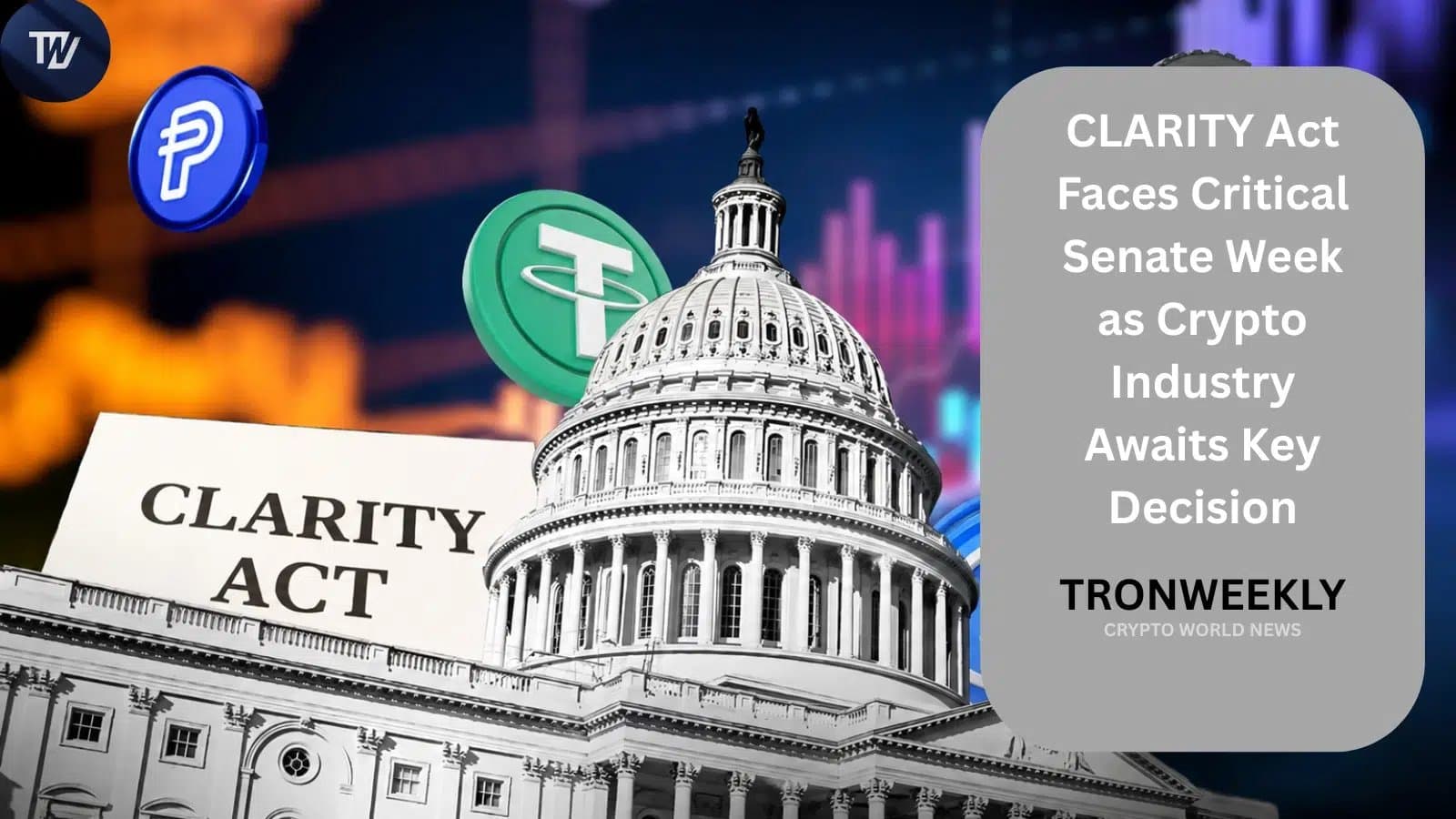
Prediction markets now show just a 37% chance the Clarity Act passes this year, down sharply from above 70% in spring. The Senate shelved crypto's flagship bill for other priorities ahead of summer recess, and the stall is spooking Wall Street hard. Bernstein warned August 3 that failure would crater crypto markets. JPMorgan went further, cautioning that extended delays risk pushing tokenization entirely onto traditional financial infrastructure instead of public blockchains, a structural threat to the industry itself.
The bill remains stuck on four major issues: ethics provisions, DeFi guidance, stablecoin yield rules, and anti-money laundering requirements. Negotiators resolved earlier fights in committee, but these four points have become immovable. When the Senate Banking Committee cleared the bill in spring, lobbyists and crypto execs expected a floor vote before recess. Instead, leadership shuffled priorities, talks froze, and market confidence evaporated.
What the stakes really are
The Clarity Act would be the most full U.S. crypto legislation to date, setting guardrails for assets, exchanges, and on-chain activity. Without it, tokenization projects face regulatory fog. JPMorgan's warning cuts deeper: if the bill dies, blockchain applications migrate to centralized platforms and traditional finance infrastructure rather than staying on decentralized public networks. That's not just a market setback. It's a structural redirection of trillions in future asset issuance away from crypto entirely.
Bernstein expects another selloff if passage fails, but argues U.S. regulators would accelerate rulemaking under Project Crypto to compensate. The two banks agree the legislation matters. They diverge on speed and severity: how much damage does delay inflict, and how fast can regulators fill the vacuum?
Bernstein sees crypto's political influence staying strong heading into U.S. midterm elections and expects the current downturn to bottom in late Q3 or early Q4, buoyed by continued White House policy support. That optimism hinges on movement in Congress, though. If the Clarity Act stalls deeper into fall, midterm chaos could bury it for good.
This article is informational and does not constitute financial or investment advice. Regulatory timelines and market outcomes remain uncertain.