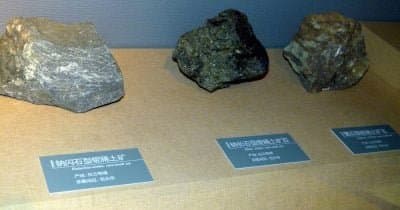
According to the International Energy Agency (IEA), China's restrictions on rare earth exports pose a significant threat to Western economies, potentially impacting up to $6.5 trillion in annual economic activity. The report highlights that approximately $4.2 trillion of this amount directly affects IEA member countries.
Dependence on Rare Earths
Rare earth elements are essential for various industries, from electric vehicle motors to defense systems and renewable energy technologies. They play a critical role in manufacturing, and the lack of access to these materials can halt operations across multiple sectors. China dominates the global market by producing about 60% of mined magnet rare earths and refining over 91% of the world's supply, creating a critical bottleneck in the supply chain.
Escalating Export Restrictions
China's export controls began escalating in April 2025, initially focusing on heavy rare earth elements. Although there was a temporary suspension of these controls in November 2025, further restrictions were implemented in June 2026, particularly targeting specific U.S. companies such as MP Materials, which operates the only active rare earth mine in the U.S., and USA Rare Earth.
The ramifications for American defense contractors are particularly serious, as losing access to rare earth supplies complicates their ability to fulfill military contracts while being excluded from Chinese government procurement.
Investment Implications
The IEA's figure of $6.5 trillion does not predict losses but instead reflects the vast economic activity reliant on a supply chain controlled by China. As a result, companies in the electric vehicle sector are bracing for potential cost increases and production delays if supplies tighten. Furthermore, defense manufacturers face challenges in acquiring necessary materials to produce systems intended for countering Chinese military actions.
This article is for informational purposes only and does not constitute financial advice.