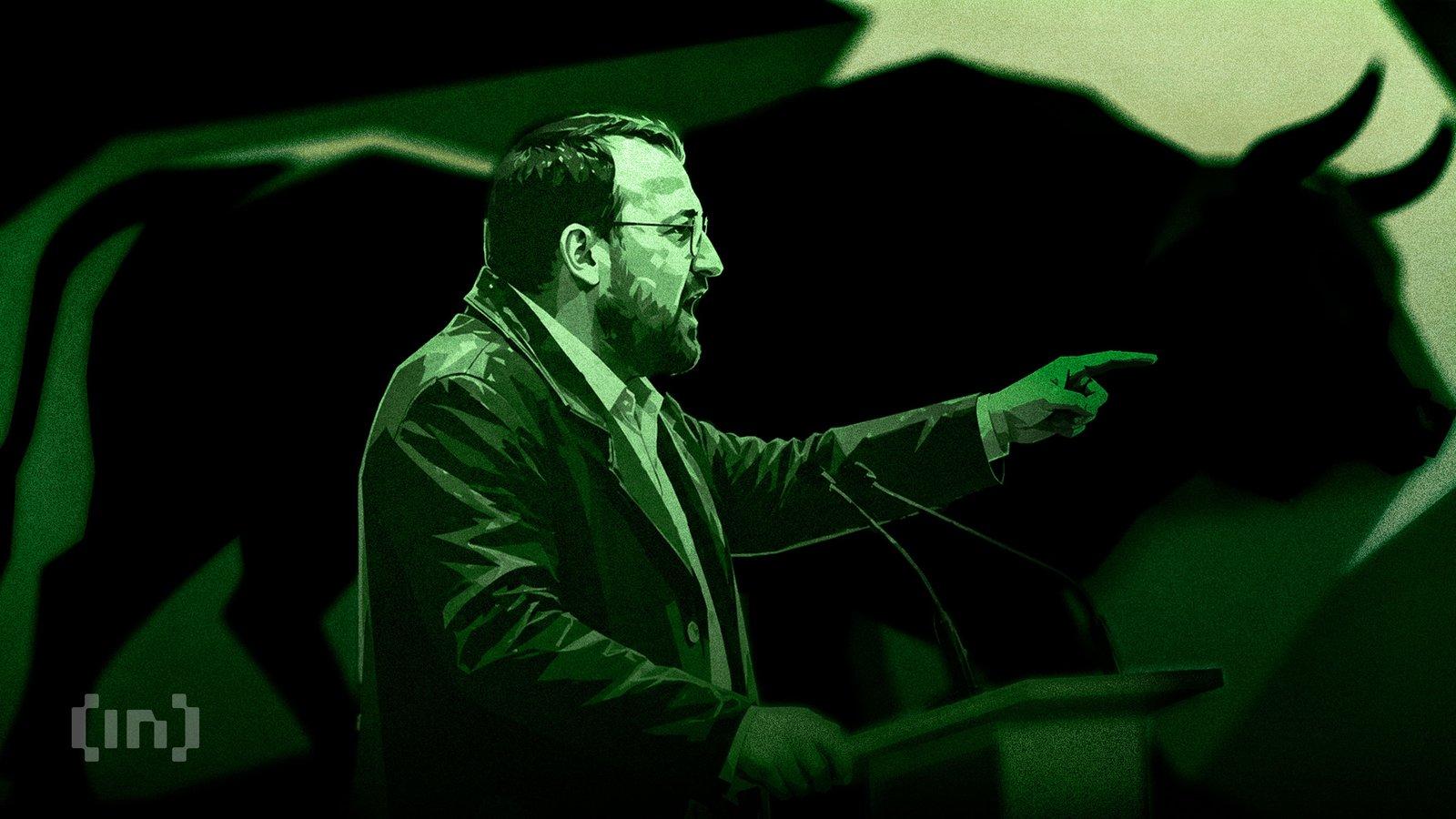
Charles Hoskinson, the founder of Cardano, has announced that the Ouroboros Leios upgrade is set to increase the network's transaction capacity by 60 times, positioning Cardano to compete with the XRP Ledger in speed.
During a recent interview on The Breakdown podcast, Hoskinson detailed how the upgrade focuses on enhancing network throughput without compromising on decentralization or security. He emphasized that this significant increase would bring Cardano's performance in line with the XRP Ledger, known for its swift transaction processing capabilities.
Implications of the Leios Upgrade
According to Hoskinson, the upgraded internal throughput will equate to a 60x increase, allowing Cardano to match the efficiency of the XRP Ledger, which has historically processed transactions in three to five seconds and supports up to 1,500 transactions per second. The XRP Ledger reached a peak of 120 transactions per second in March 2026.
Despite these advancements, Hoskinson reassured that the principles underlying Cardano will remain intact. He acknowledged the blockchain trilemma, which addresses the challenges between scaling, decentralization, and security, asserting that Cardano aims to demonstrate that trade-offs are not a necessity.
Testnet Launch and Future Plans
The testing of the Leios protocol commenced with the public release of the Musashi Dojo testnet on June 23, 2026. This phase marks the first practical application of the upgrade, with the mainnet deployment anticipated by the end of this year.
Response to Criticism of Midnight City
Hoskinson also defended the initiative Midnight City in light of criticisms from content creator Big Pey, who deemed the project a misuse of funds that failed to attract new users. In a direct response, Hoskinson expressed disapproval of Big Pey's entrepreneurial insights and challenged him to reconsider his perspectives on adoption and consumer products.
He asserted, “I’ve just lost all respect for you as an entrepreneur,” and argued that Midnight City is poised to become a vital part of the ecosystem.