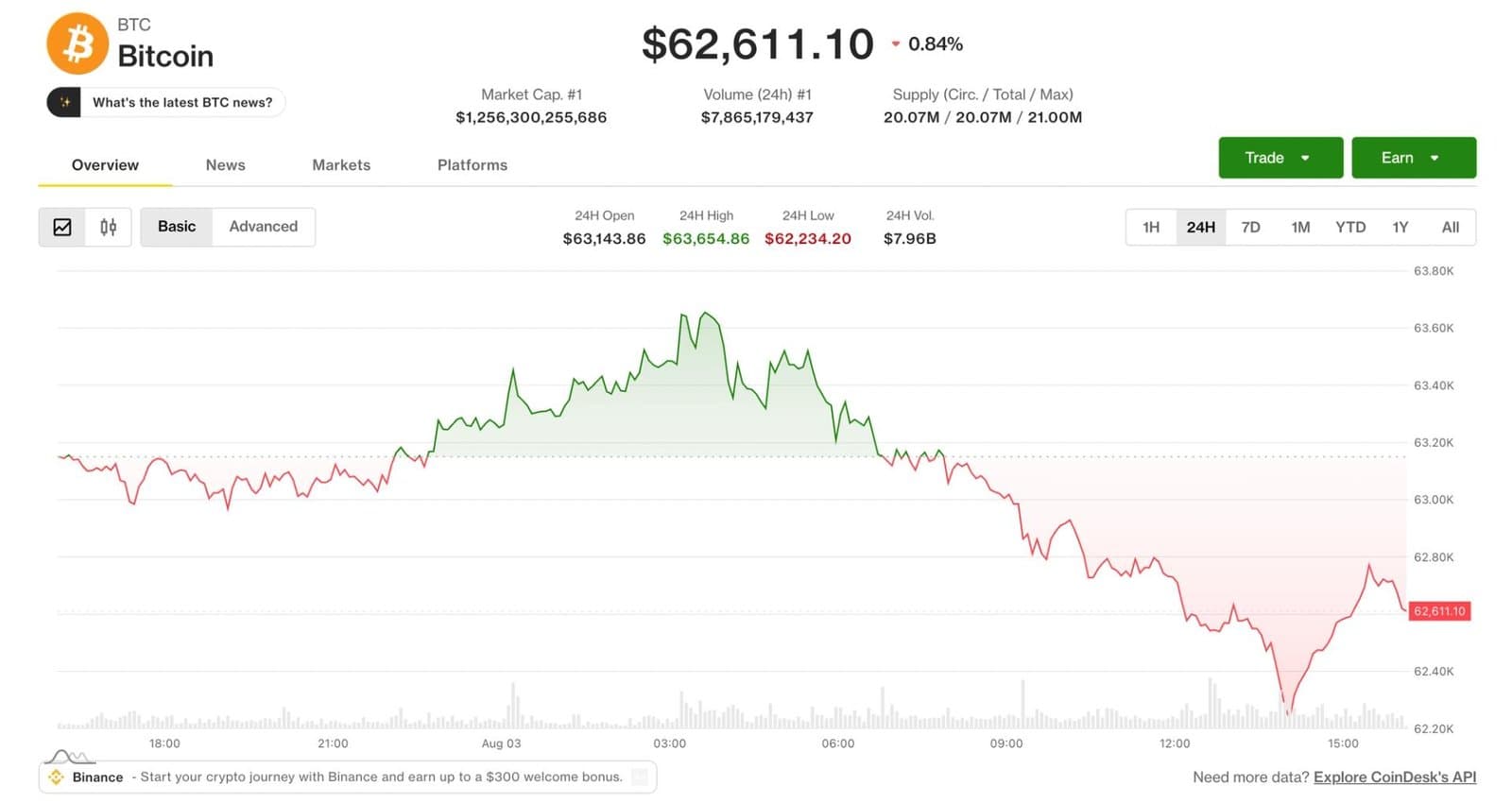
Bitcoin closed the week near $62,600 after failing to reclaim the $65,000 mark. According to Yusuf Fakhro, partner at Bahrain’s ARP Digital, the recent price drop doesn’t reflect heavy selling but rather a lack of market participation. The buying momentum that pushed bitcoin up in July has stalled, with ETF flows turning negative and trading volumes hitting lows unseen since late 2023.
Market Dynamics Behind Bitcoin’s Recent Price Action
July’s average daily spot volume dropped to the lowest level since November 2023, signaling a quiet market. CME open interest remains at levels not seen since 2023, while perpetual futures positions have plateaued near 300,000 BTC. Even Strategy, one of the largest structural buyers, has paused bitcoin purchases for the fifth consecutive week. This points to a market that is more exhausted than panicked.
The Federal Reserve’s July 29 meeting, which held rates steady without offering easing signals, removed a key bullish catalyst investors had counted on. Meanwhile, a Coldcard firmware exploit dating back to 2021 drained around 1,367 BTC (approximately $89 million) from self-custodied wallets. This incident pushed some holders to move coins back to exchanges and regulated products, adding a layer of caution into the market.
Market Reaction and What’s Next
Bitcoin traded near $62,700 at the start of the week, down 3.5% on the week. The key indicator to watch now is ETF inflows: if they remain flat while prices hold steady, it confirms the market’s exhaustion rather than active selling pressure. Should outflows fail to push bitcoin below $60,000, it would suggest that sellers have largely stepped back. This subtle shift could set the stage for the market’s next move.
This content is for informational purposes and does not constitute financial advice.