Binance Adds Microsoft and Meta Tokenized Stocks as RWA Derivatives Hit $347 Billion
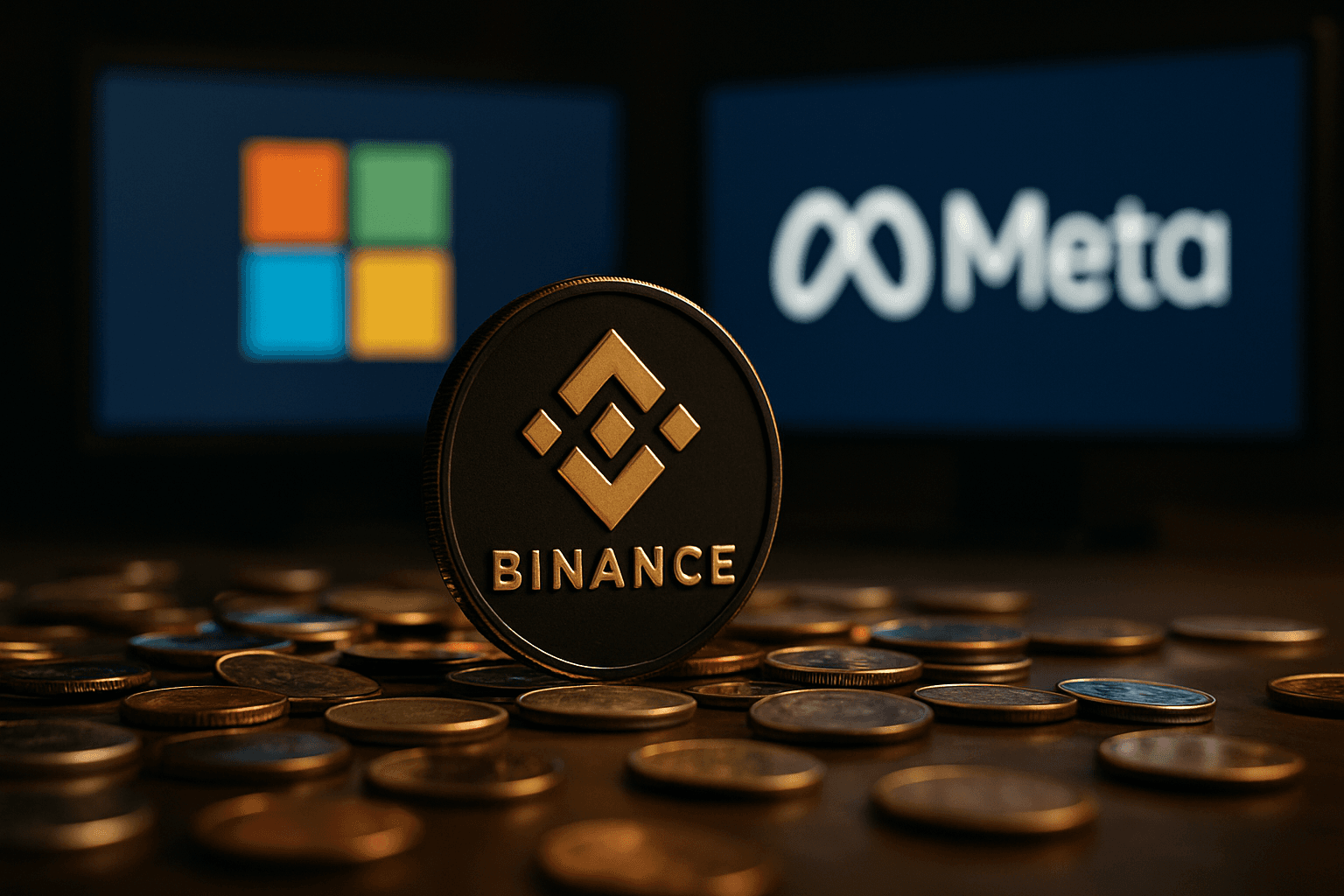
Binance has taken another significant step in bridging traditional finance and the crypto world by enabling spot trading for tokenized shares of several major companies. The exchange has added trading pairs against USDT for tokenized versions of Microsoft (MSFTB), Meta (METAB), Palantir (PLTRB), Lumentum (LITEB), and the Invesco QQQ Trust ETF (QQQB), marking a notable expansion of its real-world asset (RWA) offerings.
The move comes at a time when the RWA derivatives market is experiencing explosive growth. Data from CoinGecko reveals that trading volume in crypto-based RWA derivatives climbed to an astonishing $347.17 billion in May 2026 — a staggering leap from just $230 million recorded in January 2025. Binance currently dominates this space, holding a 55.7% share of global RWA derivatives trading volume, according to Binance Research. Other notable players in the segment include MEXC and Hyperliquid.
One of the most striking findings from market data is that on peak volatility days, tokenized stock trading volumes on crypto platforms outpace those on traditional stock exchanges by a factor of 4 to 21 times. This signals a fundamental shift in how traders are approaching equity exposure, increasingly preferring crypto-native instruments over conventional market access.
The appetite for speculative tools is particularly evident in perpetual contracts. In 2026, trading volume in TradFi-linked perpetuals surpassed standard RWA spot trading by more than eightfold, underlining the dominance of leveraged and derivatives-based strategies among crypto market participants.
The tokenized stock segment as a whole has already surpassed its entire 2025 performance within just the first five months of 2026. Market capitalization in this category rose from $831 million to $34 billion by May 2026, with technology-sector assets leading the charge. Nvidia (NVDA) and Tesla (TSLA) top the secondary market activity rankings, while Micron Technology (MU) posted a remarkable $13.16 billion in turnover. The addition of Microsoft aligns naturally with this demand for high-profile tech brands in tokenized form.
However, investors should proceed with caution. The tokenized stocks available through Binance's bStocks platform, issued by BTech Holdings Limited, are classified as depositary receipts rather than direct equity ownership. While these instruments track the prices of their underlying shares on traditional exchanges, they do not grant holders any voting rights, dividend entitlements, or legal ownership of actual corporate stock.
Furthermore, purchasers of bStocks assume the full credit and operational risk of the issuing entity. Should any Binance-affiliated company encounter financial or operational difficulties, investors would have no legal recourse to claim the underlying Microsoft or Meta shares traded on Wall Street. This structural distinction makes bStocks fundamentally different from owning shares through a conventional brokerage, and traders must factor this risk into their decision-making.
Despite these caveats, the broader trajectory is clear: tokenized real-world assets are gaining serious traction within the crypto ecosystem, and Binance's latest listings reflect a deliberate strategy to capture growing institutional and retail interest in this emerging asset class.