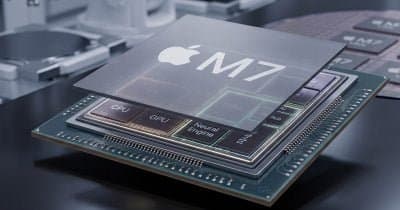
Apple is developing the M7 Ultra chip, capable of featuring up to 1.5 terabytes of unified memory, targeting a 2028 release. This development represents a significant leap over the existing M5 Ultra, doubling its memory capacity. The upcoming chip is designed to enhance AI performance, aiming to compete with Nvidia's advanced Blackwell-class accelerators.
Mark Gurman's report from Bloomberg reveals that the M7 Ultra's unified memory will allow smooth data sharing between the CPU and GPU, which is crucial for running extensive language models and AI inference tasks efficiently. The anticipated release of the M7 family, including the Pro and Max versions, is expected by late 2027, with the Ultra model following a year later. Apple's accelerated timeline suggests a strategic shift, as the company aims to bypass certain high-end M6 variants in favor of a dedicated AI-optimized line.
However, achieving the full 1.5TB configuration hinges on the cooperation of high-bandwidth memory supply chains, which have faced shortages in recent months. These constraints have previously impacted Apple's ability to offer high-spec configurations in its latest Mac Studio models.
The implications of the M7 Ultra's capabilities extend beyond conventional computing environments, particularly within the cryptocurrency and decentralized finance (DeFi) sectors. Currently, running extensive AI models necessitates specialized hardware or complex optimization techniques. A machine equipped with 1.5TB of unified memory could potentially operate models that typically require multi-GPU server setups.
Decentralized GPU networks, such as Render and Akash, have historically utilized Nvidia hardware as their foundation. If Apple can deliver competitive AI performance with lower power consumption, it could provide an alternative for node operators and inference providers looking to optimize costs. As Nvidia's pricing dynamics heavily influence decentralized computing economics, the introduction of Apple’s silicon could alter the space significantly.
The ongoing high-bandwidth memory shortages in the semiconductor industry affect numerous sectors, including gaming GPUs and AI accelerators. The sustainability of these shortages will be vital to monitor, as they may impact the broader implications of the M7 Ultra's introduction. This material is informational and not financial advice.