Altcoin Season Index at 51 as Bitcoin Dominance Holds Near 58%
The Altcoin Season Index sits at 51, well below the 75 level needed to confirm a broad rally, as Bitcoin dominance holds near 57–58% and global stablecoin supply exceeds $300 billion. Analysts warn the current cycle may be structurally different from 2021, with capital rotating selectively into RWA, AI, and infrastructure rather than lifting the entire altcoin market.
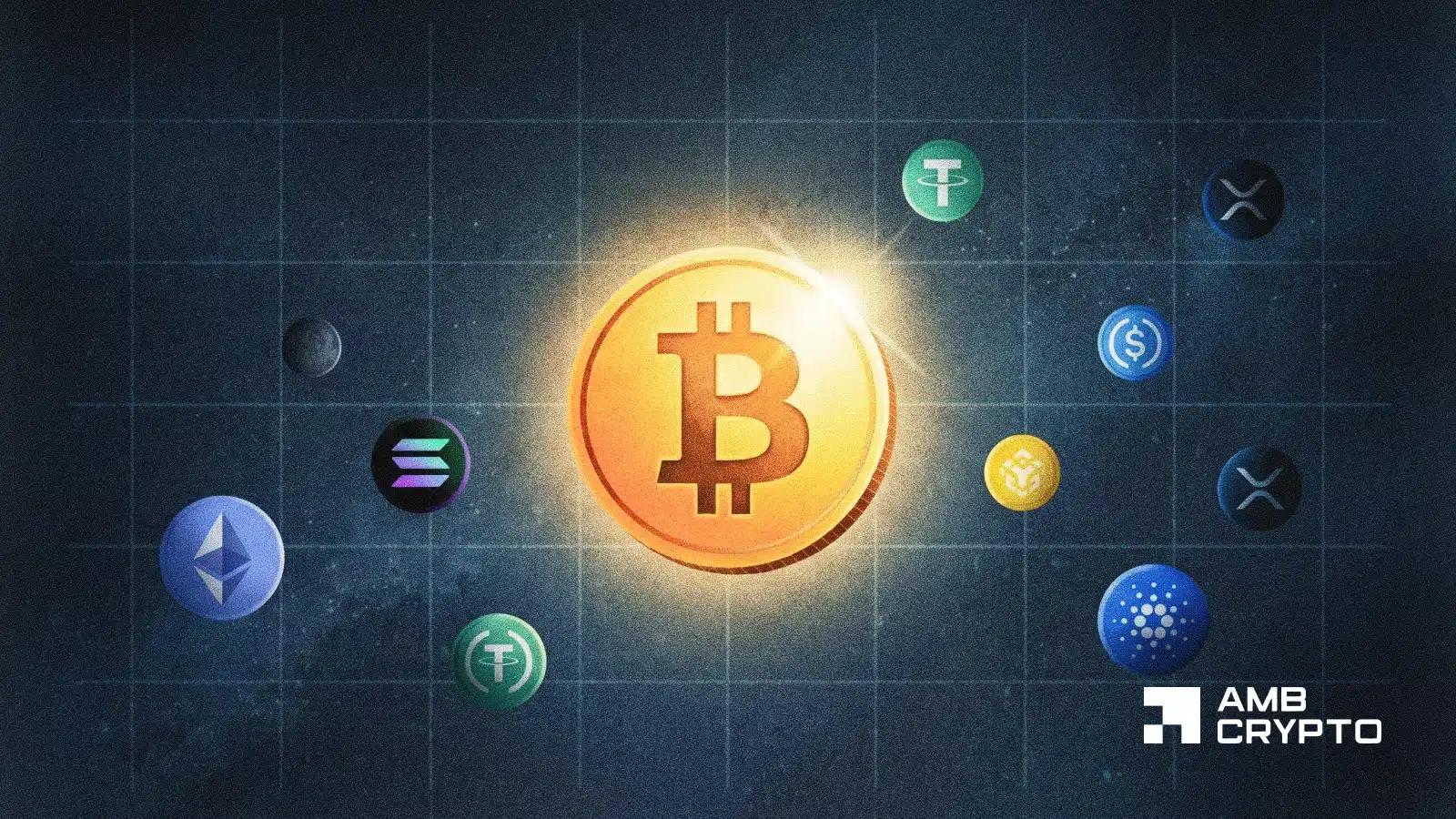
The anticipated broad-based altcoin rally has yet to materialize in the current crypto cycle, with key market indicators suggesting capital remains concentrated in Bitcoin rather than rotating into higher-risk assets. The Altcoin Season Index stood at 51 at press time, well below the 75 threshold required to confirm a genuine altseason, while Bitcoin dominance held near 57–58%.
Global stablecoin supply has surpassed $300 billion, according to DeFiLlama data, signaling that capital is available across the market. However, much of it remains on the sidelines, restrained by elevated U.S. Dollar Index levels and higher 10-year Treasury yields, which continue to make safer investments more attractive than speculative cryptocurrencies.
Ivan Patriki, co-founder of Quantmap, described the current state of altcoin markets as one of the weakest in years. 'Right now, the altcoin market feels like it's at one of its lowest ebbs in years. Sentiment is terrible, liquidity is thin, and a lot of investors have simply stopped paying attention,' he said. Aggregate altcoin metrics TOTAL2 and TOTAL3 continue to lag Bitcoin, reflecting broad investor reluctance to move beyond top-performing assets.
Analysts identify a sustained decline in Bitcoin dominance below 55%, combined with stronger relative altcoin performance, as the primary condition needed to confirm a broader capital rotation. Until that threshold is reached, Bitcoin remains the market's primary liquidity magnet, leaving altcoin rallies dependent on sector-specific catalysts rather than market-wide momentum.
Institutional participation is adding a structural dimension to the current cycle that was absent in 2021. Spot Bitcoin ETFs, deeper institutional involvement, and stricter regulatory frameworks have reshaped how capital enters the crypto market, reducing reliance on the speculative retail flows that fueled the broad 2021 rally. Institutions that are active in altcoins are concentrating positions in artificial intelligence, Real-World Assets (RWA), and blockchain infrastructure — areas offering clearer long-term growth narratives.
Ryan Lee, chief analyst at Bitget Research, noted that the nature of any future altseason may itself have changed. 'The next altseason, if we still call it that, will likely be driven by sectors rather than a blanket rally,' he said. Tokenized RWA projects and AI-adjacent protocols are among the categories attracting the most selective institutional attention.
The current cycle draws comparisons to both 2019 and 2021. In 2019, capital remained concentrated in Bitcoin for an extended period before eventually rotating into altcoins — a dynamic that leaves room for the argument that rotation has simply been delayed. At the same time, the structural changes introduced since 2021 raise the possibility that the broad-based altseason model no longer applies in its prior form.
The key question facing market participants is whether they are waiting for a market structure that no longer exists. If Bitcoin dominance begins to weaken and TOTAL2 starts to outperform, the familiar rotation pattern could still emerge. If those conditions fail to materialize, selective sector leadership may replace the sweeping altcoin rallies that once characterized every major crypto cycle. Either outcome would represent a meaningful departure from the 2021 playbook that many investors continue to reference.