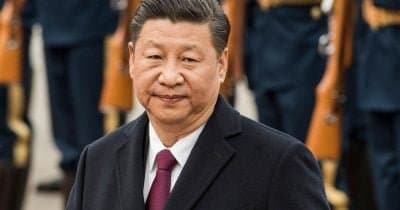
Chinese President Xi Jinping announced a new international initiative to lead global artificial intelligence governance, emphasizing a state-led framework. Speaking at the World Artificial Intelligence Conference in Shanghai on July 17, Xi proposed the creation of the World Artificial Intelligence Cooperation Organization (WAICO), which would include 29 countries, mostly from the Global South, collaborating under Beijing's leadership to establish AI standards.
State-Controlled AI and Exclusion of Decentralized Tech
Xi's speech highlighted a vision for AI governance that notably excluded any mention of blockchain, cryptocurrencies, or decentralized technologies. His call for open-source AI models framed them as state-developed and shared with partner nations on China's terms, diverging sharply from the decentralized ethos commonly associated with open-source in crypto communities.
The WAICO framework aims to extend China's AI capabilities and governance models to developing countries, consolidating its influence over emerging markets and their technological infrastructures. This aligns with China’s long-term AI ambition set in 2017 to achieve global leadership in the field by 2030.
Implications for Global AI and Crypto Markets
The inclusion of 29 countries under China's centralized AI regime may deepen the technological divide between China and Western nations, particularly the United States, which promotes regulatory frameworks accommodating both AI and crypto innovation. As a result, AI-related crypto tokens could see their market opportunities shrink if significant WAICO members adopt Beijing's centralized standards, limiting integration with decentralized systems.
Countries like Nigeria, Vietnam, and India, known for strong grassroots crypto adoption, might face conflicting pressures between their local crypto communities and top-down AI governance policies that exclude decentralized technologies. This tension could impact the adoption and growth of crypto ecosystems in these regions.
Market reaction showed modest fluctuations following Xi's announcement, reflecting cautious investor sentiment toward China’s AI strategy and its implications for decentralized technology assets.