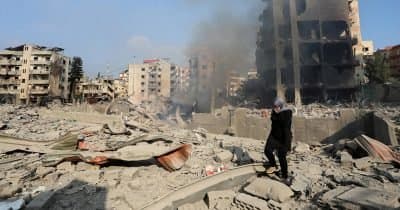
Two Israeli reservists are dead. Four more wounded. And Washington is doing what it does best in the Middle East, which is tell its closest ally to pump the brakes.
On August 5-6, Israeli forces walked into a booby-trapped building in Majdal Zun, southern Lebanon. The explosion killed two IDF reservists on the spot. Israeli Defense Minister Israel Katz didn't hold back afterward, publicly questioning why soldiers were sent into a structure that was rigged to blow. That kind of second-guessing from a sitting defense minister signals real tension over how Israel is running operations across the border.
The numbers behind the operation
Israel has already demolished 24 villages in southern Lebanon as of late July, according to Katz himself. Between 15,000 and 20,000 homes flattened. More than a million people displaced from their homes. The operations are officially described as security work, but the scale speaks for itself.
Washington has now stepped in multiple times since May to block Israel from launching wider strikes against Hezbollah. The reason is simple. The US is in active diplomatic talks with Iran right now, and a major Israeli offensive against an Iran-backed militant group would torch those negotiations. A US-brokered pause in the Israel-Hezbollah fighting was hammered out in June, specifically to keep the regional situation from falling apart during those Iran discussions. The August deaths have strained that already fragile arrangement.
Why markets are watching
Hezbollah is woven into Iranian financial networks, some of which have touched crypto at the edges. When US Treasury enforcement targets Hezbollah-linked entities, crypto addresses and exchanges get caught in the crossfire. Compliance teams at crypto firms track these situations closely because enforcement activity tends to accelerate whenever the conflict heats up.
The displacement of over a million people in southern Lebanon also creates a real-world use case that the crypto industry has pointed to for years. But for now, the immediate question is whether Washington's intervention will actually hold, or if the next incident will push the region past the point where anyone can keep the lid on.
This is information for market participants. Not investment advice or a recommendation to trade.