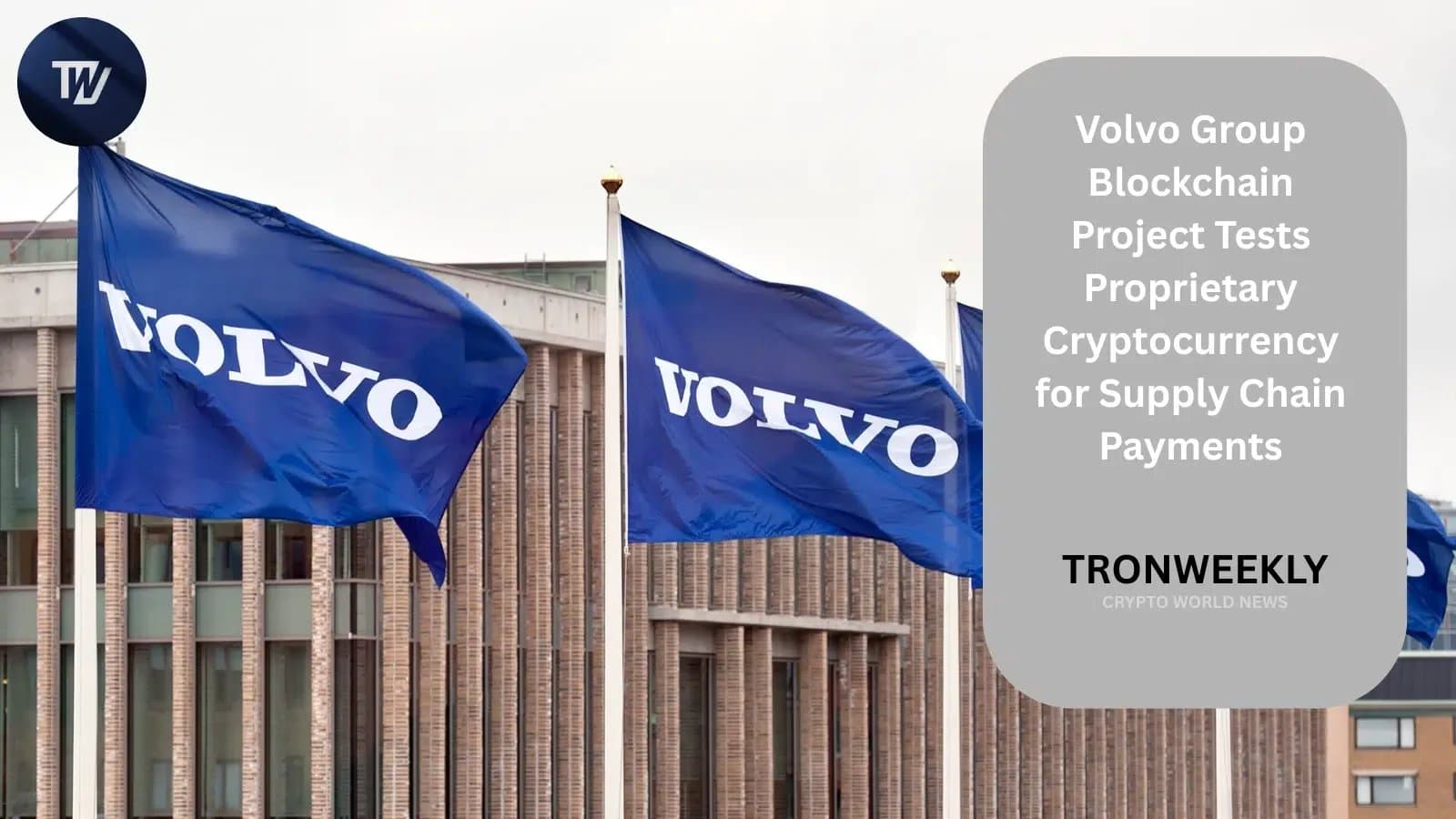
Volvo Group has developed a unique cryptocurrency aimed at streamlining payments between its suppliers and transport providers in Belgium. Unveiled on July 15 during an interview with the Cardano Foundation, this proprietary token marks a significant shift for the automaker from previous blockchain efforts focused on tracking materials to actual payment facilitation.
Ivan Branco, who manages logistics and analytics at Volvo in Belgium, explained the project's intent to simplify complex multi-party transactions that often plague supply chains. Unlike traditional cryptocurrencies, Volvo's token operates within a closed ecosystem specifically designed for its own logistics network.
Evolution from Tracking to Transactions
Volvo's venture into cryptocurrency is not entirely new. The company has been experimenting with blockchain technology since at least 2019, primarily in relation to ethical sourcing of materials like cobalt. Previous initiatives sought to trace the origins of these materials, but this latest development aims to tackle the more challenging aspect of making payments between multiple parties more efficient.
This transition represents a notable evolution in Volvo's use of blockchain, as the company shifts focus from merely asking where materials originate to finding ways to simplify payment processes. However, the project is still in the proof-of-concept phase, and no specific timeline for broader implementation has been announced.
Limitations and Market Implications
Volvo's choice to create a proprietary token instead of utilizing an existing cryptocurrency is significant. The company likely prioritizes control, as it does not require decentralization or permissionless access. Nonetheless, this limitation means the token will only function within Volvo's logistics operations in Belgium and is not intended to disrupt the broader cryptocurrency market.
The absence of a formal name for the token, a specific blockchain platform, or transaction volume targets further shows its limited scope. While the association with the Cardano Foundation suggests some connection to that blockchain, no detailed information has been made public about the infrastructure backing the project.
Future Considerations
As with many enterprise blockchain initiatives, the potential for failure exists. Historically, proof-of-concept projects often do not progress beyond initial testing phases. Thus, there is no guarantee that Volvo's cryptocurrency will evolve into a widely adopted payment system.
This article is for informational purposes only and does not constitute financial advice.