Vitalik Buterin Names Obfuscation as Cryptography's Ultimate Challenge, Warns of Astronomical Practical Barriers
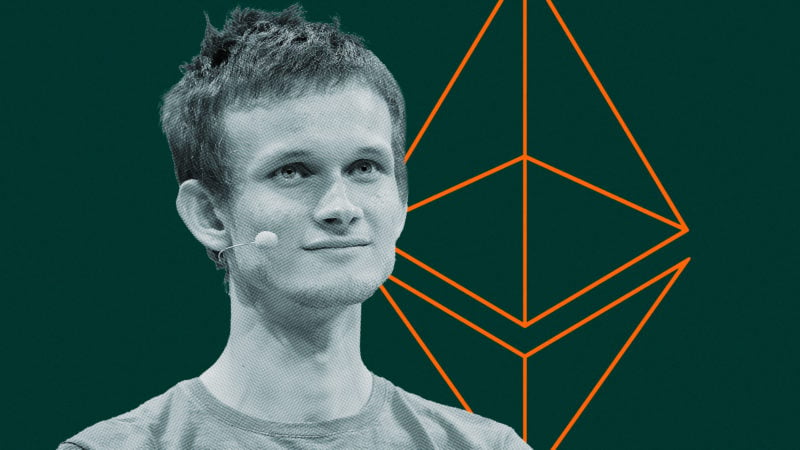
Ethereum co-founder Vitalik Buterin has once again sparked conversation in the cryptographic research community by describing obfuscation as the so-called 'final boss' of modern cryptography — a problem so complex and computationally demanding that solving it in any practical sense remains a distant dream.
Buterin's remarks highlight a fundamental tension within advanced cryptographic research: while indistinguishability obfuscation, commonly referred to as iO, represents one of the most powerful theoretical tools in the field, its real-world applicability is essentially nonexistent at this stage. The Ethereum figurehead pointed out that current iO schemes come with runtimes so enormous he described them as 'literally galactic' — a colorful way of saying that running such computations would require resources far beyond anything available on Earth, or perhaps anywhere in the known universe.
Indistinguishability obfuscation, at its core, is a cryptographic technique that allows a program to be transformed into an obfuscated version that reveals nothing about its internal logic, while still functioning identically to the original. If fully realized and made efficient, iO could unlock a new era of cryptographic applications — from enhanced privacy tools to novel smart contract designs — potentially revolutionizing the way blockchain systems and digital security infrastructures operate.
However, the gap between theoretical promise and engineering reality remains staggering. Researchers have known for years that iO constructions, while mathematically fascinating, carry computational overhead that makes them effectively unusable with today's hardware. Buterin's framing of the problem as a 'final boss' underscores just how far the cryptographic community still has to go before such techniques could be deployed in any meaningful context.
This commentary from Buterin comes amid broader discussions within the blockchain and cryptography space about the future of privacy-preserving technologies. Zero-knowledge proofs and other cryptographic primitives have seen significant practical advancement in recent years, raising hopes that even the most demanding techniques might eventually be optimized. Yet obfuscation, by most expert accounts, sits in a league of its own when it comes to computational impracticality.
For the Ethereum ecosystem and the wider Web3 community, Buterin's candid assessment serves as both a sobering reality check and a long-term research beacon. While iO may not be within reach today, identifying it as the ultimate frontier motivates continued investment in cryptographic research that could one day bridge the gap between theoretical elegance and practical deployment.
Read Also
Tether CEO Paulo Ardoino Confirms Gold-Backed Loan Partnership With Ledn
June 29, 2026
Strategy Boosts STRC Yield to 12%, Greenlights $2B in Share Repurchases, and Opens Door to Bitcoin Sales
June 29, 2026

Bitcoin Struggles to Hold Ground as US Spot ETF Weekly Outflows Reach $1.8B and Rate Hike Expectations Rise
June 29, 2026