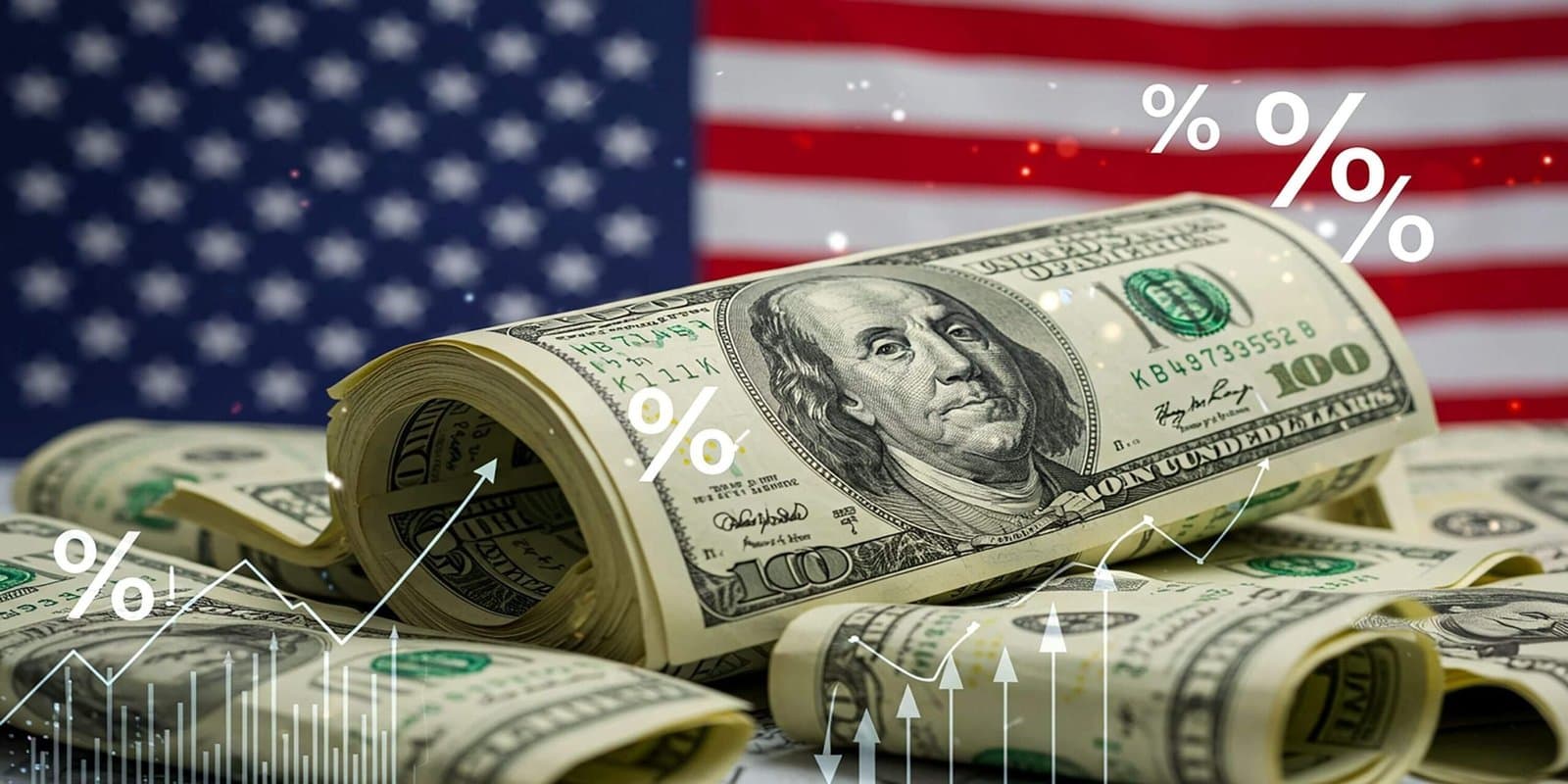
The U.S. dollar is nearing its highest point of the year, driven by investor speculation on potential Federal Reserve interest rate hikes and escalating military tensions between the United States and Iran. As the dollar strengthens, market sentiment indicates a high likelihood of further rate increases before the year's end, with money markets pricing in 37 to 40 basis points of tightening.
The Bloomberg Dollar Spot Index has remained close to its 2026 highs, with speculative traders holding their largest bullish positions on the dollar since 2015, exceeding $40 billion in net long positions. Concurrently, the 10-year real Treasury yield recently surpassed 2.3%, marking the highest level in over a year. This rise signals that investors expect the Fed to maintain its hawkish stance, particularly against currencies from low-rate economies.
Higher real yields enhance the attractiveness of dollar-denominated assets for global investors, while simultaneously exerting downward pressure on bond prices. Asset managers are adjusting their strategies by increasing dollar holdings and reducing exposure to long-term U.S. Treasuries. A notable trend is the funding of bullish dollar bets through short positions on weaker currencies, such as the euro and the Japanese yen.
Despite the prevailing bullish sentiment, some analysts express caution. They argue that softening labor market conditions could indicate that real yields might be nearing their peak. These analysts contend that the stronger dollar and rising yields may already be tightening financial conditions enough to diminish the necessity for further Fed actions.
The conflict between the U.S. and Iran has further complicated the market landscape. Recently, U.S. and Iranian forces exchanged missile and drone strikes, with Iran reportedly closing the Strait of Hormuz, a crucial passage for global oil shipments. In retaliation, the U.S. military targeted Iranian air defense systems.
As a consequence of these developments, oil prices have surged by 2%, with Brent crude climbing to $77.60 per barrel. Rising oil prices contribute to inflationary pressures, reinforcing the argument for another Fed rate hike. In currency markets, the British pound has declined 0.1% to $1.339, reflecting a 0.6% loss against the dollar this year. The euro has fallen by 2.7% against the dollar in the same timeframe.
This material is for informational purposes only and does not constitute financial advice.