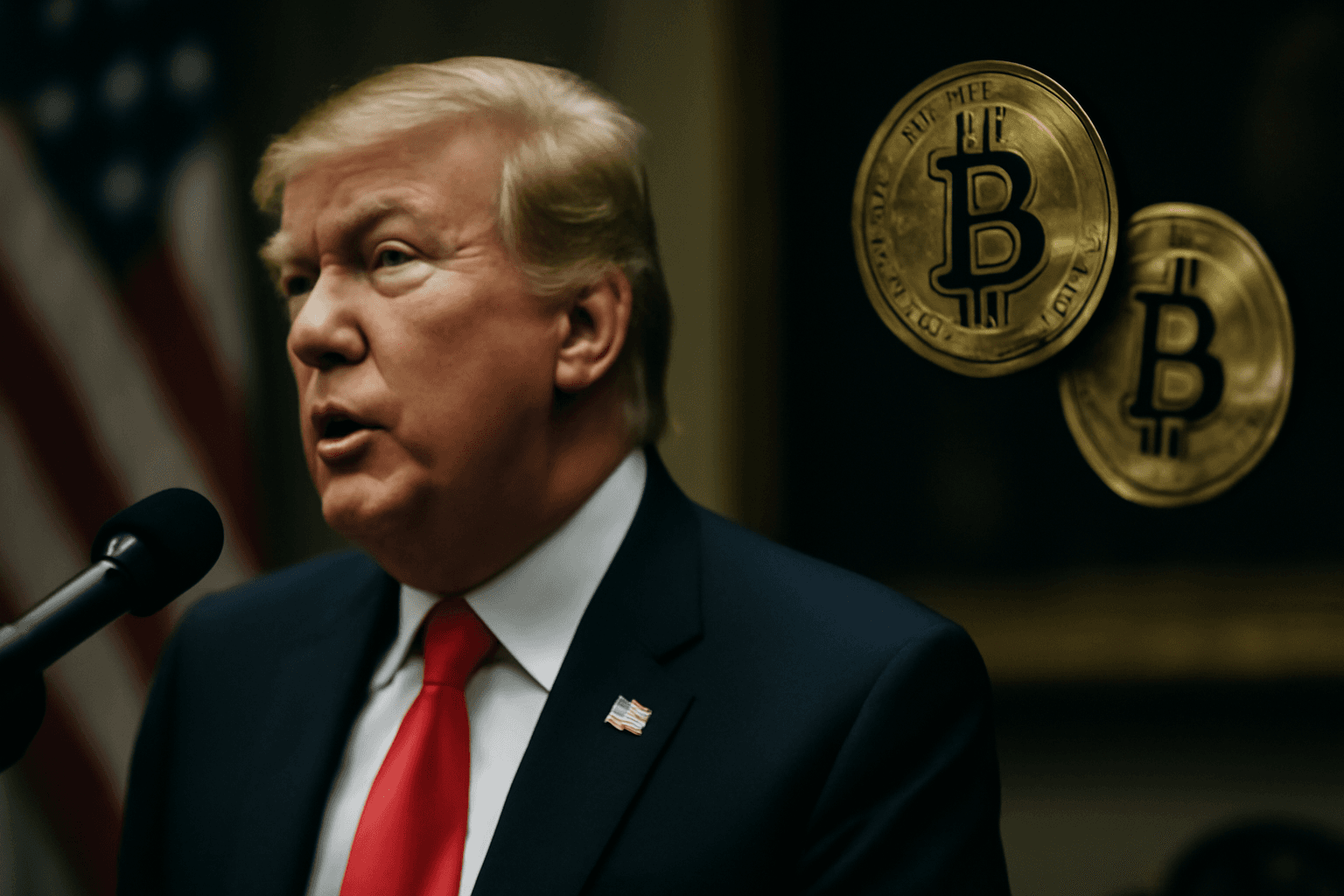
Recent statements by President Donald Trump regarding the Strait of Hormuz have triggered significant volatility in cryptocurrency markets. His assertion that the U.S.-Iran memorandum of understanding is essentially 'over' and the call for nations to provide compensation for American protection of this critical shipping corridor have created a wave of uncertainty among traders.
Trump's announcement on Truth Social indicated that a renewed blockade of the Strait would commence 'immediately.' This declaration not only raised geopolitical tensions but also impacted the broader financial landscape, particularly in risk-related assets, including major cryptocurrencies.
Bitcoin experienced a drop below the $62,000 mark as traders moved to mitigate risk, leading to a decline of approximately $20 billion in the total crypto market capitalization. The spike in oil prices, driven by fears surrounding this essential energy passage, compounded the market's unease. In a rapid response, over $93 million in Bitcoin positions were liquidated within a 24-hour window, heavily affecting long-term positions.
Aside from the Hormuz comments, Trump's reference to the CLARITY Act, which he urged Congress to pass in memory of the late Senator Lindsey Graham, introduced another layer of complexity. While the geopolitical situation dominated immediate reactions, this mention emphasized the ongoing evolution of U.S. crypto policy amid the turbulence. The CLARITY Act aims to clarify the regulatory framework surrounding digital assets, potentially shaping future market structures.
The current situation signals a crucial period for traders as Bitcoin approaches a critical liquidation zone between $61.6K and $63.7K. This price range is pivotal for understanding market sentiment in the coming days. Other cryptocurrencies like XRP, Ethereum, and Solana also experienced declines, reflecting widespread market volatility.
This material is informational and should not be considered financial advice.