Thinking Machines Lab has announced the launch of Inkling, a groundbreaking AI model featuring 975 billion parameters, marking a significant advancement in open-source artificial intelligence. Released on July 15, 2026, Inkling is designed for fine-tuning and supports a remarkable context window of 1 million tokens.
The model, a product of former OpenAI CTO Mira Murati's startup, stands out by utilizing a Mixture-of-Experts (MoE) architecture. This design allows only 41 billion parameters to be active at once, optimizing computational resources while maintaining access to extensive knowledge. The training dataset for Inkling consists of an impressive 45 trillion tokens, vastly surpassing the 300 billion tokens used for training GPT-3.
Inkling introduces a unique feature called controllable “thinking effort,” enabling users to adjust the model's reasoning intensity based on task complexity. This flexibility is particularly beneficial in scenarios where budget constraints are a factor, as it allows for a balance between speed and computational cost. For simpler tasks, users can opt for a low-effort response, while complex analyses can be approached with increased reasoning capabilities.
In addition to the primary model, the company has also launched Inkling-Small, a variant with 12 billion active parameters, tailored for teams lacking access to high-performance GPU clusters. Both models are available for free download on Hugging Face, including an optimized version for NVIDIA’s Blackwell hardware.
Fine-Tuning and Accessibility
A key component of Inkling’s value proposition is the accompanying fine-tuning platform, Tinker. This tool empowers developers to customize the Inkling model for specific applications without requiring extensive technical expertise. The open-weights philosophy encourages developers to download and run the model on their own infrastructure, offering greater adaptability compared to proprietary solutions.
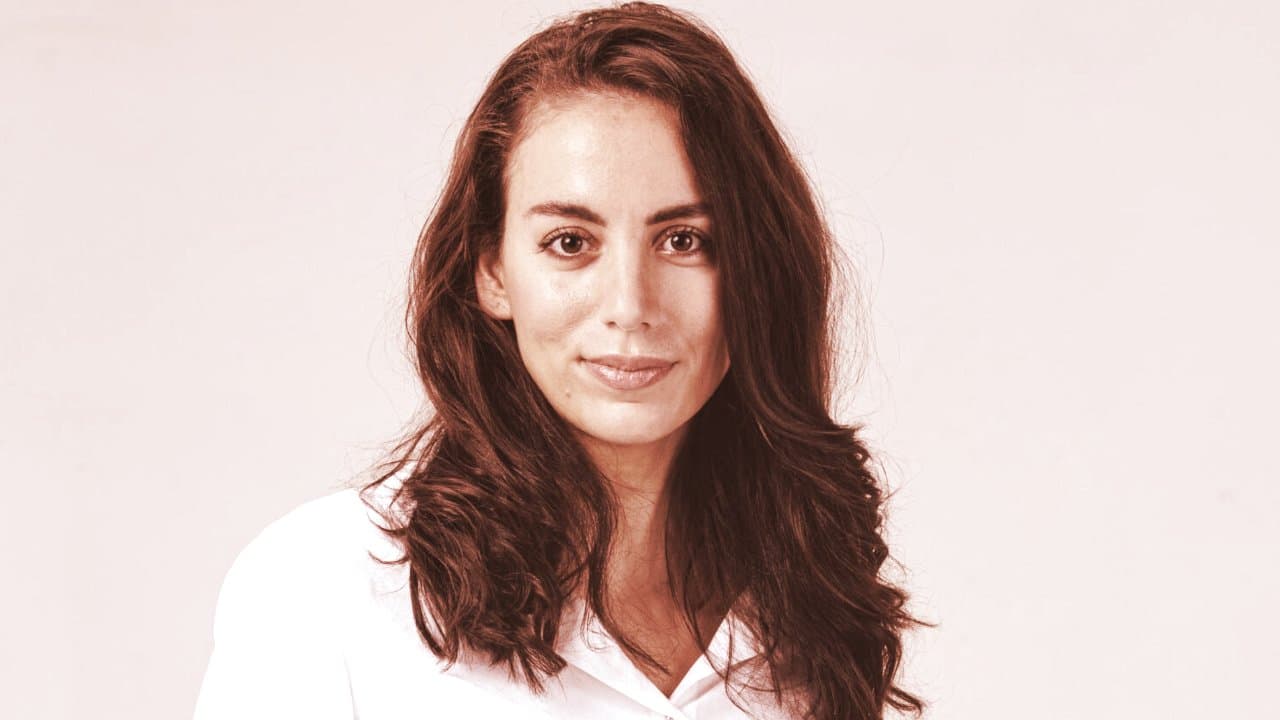
Mira Murati established Thinking Machines Lab in February 2025, approximately five months after her exit from OpenAI. The startup successfully raised a $2 billion seed round, achieving a valuation between $10 billion and $12 billion, with notable investors including Andreessen Horowitz and Nvidia. Murati’s experience as a former CTO at OpenAI reinforces her credibility in spearheading this innovative venture.
This article is for informational purposes only and should not be considered financial advice.