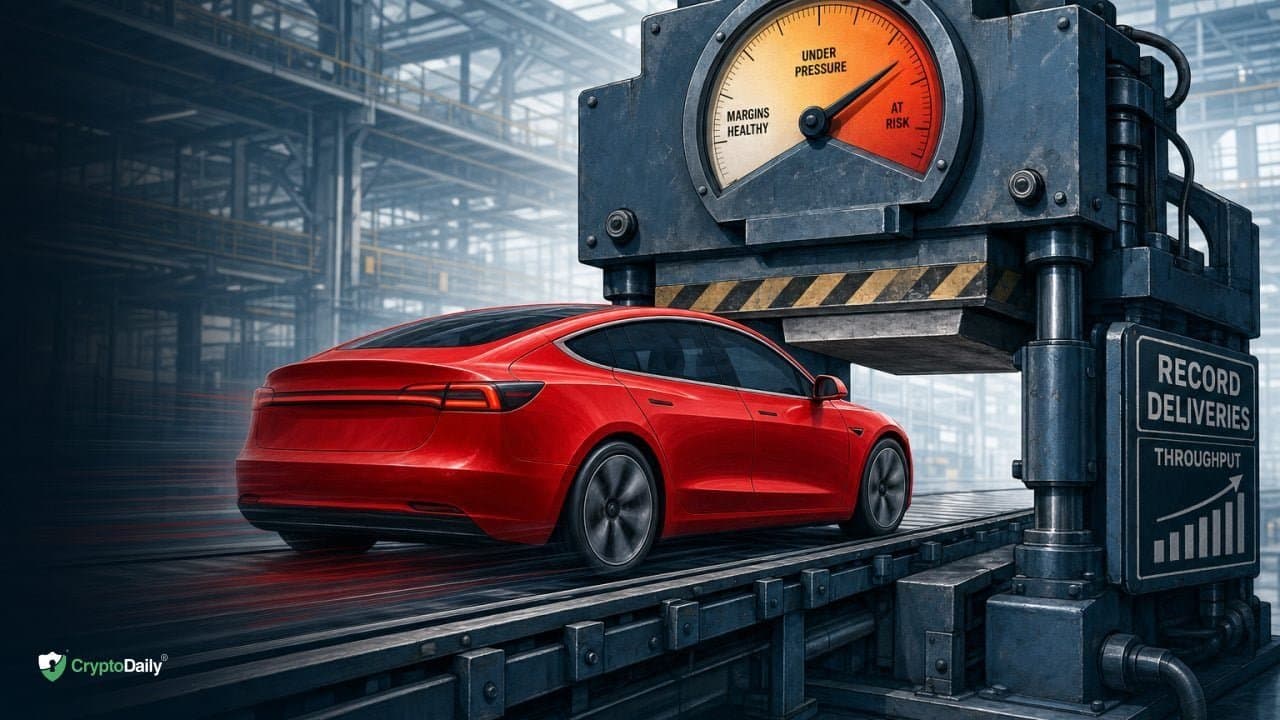
Tesla reported a new quarterly delivery high of 480,126 vehicles for Q2 2026. This figure exceeded production by 28,368 units, indicating a reduction in inventory.
The company’s upcoming earnings report, scheduled for July 22 after market close with a webcast at 4:30 p.m. Central, will reveal if this delivery milestone leads to improved profit margins.
Deliveries surpassed the consensus estimate of 406,024 by approximately 74,102 vehicles. Despite this, Tesla shares dropped about 7% on July 2, reflecting concerns over margins and valuation rather than volume.
Margins depend on the balance between revenue collected per vehicle and the costs of production, distribution, and service. Price reductions that outpace cost savings can compress margins, while better vehicle mix, lower costs, or software and energy business growth can expand them.
Energy storage deployments reached 13.5 GWh in Q2, marking another strong quarter for Tesla’s energy segment. This business often provides steadier unit economics and can help stabilize overall gross margins when vehicle pricing is competitive.
The software segment, including Full Self-Driving features, contributes revenue with minimal extra cost, although its financial impact often comes through deferred revenue recognition rather than immediate sales.
The inventory drawdown could boost reported margins temporarily by absorbing fixed costs over more units, but margin gains may diminish if deliveries focused on lower trim levels or costlier shipping regions.
Investors will closely watch how Tesla manages the mix of autos, energy, and software revenues to translate record deliveries into stronger profitability.
This article is for informational purposes and does not constitute financial advice.