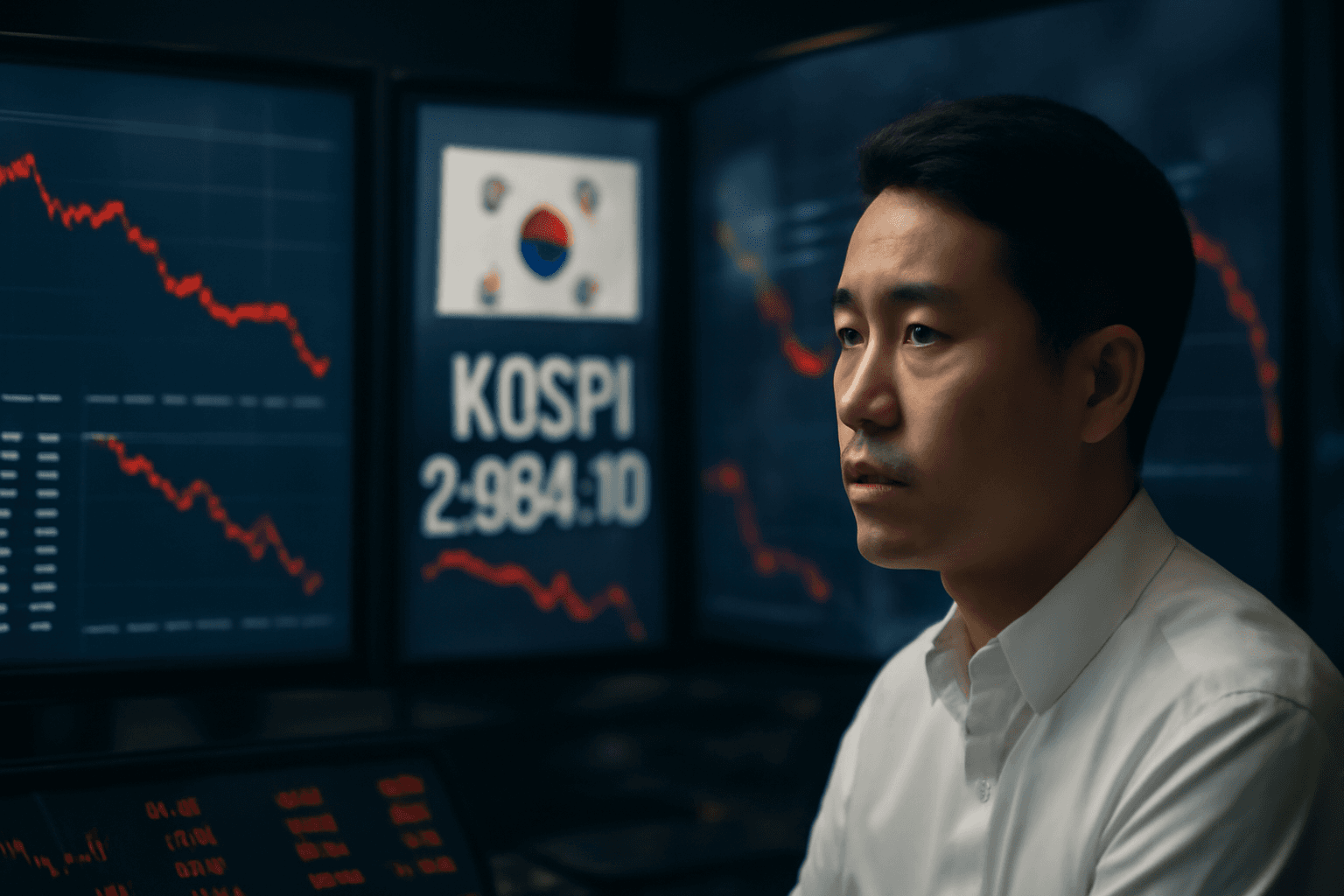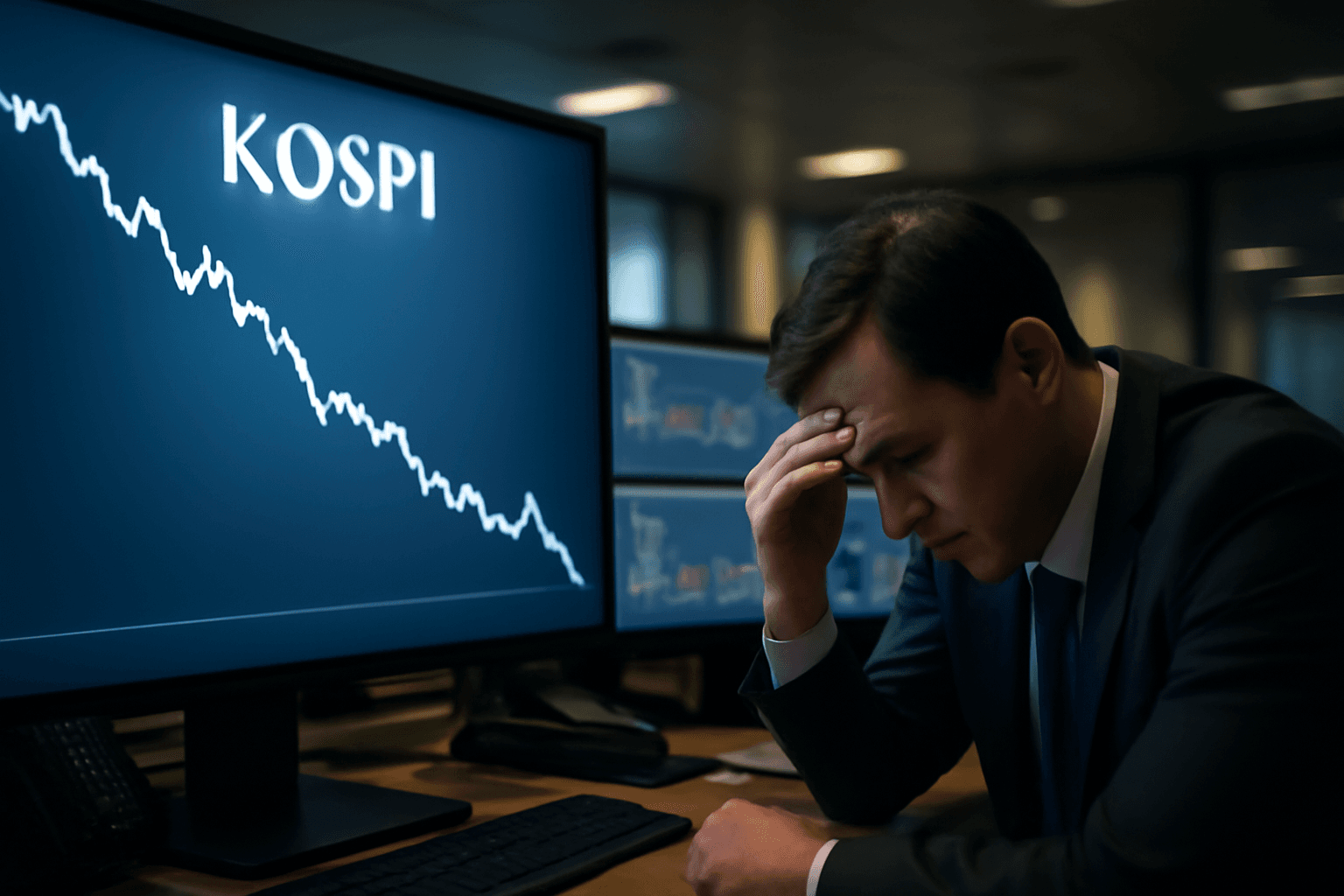
In a striking downturn, South Korea's KOSPI index has plummeted by 27% within the last 25 days, which follows a peak gain of 122% earlier this year. The recent decline includes a staggering drop exceeding 8%, prompting a market-wide circuit breaker that halted trading for 20 minutes. Major contributors to this sell-off include industry giants Samsung and SK Hynix, which hold substantial influence over the market due to their significant share holdings.
Context of the Market Crash
This notable decrease in the KOSPI index comes in the wake of escalating geopolitical tensions, particularly stemming from the ongoing conflict involving the U.S., Israel, and Iran. This volatility has impacted investor confidence, leading to rapid sell-offs in key sectors. The KOSPI had previously experienced a remarkable climb, but has since faced pressure from both international events and domestic economic uncertainties.
Details of the Trading Halts
The recent trading halt marked the first occurrence of a circuit breaker being triggered in over four months. The swift decline during this period has raised concerns among investors about the stability of the South Korean market. The tech sector, dominated by Samsung and SK Hynix, has been particularly hard hit as these companies are major players in the global semiconductor market and their performance significantly influences KOSPI.
Implications for Investors
The sharp downturn in the KOSPI index signals a need for investors to closely monitor both global market conditions and internal economic indicators. As uncertainty looms, strategies from other sectors may become relevant for asset management and diversification. The situation may also provide opportunities for re-evaluation of investment positions, particularly for those heavily invested in the tech industry.
This material is for informational purposes only and is not financial advice.