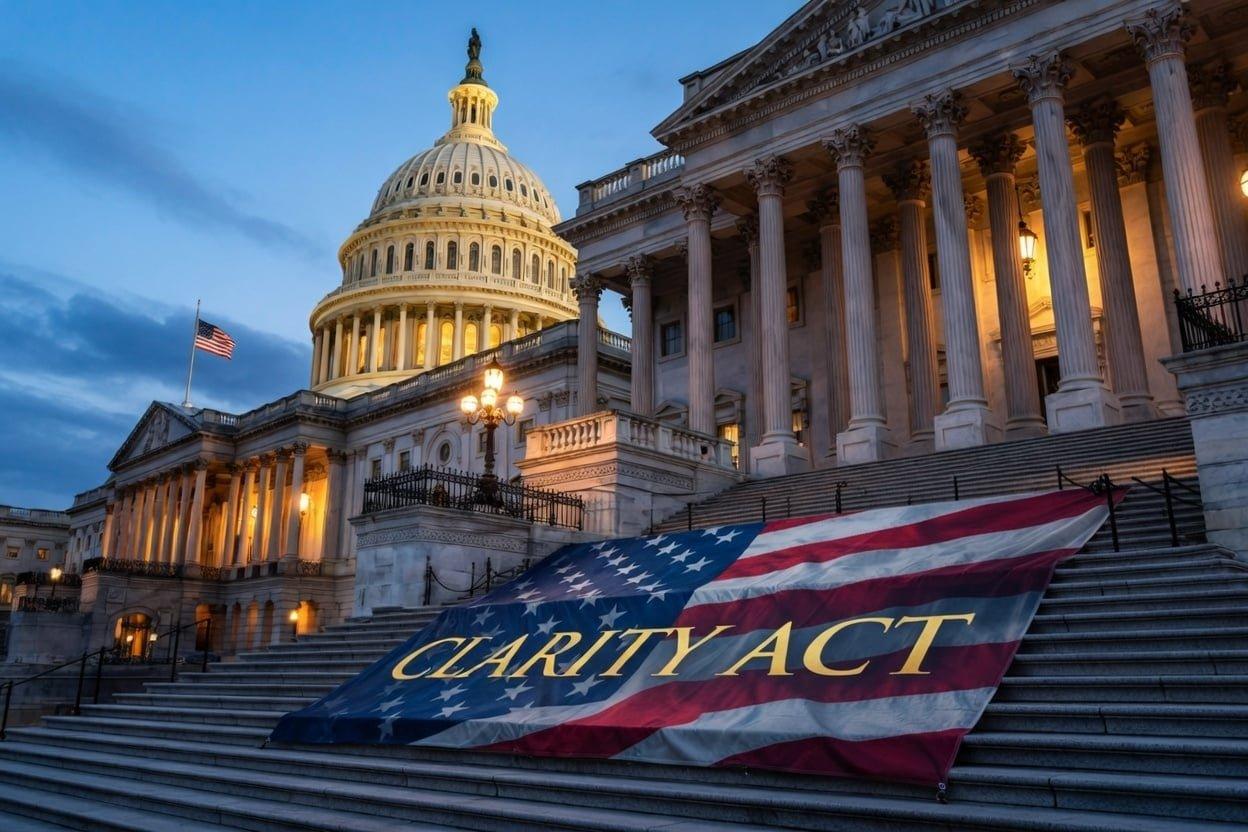
Senator Ron Wyden has written to Senate leaders urging them to maintain legal protections for non-custodial blockchain developers as deliberations continue over the CLARITY Act, an essential piece of legislation for the crypto market. In his letter addressed to Senate Majority Leader John Thune and Senate Democratic Leader Charles Schumer, Wyden emphasized the importance of preserving a specific section known as the Blockchain Regulatory Certainty Act (BRCA).
Importance of the BRCA in Current Legislation
The BRCA is intended to ensure that developers who do not manage user funds are not classified as money transmitters simply for releasing software. Wyden points out that this provision not only codifies existing federal policy but also retains enforcement authorities for the Department of Justice (DOJ) and the Financial Crimes Enforcement Network (FinCEN) to target illicit actors.
- Wyden's letter insists on the inclusion of BRCA in the CLARITY Act.
- Developers involved in illicit activities would still be subject to prosecution.
- The provision is supported by various crypto industry stakeholders who seek clearer legal guidelines for open-source developers.
Concerns from Law Enforcement and Industry Stakeholders
Despite backing from numerous industry groups, the BRCA has faced criticism from some law enforcement agencies. Critics argue that broad protections for developers could hinder investigations into crimes like human trafficking and illegal financial activities. However, Wyden disputes this perspective, stressing that the provision allows DOJ and FinCEN to maintain their capacity to pursue criminal actors while shielding those whose activities are lawful.
Acting Attorney General Todd Blanche has previously stated that enforcement efforts should focus on individuals directly involved in illegal activities, rather than on developers who do not have control over funds or intent to commit crimes.
Future Developments in Crypto Regulation
The discussions regarding developer protections are increasingly viewed as a crucial issue in the ongoing talks surrounding the CLARITY Act. As the legislation faces considerable Senate pressure, Senator Cynthia Lummis has indicated that the current term may represent one of the last opportunities to enact significant crypto legislation before 2030.
With the future of blockchain developer protections hanging in the balance, stakeholders will need to closely monitor the outcome of these legislative efforts. A coherent and supportive regulatory environment may prove vital for the continuity and innovation in the cryptocurrency space.
This material is for informational purposes only and does not constitute financial advice.