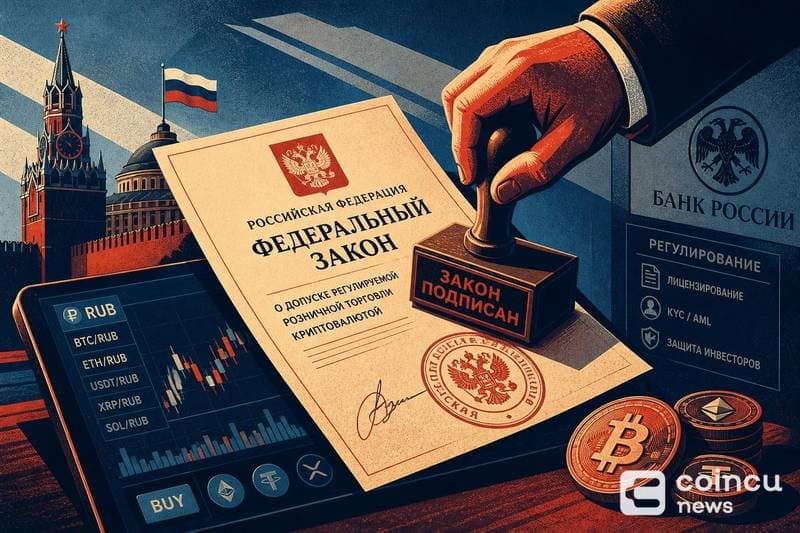
Putin signed off on Russia's first full cryptocurrency trading law, clearing the way for ordinary citizens to legally buy and sell digital assets. The framework went into the official legal gazette on August 4, 2026, switching crypto from a gray zone into regulated territory.
Before this, Russian retail traders operated without clear legal standing. They could access exchanges, but the government had never spelled out whether the activity was lawful or where enforcement lines fell. Banks wouldn't touch crypto accounts. Platforms had to guess at compliance. Now that changes. The law establishes actual rules for how digital assets get held, traded, and taxed, giving both traders and operators a playbook instead of legal roulette.
The shift matters because permission under a rulebook feels different than legal ambiguity. Retail participants gain confidence knowing they're not breaking the law. Regulated platforms can operate openly instead of skirting the edges. Banks and payment providers get clarity on whether they can serve the sector. For traders in countries where crypto sits in limbo, this kind of framework can unlock real participation.
Russia joins a growing list of nations tightening crypto regulation rather than banning it outright. The approach recognizes that digital assets aren't vanishing, so governments are choosing supervision over prohibition. That said, the law permits retail trading within defined conditions, not a blanket green light for every crypto activity. Margin trading, derivatives, and other high-risk products may still face restrictions.
This article is informational only and does not constitute financial advice. Always conduct your own research before trading or investing in cryptocurrencies.