Ripple's Monica Long Outlines XRP Ledger Strategy Amid Growing Institutional Payments Competition
Ripple President Monica Long has outlined the company's strategy for XRP, XRPL, and RLUSD amid growing institutional interest in blockchain payments. Ripple also joined the Open USD stablecoin initiative as a founding partner alongside Visa, Mastercard, and Coinbase.
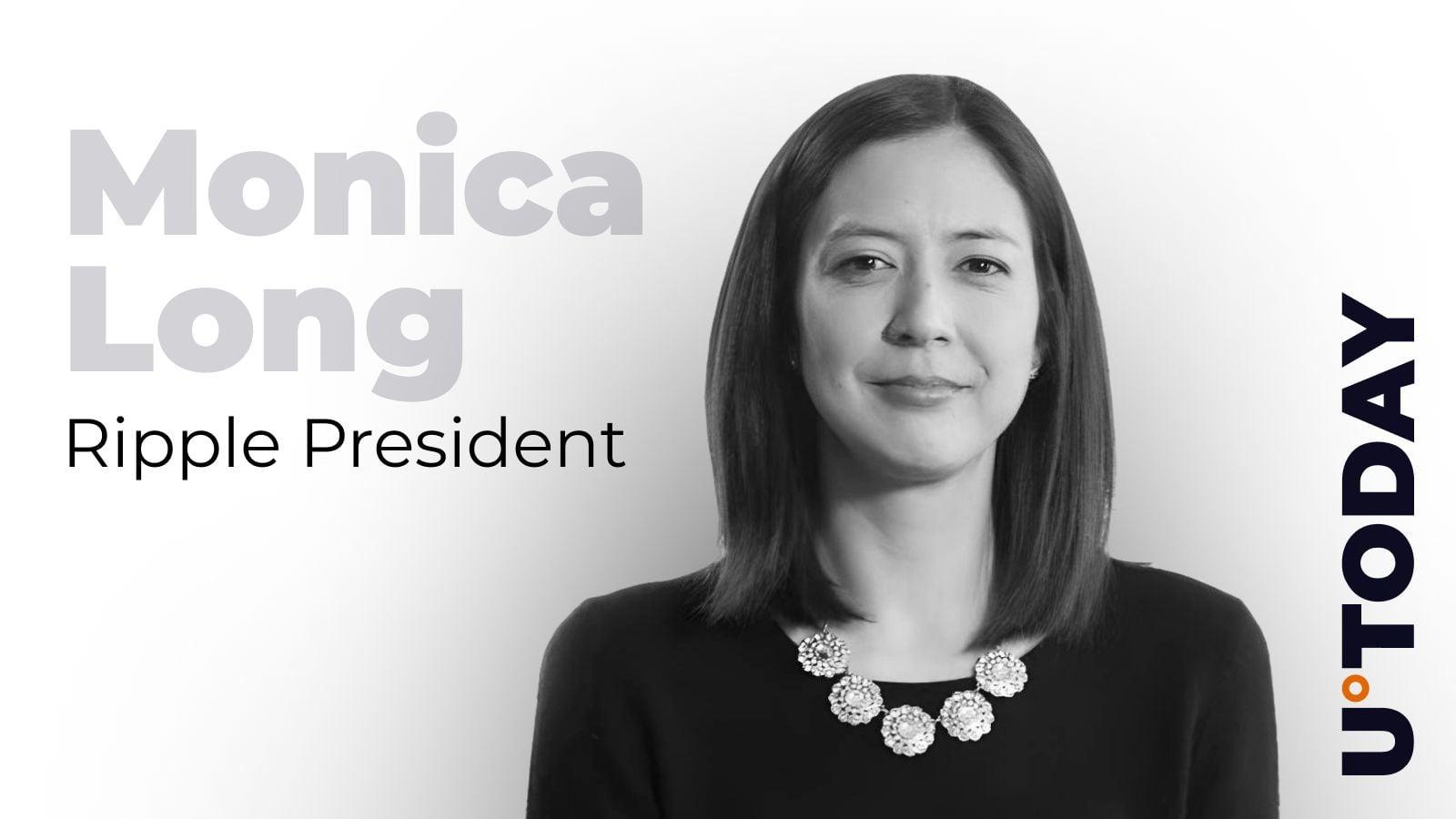
Ripple President Monica Long has laid out a forward-looking strategy for the company's role in the evolving digital payments landscape, placing the XRP Ledger, XRP, and RLUSD at the center of its institutional ambitions.
In a statement shared on June 30, 2026, Long emphasized that the payments industry is heading toward a multichain future. "The future of payments will be multichain, interoperable, and built on institutional-grade blockchain infrastructure," she wrote, signaling Ripple's intent to position itself as foundational infrastructure for the next wave of regulated financial services.
Long's remarks came in direct response to a major industry development: Ripple joined the Open USD stablecoin initiative as a day-one integration partner. Open USD is a dollar-pegged stablecoin launched by a consortium of more than 140 financial and technology companies. The list of founding partners reads like a who's who of both Wall Street and Silicon Valley, including Visa, Mastercard, Stripe, Coinbase, BlackRock, BNY, Standard Chartered, Google, and Shopify. The project went live on Tuesday, marking a significant step toward mainstream institutional adoption of stablecoin infrastructure.
Ripple's participation underscores its broader commitment to open, multichain frameworks that can support institutional adoption across the digital asset ecosystem — rather than betting exclusively on a single chain or protocol.
According to Long, Ripple's core objective remains straightforward: to establish the XRP Ledger as the premier blockchain for institutional payments. She also highlighted efforts to make the XRP Ledger a natural home for the next generation of regulated stablecoins, while simultaneously driving global utility and adoption of both RLUSD and XRP.
These goals reflect a deliberate strategy to serve financial institutions that are increasingly exploring blockchain-based settlement and regulated stablecoin solutions. Ripple appears to be positioning RLUSD not merely as a product, but as a key piece of infrastructure within a broader interoperable financial ecosystem.
Adding further context to the company's institutional scale, Mike Higgins, CEO of Ripple Prime, recently disclosed that the platform processes over $3 trillion annually on behalf of more than 300 institutional clients. Higgins also shared plans to bring Ripple Prime's prime brokerage and clearing capabilities directly onto the XRP Ledger — a move that could significantly deepen the ledger's role in institutional finance.
The announcements come at a time of heightened activity in the regulated stablecoin space, with major financial players racing to establish dominant infrastructure. Ripple's integrated approach — combining the XRP Ledger's settlement capabilities with RLUSD's dollar-pegged stability and XRP's liquidity — appears designed to capture a meaningful share of that market.
With institutional demand for blockchain-based financial services continuing to accelerate, Ripple's roadmap suggests the company is betting heavily on regulatory compliance, interoperability, and deep institutional partnerships as the primary drivers of long-term growth.