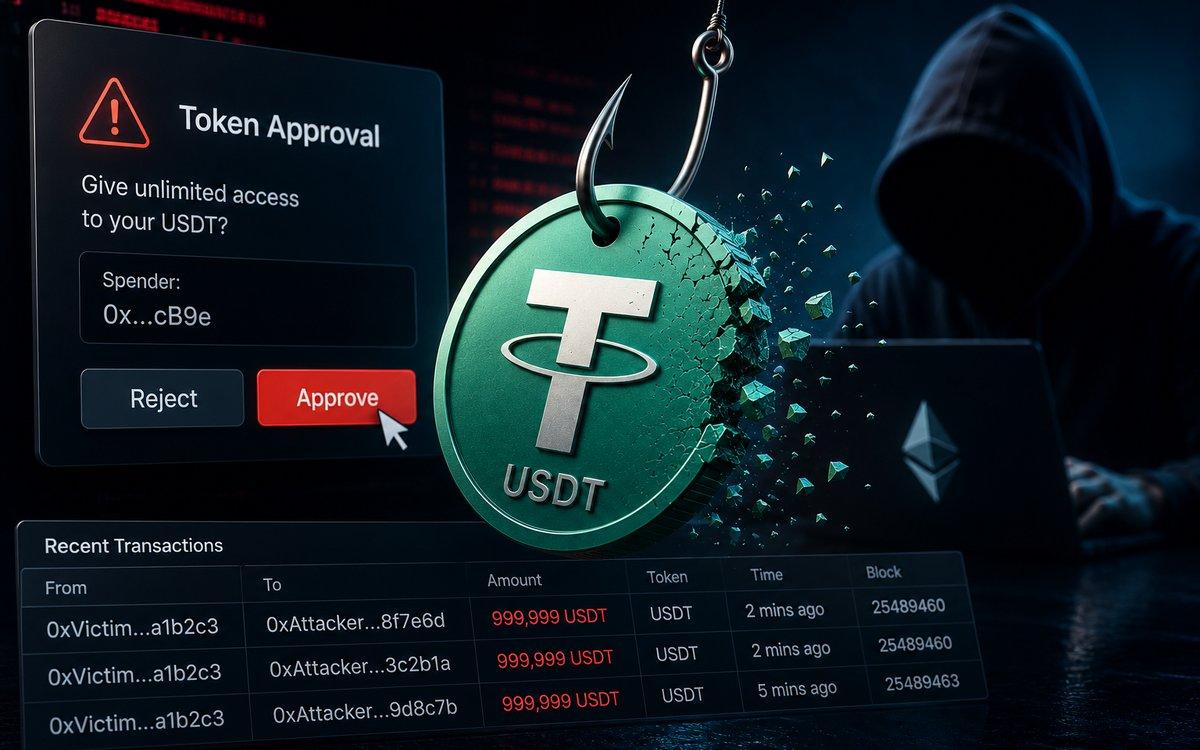
A cryptocurrency user lost nearly $1 million in USDT after unknowingly approving a fraudulent token request on the Ethereum network. The attack was executed swiftly, with the stolen funds being divided into three transactions shortly after the approval.
Understanding the Implications of This Incident
The significant loss highlights the risks associated with token approvals, which can grant attackers access to users' funds without the need for private keys. Instead of compromising key security, the attacker exploited the victim's trust by encouraging a signature that allowed excessive token access.
- Victim lost $999,999 in USDT.
- Funds were transferred in three transactions across Ethereum blocks 25489460 and 25489463.
- The approval granted unlimited access to the token.
Why Token Approval Phishing Is a Growing Concern
Phishing techniques in the crypto space are evolving, with attackers increasingly relying on methods that do not require direct access to private keys. In this case, the victim's smart contract approval remained active until manually revoked, potentially for months or even years. Users should be aware that their approvals can be exploited and need to regularly audit active token allowances.
Similar scams have previously resulted in significant losses, including a recent incident where a fake Uniswap site deceived users into approving malicious contracts, leading to approximately $400,000 being stolen. Frequent alerts from wallet providers have been insufficient to prevent such occurrences, as they often do not catch these specific phishing tactics.
Next Steps for Ethereum Wallet Holders
To protect oneself from such dangers, users are advised to utilize token approval tools, like Etherscan's Token Approval Checker, to manage and revoke unnecessary approvals. Ongoing vigilance is required, as the approval habit can leave wallets vulnerable to future phishing attempts. Checking and revoking unneeded token allowances should be a part of every user's routine diligence in managing their cryptocurrency assets.
Disclaimer: This material is for informational purposes only and should not be considered financial advice.