Web3 projects are adapting traditional financial models by integrating wallets, smart contracts, and public ledgers.
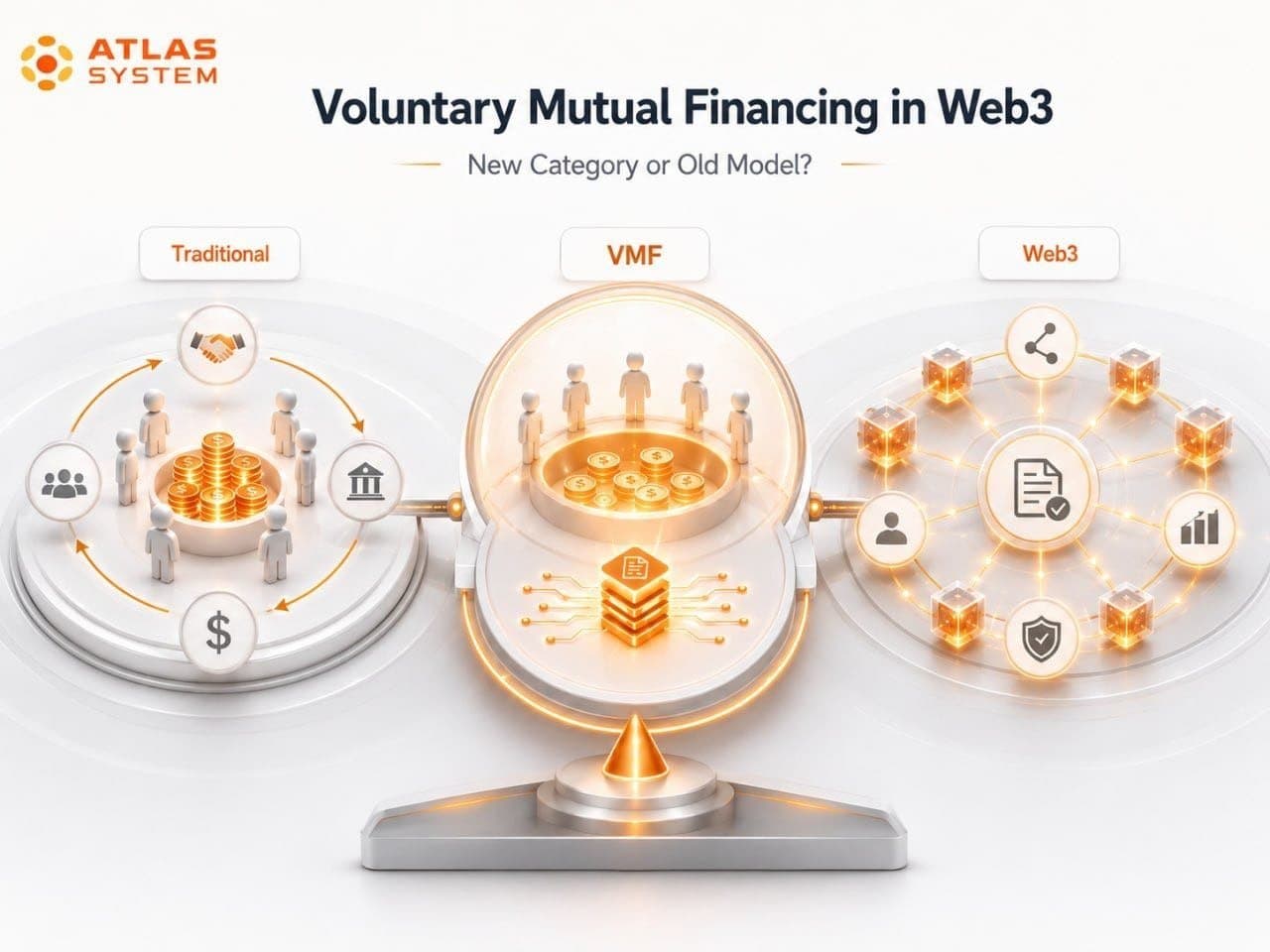
Voluntary mutual financing now appears as a candidate for this transformation. Participants pool funds into a shared system governed by predefined rules, with no external investment or trading.
Distributions rely solely on contributions within the system and are executed via smart contracts, which prompts debate on whether this represents a new Web3 category or just an older model enhanced with transparent technology.
Smart contracts notably improve transparency over conventional online earning platforms, which often depend on private accounting and user trust without independent verification.
For example, Atlas System operates on BNB Smart Chain using USDT BEP-20 tokens and multiple smart contracts that manage participation, claim processing, liquidity routing, and partner payouts.
Users can verify transactions via BscScan to confirm wallet interactions with contracts and actual token transfers, a significant step beyond closed bookkeeping.
Atlas System has also published its contract source code, whitepaper, manifesto, and external security assessments, allowing users to cross-check platform claims against the deployed code.
However, the fundamental economic mechanism remains unclear. Atlas System does not reveal any external revenue stream that would fund the net payouts users receive.
According to its documentation, claims depend primarily on contributions from participants without a disclosed profit source, which raises questions about sustainability.
This development follows broader Web3 trends where digital ownership moves from centralized platforms to tokenized assets, similar to how decentralized finance and DAO governance have evolved.
Material is for informational purposes only and does not constitute financial advice.