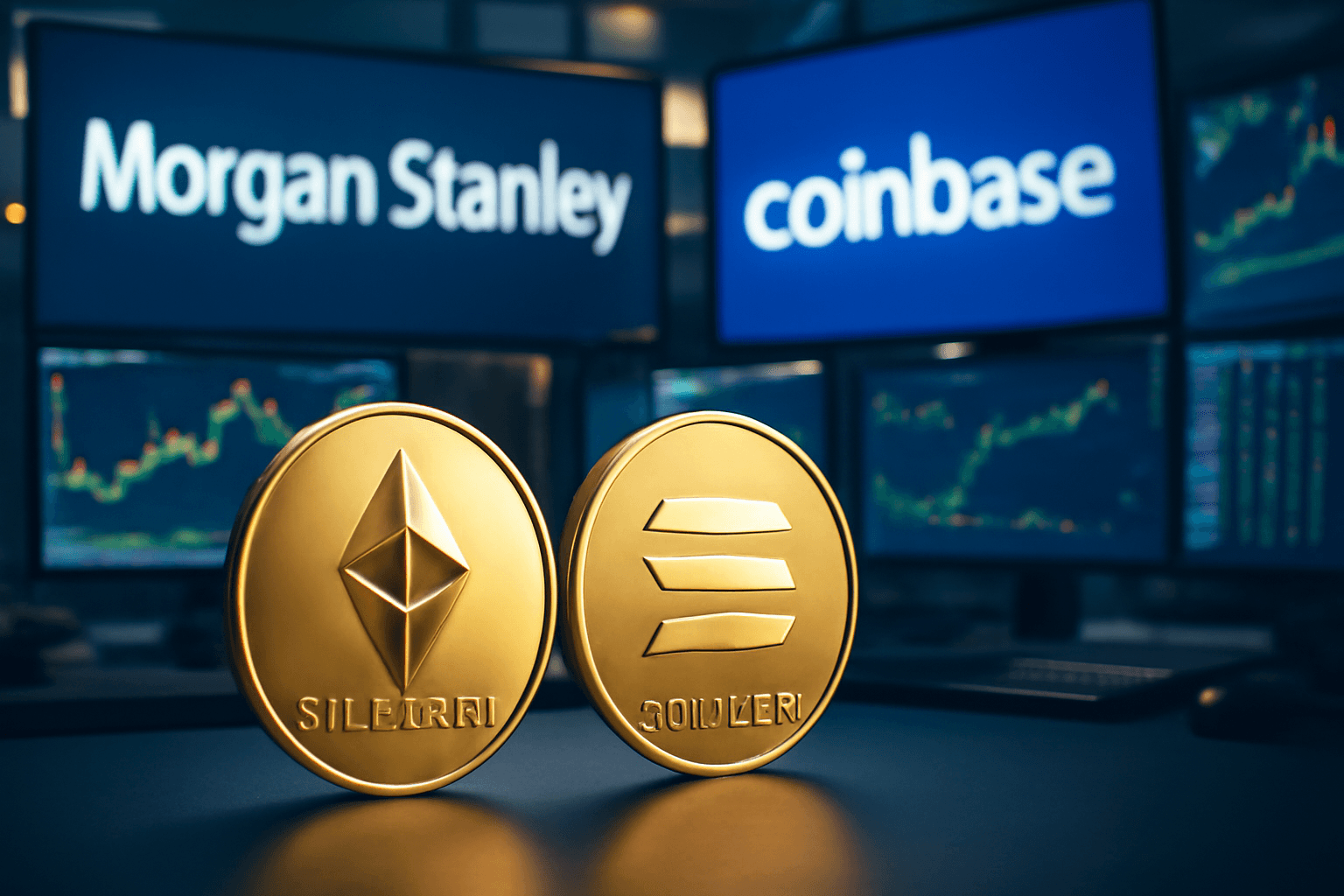
Morgan Stanley has made significant updates to its spot exchange-traded fund (ETF) applications for Ethereum and Solana, announcing Coinbase as the custodian and staking facilitator. This latest amendment is the third since initial filings in January.
On July 14, the banking institution revised its S-1 registration statements for the proposed funds, stipulating that Coinbase will oversee custody while facilitating staking operations. The updates also name BNY Mellon as a joint custodian for both the Morgan Stanley Ethereum Trust and the Morgan Stanley Solana Trust.
Staking Details and Fee Structure
The updated filings emphasize staking as a core feature of the proposed products. The Ethereum trust plans to stake between 50% and 80% of its Ether (ETH), while the Solana trust may stake up to 100% of its Solana (SOL) holdings, retaining a portion liquid for redemptions and operational expenses. Staking providers will share 5% of the rewards, with the remainder going to each trust.
Both proposed funds will carry an annual sponsor fee of 0.14%, positioning them competitively against Grayscale's 0.15% fee for its Ethereum product. This fee reduction is part of Morgan Stanley's strategy to secure market share amidst intensifying competition in the ETF space.
Snapshot of Previous Filings and Market Response
This aggressive pricing strategy follows the successful launch of Morgan Stanley's Bitcoin Trust (MSBT), which attracted $300.7 million in inflows shortly after its launch in April 2025. With these rolling updates initially filed in January and revised in June the firm indicates an ongoing dialogue with the U.S. Securities and Exchange Commission (SEC), suggesting active engagement rather than a stagnant review process.
The approval timeline remains uncertain, with market-watchers keenly awaiting a final round of amendments that will clarify the launch mechanics. This will reveal if Morgan Stanley can introduce staking-enabled Ethereum and Solana funds to the network of approximately 19,000 advisers.
This material is for informational purposes and should not be considered financial advice.