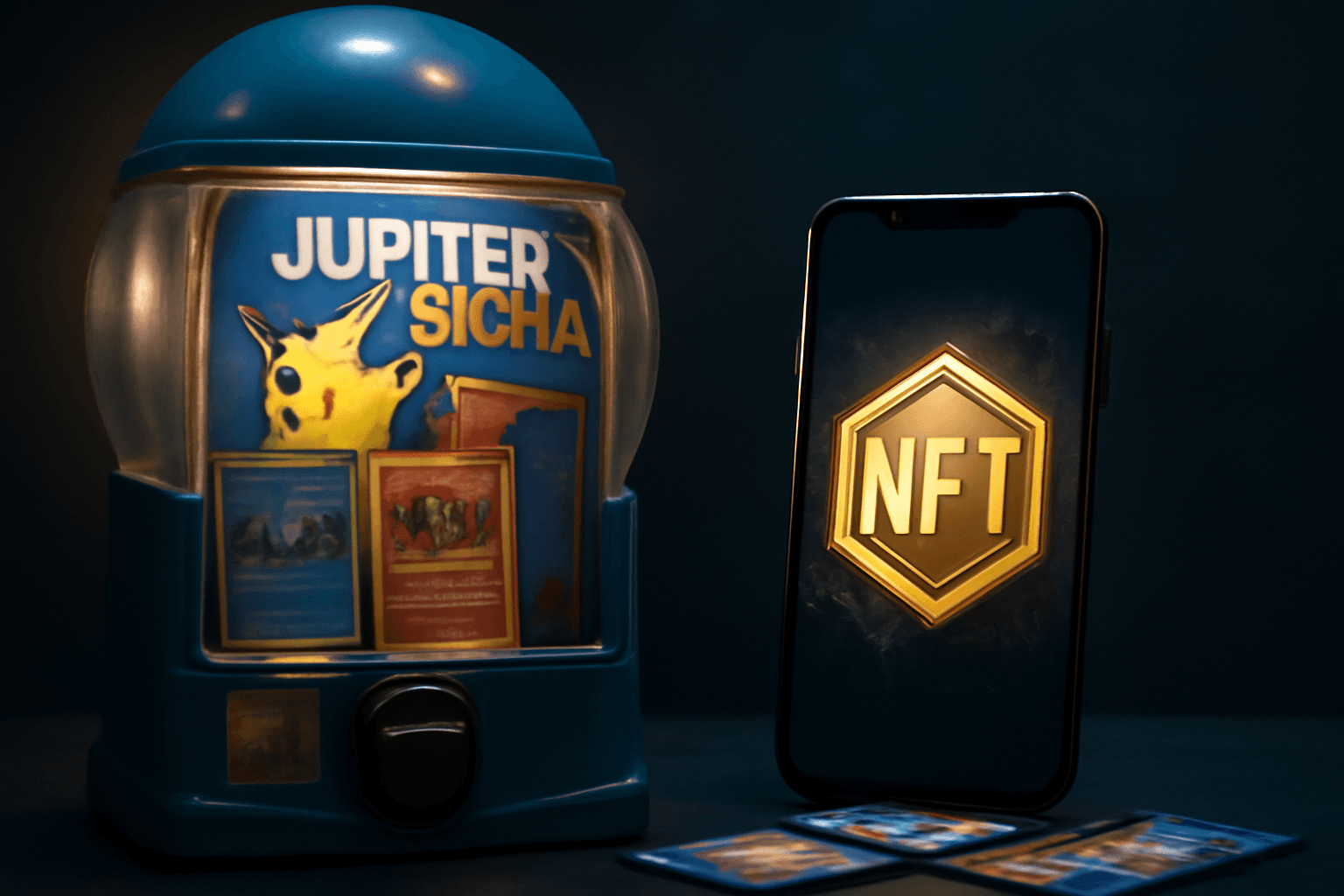
On July 13, 2026, Jupiter, a major decentralized exchange on Solana, introduced Jupiter Gacha, a platform enabling users to purchase random packs of authentic Pokémon and One Piece cards on the blockchain. This innovative approach merges physical collectibles with digital authentication, raising questions about the future of the NFT market.
Each card is sealed in a protective slab, ensuring its authenticity and physical integrity, while being tokenized for easy tradability on the Jupiter exchange. This method not only preserves the excitement of card collecting but also enhances the user experience by integrating blockchain technology into a traditional hobby.
Adam Hollander, the Chief Marketing Officer at OpenSea, has expressed optimism regarding the potential of tokenized Pokémon cards to reignite interest in the NFT space. He argues that this development could signal a broader resurgence for digital collectibles, especially amidst the growing popularity of similar platforms. Collectors have seen a spike in interest as various platforms, including Collector Crypt and Courtyard, have previously explored on-chain Pokémon trading.
The introduction of a randomized pack purchasing model mirrors the thrill of traditional card collecting, allowing users to experience the element of chance while eliminating the complexities of physical distribution. The slabs provide proof of ownership and authenticity, making it convenient for users to trade their cards.
Currently in beta, Jupiter Gacha is still refining its product and assessing how it can scale within the market. The backing of Jupiter's established position on Solana, combined with its recent partnership with Securitize for regulated tokenized equity offerings, strengthens its credibility in the collectibles space.
The implications of this launch are significant, as it may set a new standard for how physical collectibles can be digitized and traded. As the NFT market continues to evolve, the success of Jupiter Gacha could very well influence the future trajectory of digital ownership and authentication in the collectibles market.
This material is for informational purposes only and is not financial advice.