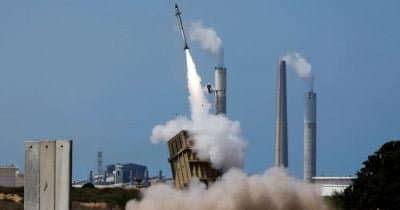
Israel has maintained its veto on transferring US-funded Iron Dome missile defense systems to Ukraine, a stance that has lasted since 2021. Although American taxpayers have contributed over $2.6 billion to the Iron Dome's development, Israel controls where the technology can be deployed, citing national security risks.
The Iron Dome, co-developed with US defense contractor Raytheon, represents a unique partnership where American funding and engineering are integral to the system. From 2011 through 2021, the US invested about $1.6 billion, with an additional $1 billion approved in 2022. Despite this, Israel’s technology transfer agreements give it decisive power over distribution decisions.
Geopolitical Stakes and Regional Dynamics
Israeli Prime Minister Benjamin Netanyahu publicly explained in 2023 that sending Iron Dome batteries to Ukraine could risk the technology falling into Iran's hands, a direct threat to Israel’s security. Russia's strong presence in Syria complicates matters further, as Israel relies on unobstructed air operations there and fears antagonizing Moscow by arming Ukraine with Israeli-linked systems.
US senators Chris Van Hollen and Lindsey Graham pushed Israel in mid-2023 to reconsider, emphasizing that the US was only asking to transfer American-owned systems, not Israel’s own. Israel refused. More recently, in May 2026, Israel moved Iron Dome batteries and crews to the United Arab Emirates, signaling shifting regional partnerships confirmed by US Ambassador Mike Huckabee.
With Israel’s veto firmly in place, Ukraine has shifted focus towards developing its own layered air defense system inspired by the Iron Dome design and is seeking other Western alternatives. This pivot highlights how geopolitical alliances influence defense technology flows amid ongoing regional conflicts and national security calculations.
This content is for informational purposes and does not constitute financial advice.