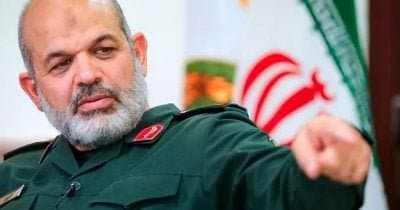
The Islamic Revolutionary Guard Corps (IRGC) issued a warning threatening to strike American corporate assets across the Middle East if the United States persists with airstrikes targeting Iranian infrastructure, notably bridges. This announcement comes as the U.S.-Iran conflict intensifies following recent U.S. attacks, which have caused civilian casualties and heightened regional tensions.
Shift Toward Economic Targets
The IRGC's statement signals a strategic shift from exclusively military objectives to economic and infrastructure targets, indicating a potential broadening of the conflict. Targeting corporate assets could disrupt U.S. economic interests in the region, complicating diplomatic efforts and increasing risks for multinational companies operating in the Middle East. Such moves suggest an escalation in the methods employed by the IRGC to respond to U.S. military actions.
Implications for US-Iran Diplomacy and Market Sentiment
Market confidence in a US-Iran agreement expected in 2026 has declined, with the probability of including Iran Reconstruction Funding in any deal falling to 25.5 percent from 26 percent just one day earlier. The ongoing military confrontations and the IRGC’s expanded threat profile create an environment of uncertainty that weighs on diplomatic negotiations. Key figures such as U.S. negotiator Mike Vance and Iranian Foreign Minister Javad Zarif remain central to potential de-escalation but face significant challenges amid rising hostilities.
Further developments, particularly additional strikes on critical infrastructure, may provoke more aggressive responses from the IRGC, affecting regional stability and market dynamics. Observers will be closely monitoring announcements regarding renewed diplomatic talks or new military engagements, as these will influence the likelihood of a US-Iran deal and broader geopolitical risk assessments.
This material is for informational purposes and does not constitute financial advice.