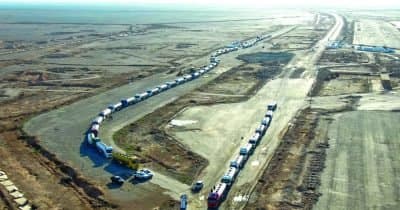
Iraq has initiated large-scale transport of crude oil and fuel using truck convoys passing through Syrian territory. This development follows Iran's June 20, 2026, shutdown of the Strait of Hormuz, a critical maritime passage for global oil shipments.
Overland Route Agreement
The State Oil Marketing Organization of Iraq (SOMO) finalized an arrangement with Syrian authorities in April 2026 to facilitate this overland oil movement. The pact includes shipment of crude oil by trucks and a plan to export approximately 650,000 tons of fuel oil monthly through Syria.
Strategic Pipeline Projects
A significant part of Iraq’s strategy is the Basra-Haditha pipeline. Approved in 2024, this 700-kilometer pipeline is projected to cost $5 billion. It aims to transport up to 2.5 million barrels per day from southern Iraqi oil fields to ports on the Mediterranean in Syria and Turkey, as well as to Red Sea terminals in Jordan.
also Iraq is reviving the Kirkuk-Baniyas pipeline, which connects northern Iraqi oil fields to the Syrian Mediterranean coast. This older infrastructure project receives backing from the United States and Syria.
Importance of the Strait of Hormuz
Approximately 20% of the world’s oil and gas trade passes through the Strait of Hormuz. Iran cited breaches of a recent peace agreement as justification for its renewed closure, disrupting a major supply corridor and prompting Iraq’s shift to land routes.
The market responded with limited immediate volatility following Iraq’s rerouting announcement.