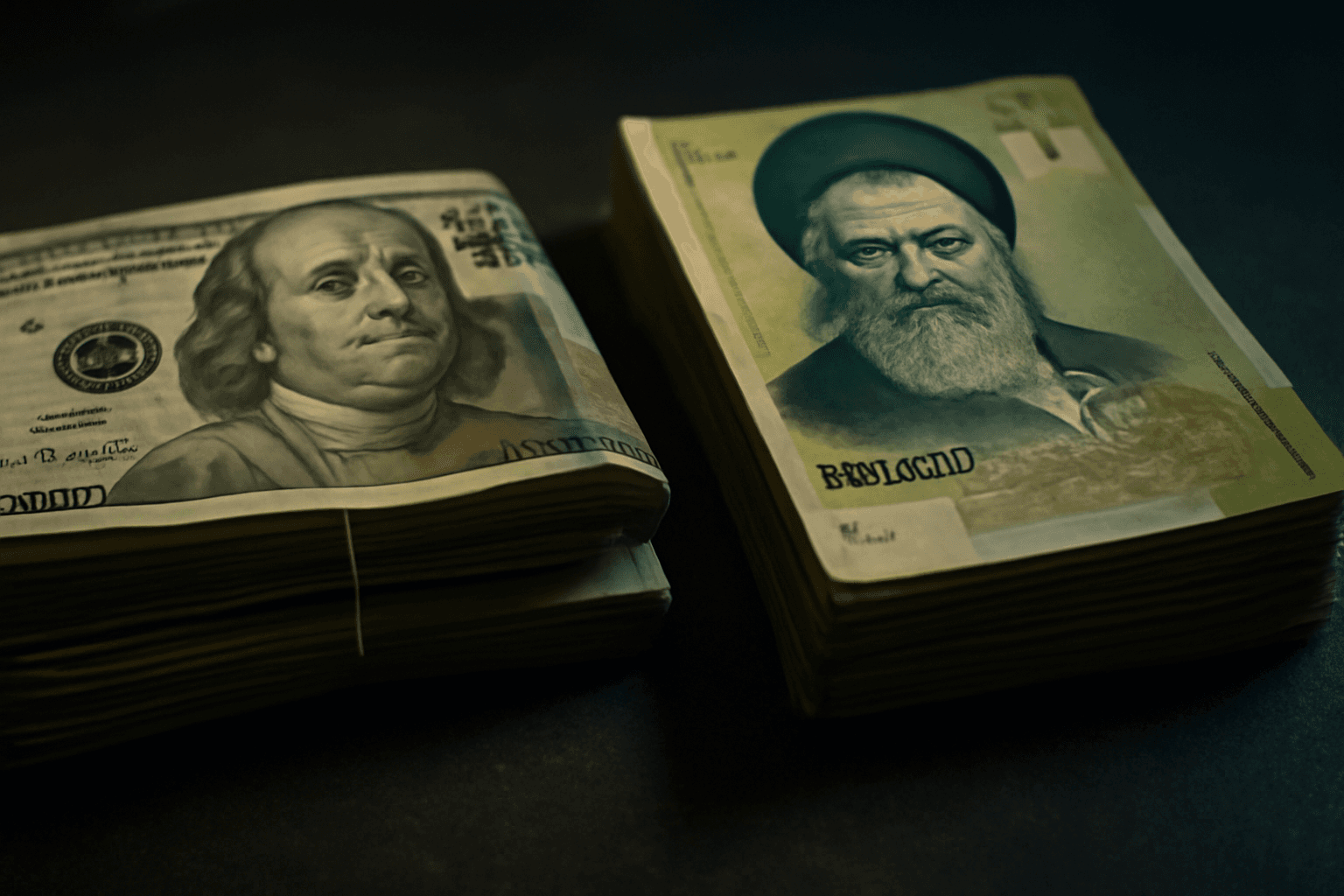
On July 20, Iran’s rial fell to an unprecedented low of approximately 1.95 million per U.S. dollar, marking a new record amid escalating U.S. sanctions and the breakdown of a short-lived ceasefire.
The currency had already surpassed its previous peak of 1.9 million rials per dollar on May 4, reaching 1.918 million on July 17. The decline reflects ongoing damage to Iran’s energy and transport sectors alongside disrupted trade through the Strait of Hormuz.
The International Monetary Fund forecasts a 6.1% contraction in Iran’s economy in 2026, after earlier expectations of slight growth. Inflation is projected to soar to 68.9%, intensifying the economic strain on citizens.
At the current exchange rate, the official monthly minimum wage of 166,255,500 rials is worth roughly $87, highlighting the erosion of purchasing power.
Renewed U.S. pressure following the collapse of the regional truce has directly contributed to the rial’s depreciation. This weakening raises costs of imported goods, raw materials, and medicines, increasing fears of rising food prices nationwide.
Since the start of 2026, the rial has lost about 25% of its value, falling from near 1.47 million rials per dollar. This decline has significantly reduced real wages and savings for ordinary Iranians.
Bitcoin prices hovered near $64,239 on July 20 as market participants monitor the situation. The cryptocurrency previously surged above $66,000 and $67,000 during earlier phases of the U.S.-Iran truce, reflecting heightened market volatility. The recent truce failure has dampened that momentum, with traders anticipating renewed fluctuations if conflict escalates.
The material is informational and not financial advice.