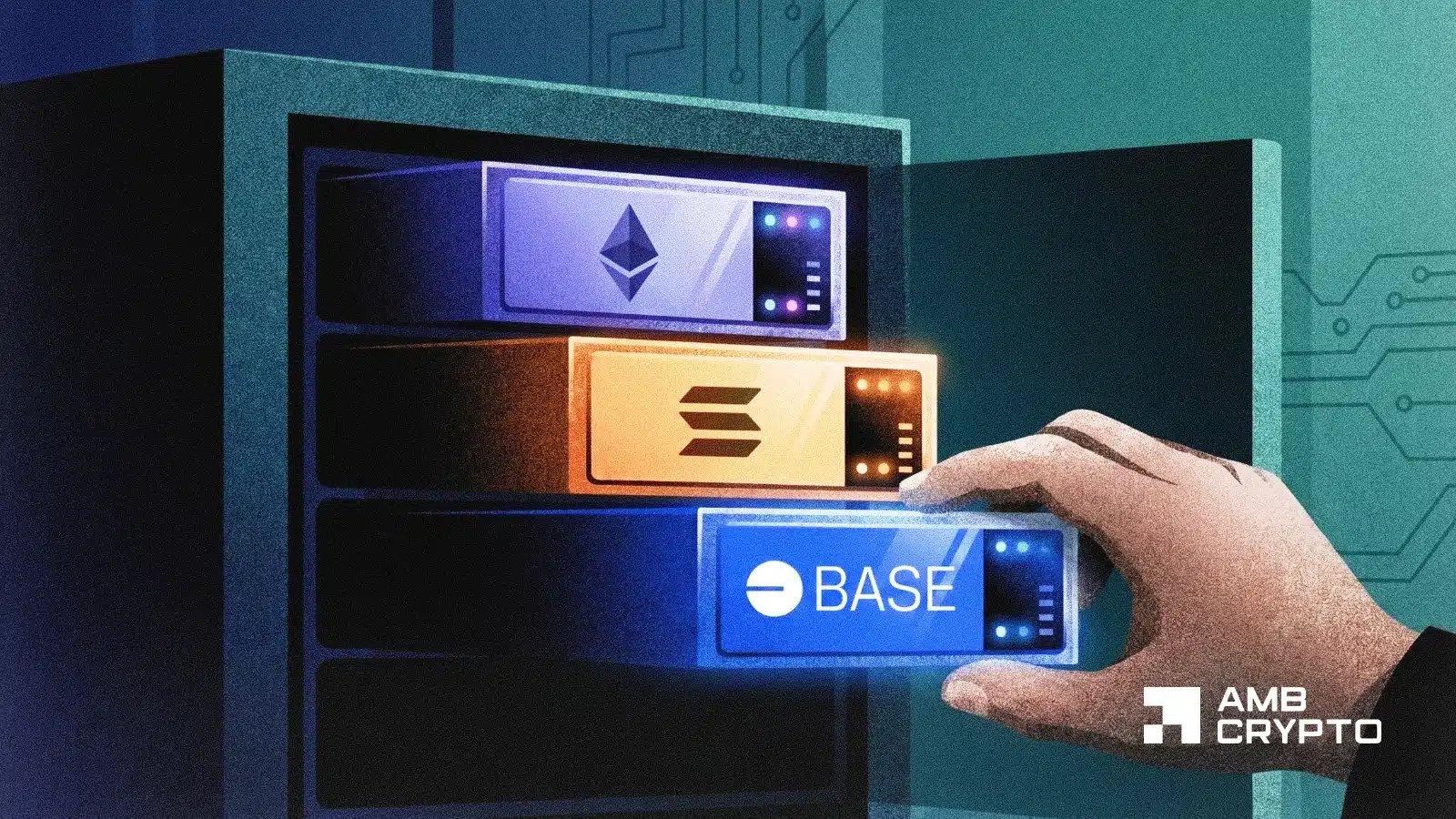
As the third quarter of the year unfolds, significant transformations are underway in blockchain infrastructure, driven primarily by increasing institutional demand rather than focusing solely on retail adoption. Currently, over $30 billion in real-world assets (RWAs) are now recorded on public blockchains, revealing vulnerabilities across several existing networks.
This escalating demand emphasizes the need for enhanced throughput, quicker settlement, compliance adherence, and reliability, prompting major blockchains to revamp their foundational structures instead of making gradual improvements.
Understanding the Shift in Blockchain Dynamics
Ethereum, Solana, Base, and Avalanche are tackling various challenges through substantial protocol upgrades that aim to bolster their capabilities to handle institutional-grade financial operations. This coordinated revamp denotes a crucial pivot where the quality of infrastructure is establishing itself as a significant competitive advantage across the blockchain sector.
- Over $30 billion currently sits in RWA on public blockchains.
- Ethereum plans to increase gas limits from 60 million to 200 million in 2026.
- Solana aims to reduce finality time from 12.8 seconds to approximately 100-150 ms.
Innovations for Institutional Applications
As financial institutions require increased reliability and prompt settlement times, many blockchain networks, led by Ethereum, are undergoing foundational redesigns. Ethereum's latest upgrades, including the introduction of pre-blocked state (PBS) and block-level access lists, will significantly enhance settlement capabilities while aligning with the Lean roadmap for parallel executions. The mainnet version of these upgrades is expected to launch in the first half of 2026 following accelerated developments in late 2025.
On the other hand, Solana is tackling its own challenges with the Alpenglow upgrade, set for mainnet deployment in the second half of 2026. This upgrade focuses on redesigning the consensus mechanism to achieve significantly faster transaction finality while enhancing reliability during peak institutional demand.
Future Implications and What to Watch
With these upgrades being rolled out through 2026 and 2027, capital, developers, and liquidity are likely to increasingly favor networks that demonstrate successful execution of these enhancements. Stakeholders should monitor these developments closely as they may significantly influence the future landscape of institutional finance on blockchain.
This material is for informational purposes only and is not financial advice.