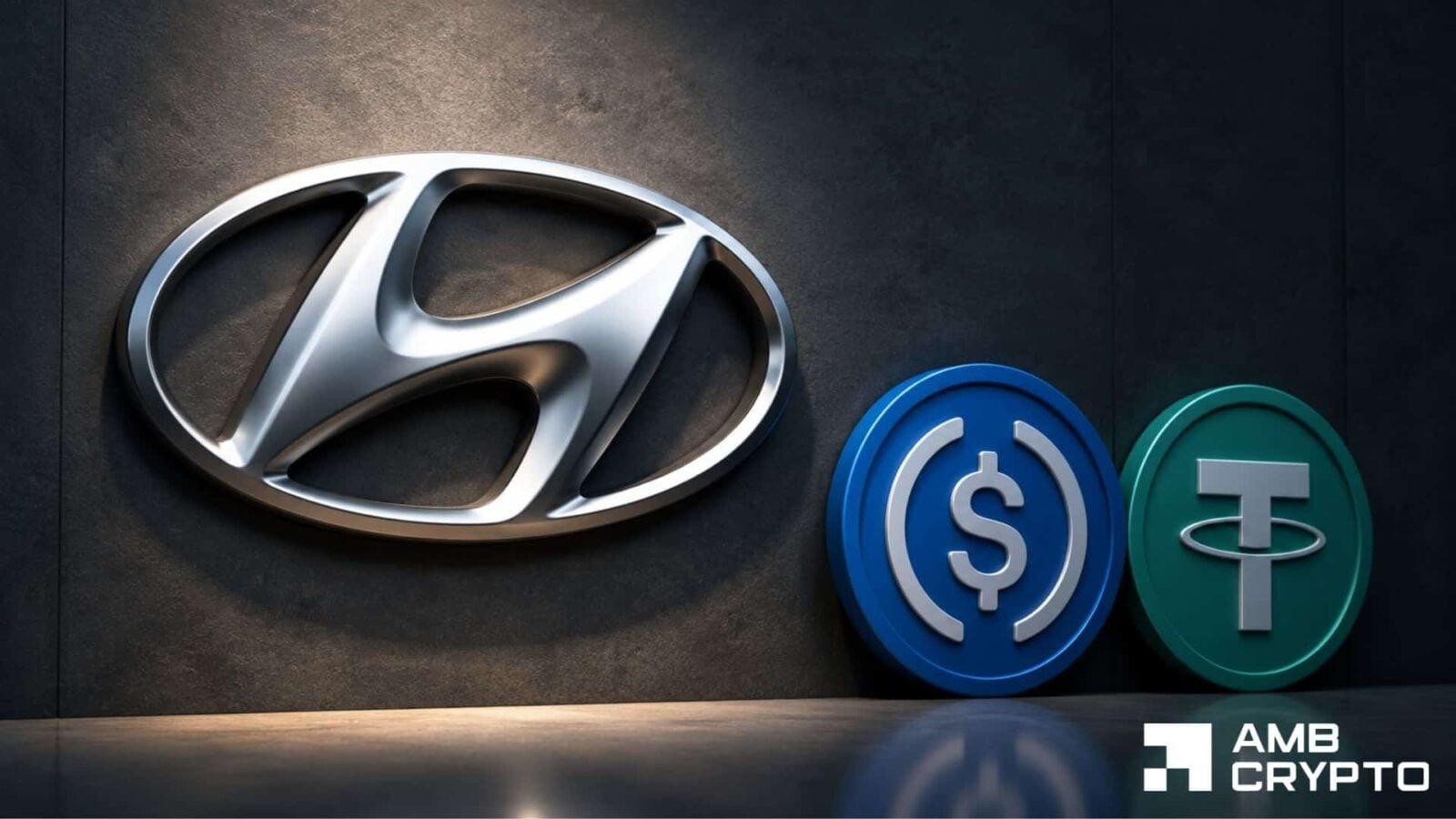
Hyundai, the South Korean automotive manufacturer, is actively integrating stablecoins into its operations, specifically for streamlining internal transfers between its subsidiaries. During a recent testing phase, the company achieved a significant reduction in transfer times between its offices in the United States and Mexico, with transactions using Tether’s USDT taking approximately seven minutes, compared to the traditional methods which typically require four hours or more.
Hyundai's pilot program featured collaborations with several key players, including its finance arm Hyundai Card, the Avalanche network, Tether, and Axiym, a payment integration service. Hyundai praised the use of stablecoin transfers, highlighting their “overwhelming speed and superior stability” as a notable improvement over conventional banking methods.
Paolo Ardoino, CEO of Tether, referred to this initiative as a significant example of “real world adoption of USDT.” Meanwhile, Bo Hines, CEO of Tether U.S., expressed optimism about the future of finance, characterizing Hyundai's efforts as a glimpse of what is to come.
Broader Applications and Future Plans
Looking ahead, Hyundai plans to conduct a similar trial using Circle’s USDC and Visa for transfers within the European Union by the end of July. This strategy marks a foundational step toward utilizing stablecoins not only for internal transactions but also for broader applications such as international remittances and payment systems.
Hyundai aims to continually explore and expand its use of stablecoins, signaling an increasing reliance on this technology for global financial operations.
Market Context and Competition
The landscape for stablecoin adoption is rapidly evolving, with USDT and USDC being prominent competitors. Stablecoins have transitioned from experimental assets to vital tools addressing significant challenges such as access to U.S. dollars and efficient cross-border transactions.
Though Euro-based stablecoins have gained traction, the U.S. dollar-based market remains the most competitive. The introduction of the MiCA regulatory framework has given USDC a competitive edge, allowing it to dominate stablecoin transaction volumes. Currently, USDC commands 63% of the annual stablecoin transaction volume, translating to approximately $6 trillion in a total market valued at $9 trillion. In comparison, Tether’s USDT has recorded $3.3 trillion, accounting for 36% of the market.
This shift represents the first time that USDC has surpassed Tether in annual transfer volume, though it remains to be seen if it can sustain this lead through the end of the year.
This material is for informational purposes only and does not constitute financial advice.