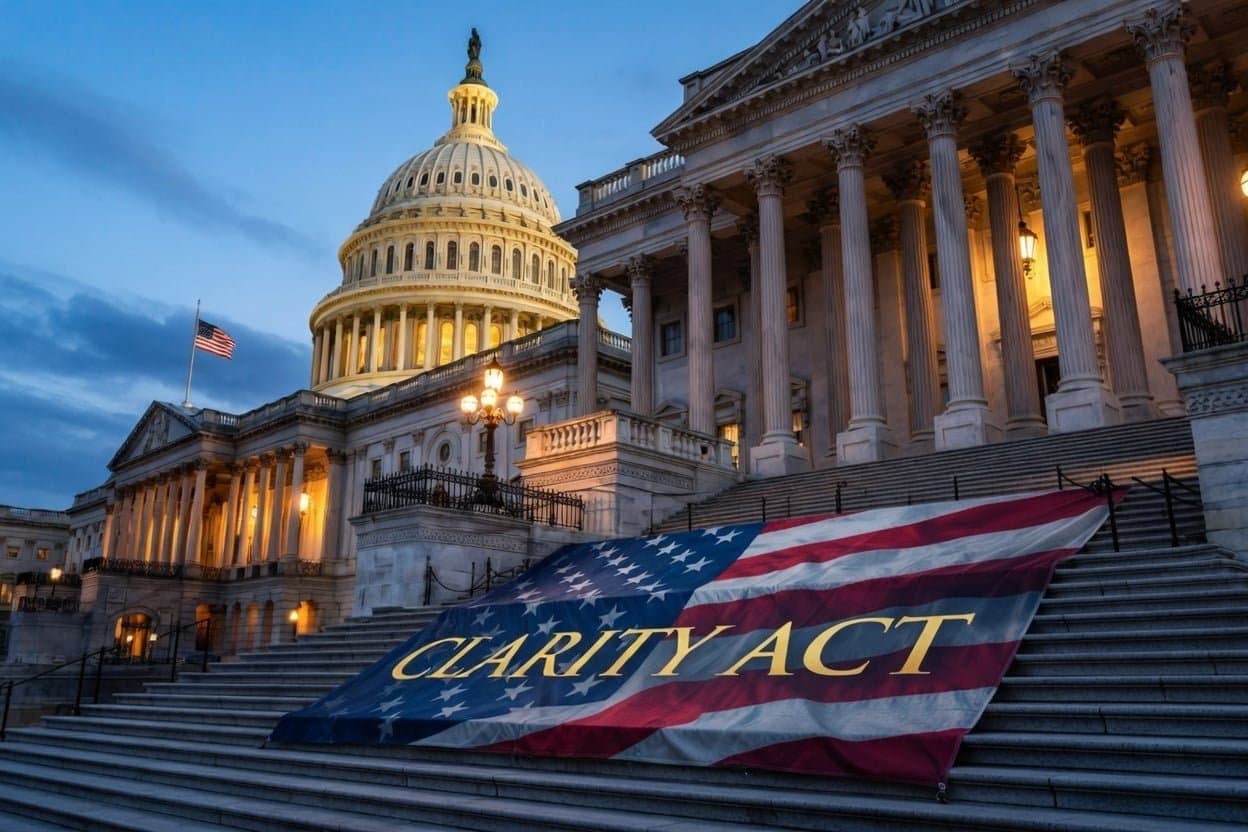
Matt Hougan has a message for anyone panicking about this week's Senate vote: the crypto industry will survive without the Clarity Act. The bill faces a razor-thin window before lawmakers scatter for summer recess on August 10, but Hougan, Bitwise's chief investment officer, doesn't see regulatory gridlock as a terminal threat. The SEC will step in if Congress fumbles, he wrote Tuesday.
The mechanism here matters. If the Senate lets the bill die this week, regulators don't just shrug and go home. Paul Atkins, the SEC chair, has already signaled the agency can carve out rules covering the same terrain the Clarity Act would address. Those rules might actually be friendlier to innovation than whatever Congress would hammer out in a bipartisan compromise. The catch? A new administration could torch them just as fast. SEC policy shifts with each chair. Congressional law doesn't.
Wall Street Already Locked In
Here's the harder point Hougan keeps making: the financial establishment has moved too deep into crypto markets to simply reverse course. BlackRock's tokenized fund got S&P's highest stability seal, Nasdaq offers crypto trading, JPMorgan runs blockchain pilots, Visa processes stablecoin payments. These aren't experimental skunkworks. They're revenue-generating operations embedded in legacy finance. Rolling that back would be messier than regulators want to contemplate.
Hougan estimates the crypto sector has roughly two and a half years to entrench itself while SEC rules are in play. That's enough runway for the market to grow fat enough that any future regulatory reversal becomes politically toxic. Kill a $2 trillion asset class? Good luck selling that to your own party's donor base.
The Clarity Act could still come back. If it dies this week, lawmakers might resurrect it in the fall or winter. Or it lands in a year-end omnibus bill, forcing everyone to vote on a grab bag of unrelated measures. Polymarket currently prices the bill's odds of passing before the end of 2026 at just 23 percent. Not zero. But not a sure thing either. Hougan's point is simpler than the headline suggests: uncertainty about rules is annoying, but it's not apocalyptic. The industry has built enough structural weight that it keeps moving forward regardless.
This material is for information only and should not be construed as financial advice or investment guidance.