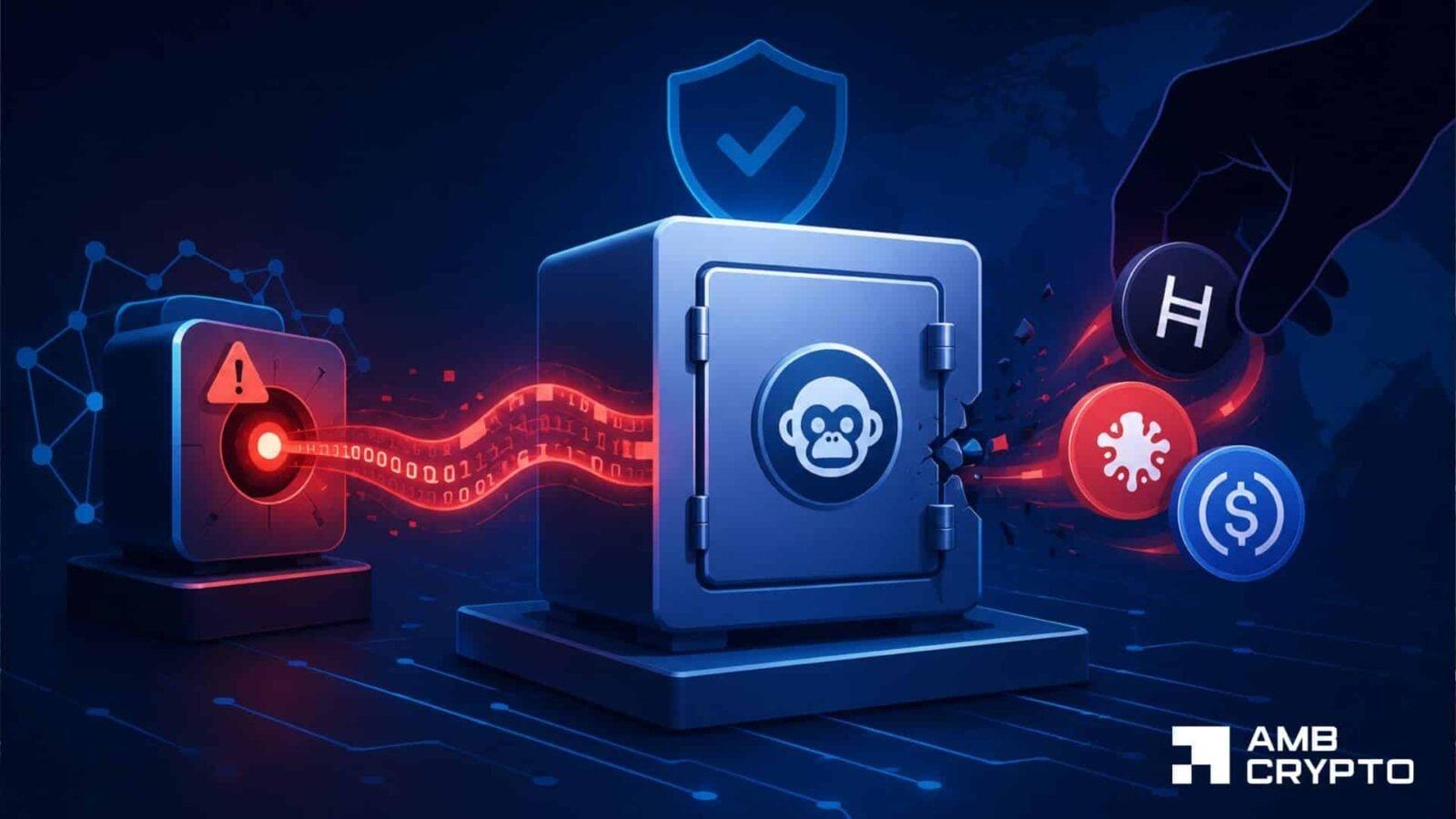
Bonzo Lend, a DeFi lending protocol on the Hedera network, experienced a significant exploit resulting in losses of approximately $9.05 million. The attack occurred due to an oracle compromise that allowed the attacker to borrow assets in excess of the required collateral.
Preliminary investigations have identified a fault in the signature verification process of Supra. This flaw enabled the manipulation of SAUCE price feeds, which facilitated undercollateralized loans prior to the halt of protocol activities.
Impact on Hedera and the Market
Hedera confirmed through a post on X that the protocol's smart contracts and its core network remained secure and uncompromised. Consequently, the root cause of the breach has been attributed to the external oracle infrastructure rather than the blockchain's security.
The aftereffects of the exploit have impacted market sentiment, with HBAR trading down to approximately $0.068. Additionally, the total value locked (TVL) in Hedera’s DeFi ecosystem has seen a decline of 21.43%, falling to $25.4 million amid capital withdrawals.
This incident underscores the critical need for robust price oracle systems within DeFi lending frameworks. As recovery efforts unfold, there will likely be a heightened focus on implementing stronger oracle safeguards and verification processes.
The audit conducted on Bonzo Lend's smart contracts revealed no inherent issues; however, it also indicated how the attack succeeded. The attacker exploited the protocol’s dependence on trusted oracle inputs, manipulating the price feed to yield profits even though the code functioned as intended.
While protocols are often seen as secure due to flawless code execution, vulnerabilities can arise from their operational logic, exposing users and protocol owners to risks. This incident reflects a growing concern in DeFi, where the very rules that govern a protocol can be manipulated, as noted in recent discussions on DeFi vulnerabilities.
As a result, many protocols are now integrating economic simulations, formal verification processes, and bug bounty programs in addition to standard audits to protect against similar exploits.
This material is for informational purposes only and does not constitute financial advice.