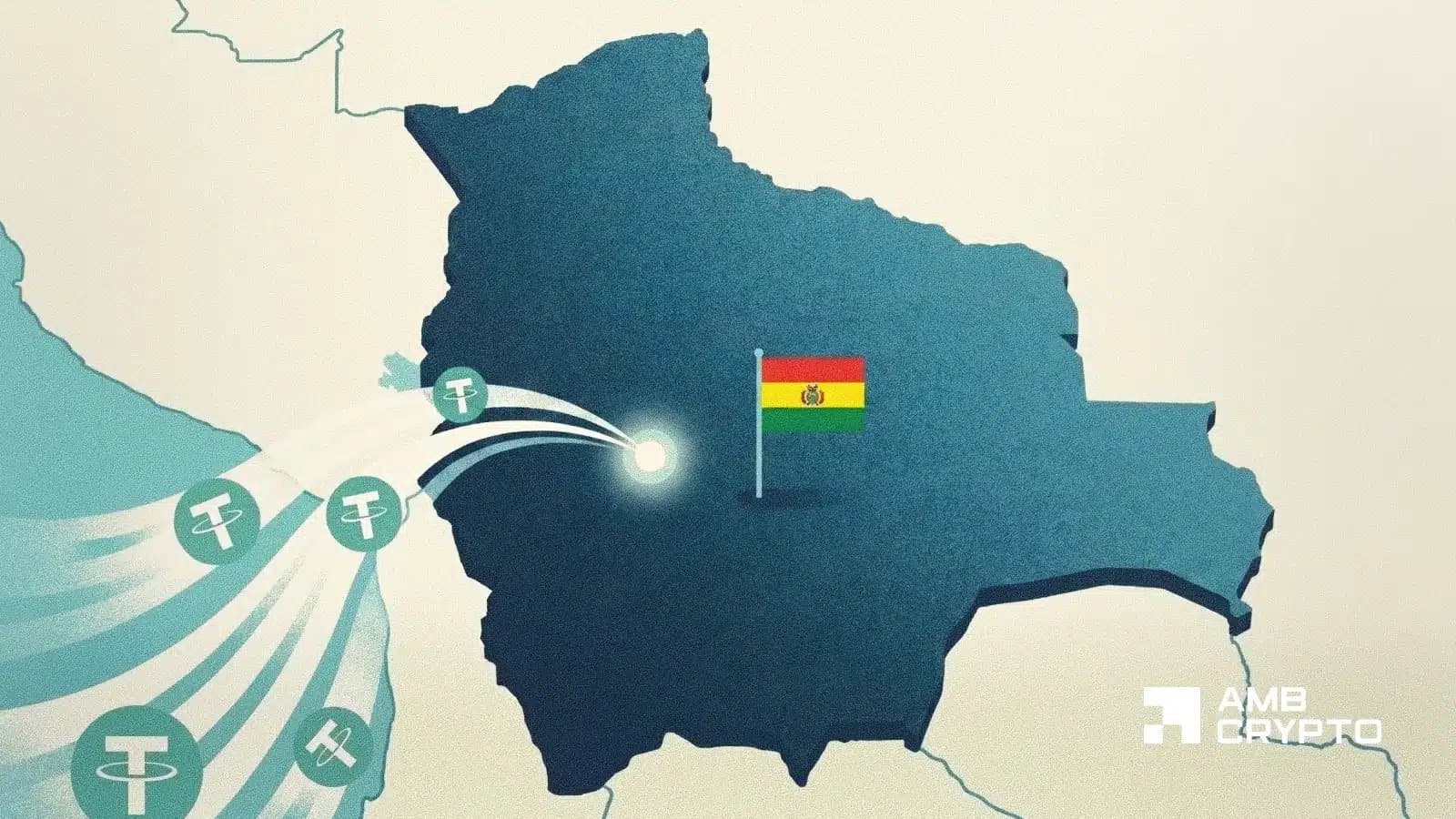
The Bolivian government is exploring the formal inclusion of Tether's USDT within its payment network. This move marks a significant shift from the country's previous strict ban on currencies not issued by the Central Bank of Bolivia, including stablecoins.
In 2020, Bolivia reinforced this ban, but began relaxing restrictions in mid-2024 to facilitate remittances and address a shortage of US dollars. The current proposal aims to officially integrate USDT, as stated by José Gabriel Espinoza, the Minister of Economy and Public Finance, who noted that the government is evaluating how to incorporate USDT to function alongside the Bolivian boliviano and the US dollar.
Context of USDT Adoption in Latin America
The proposed inclusion follows the inauguration of President Rodrigo Paz Pereira in 2025, who, like the previous administration, is advocating for the integration of digital assets into the banking system. Increasingly, businesses in Bolivia are using USDT as a unit of account, with several banks supporting the stablecoin.
Tether CEO Paolo Ardoino commented on the growing use of USDT, calling it a cornerstone in several emerging market economies. Adoption in Latin America is largely driven by factors such as remittances, foreign exchange shortages, and inflation. In Bolivia, spending via stablecoin cards surged sixfold in 2025 after the initial ban was lifted in 2024, primarily for international transactions.
- Stablecoin transaction volume reached $1.78 trillion in June, with USDT holding a 36% market share.
- USDT's market supply peaked at $190 billion in May before declining to $184 billion, reflecting a $6 billion capital outflow.
- The overall crypto market sentiment remains cautious, even as real-world usage of stablecoins continues to grow.
In the broader context, global entities like Hyundai are also adopting stablecoins. Notably, Binance reported a doubling of stablecoin transfer users in LATAM, emphasizing the region's strong demand for these digital assets.
This article is for informational purposes only and does not constitute financial advice.