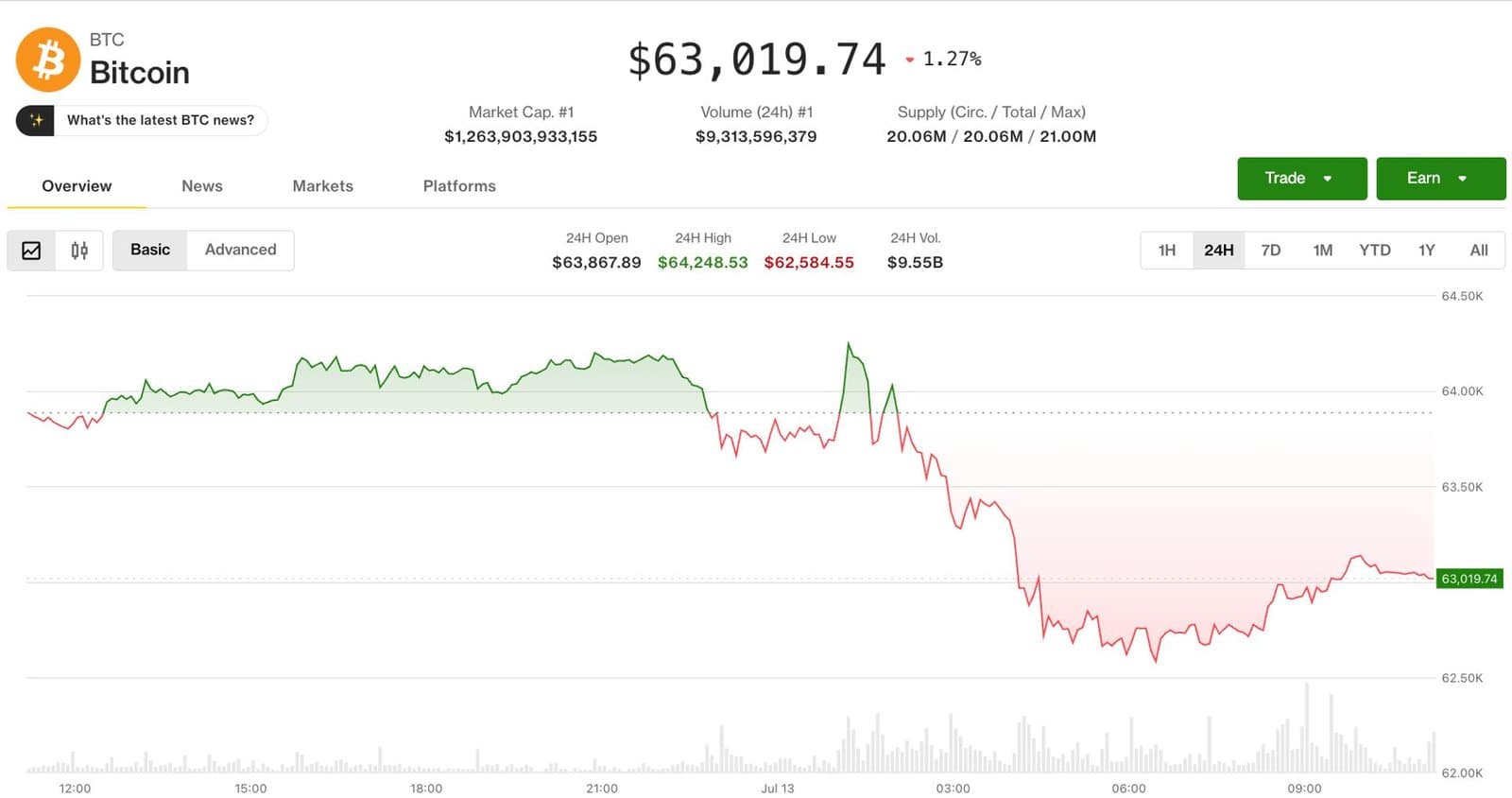
Bitcoin has stabilized at $62,600 following a recent drop from $64,400 to $61,800. The cryptocurrency's resilience comes in the wake of significant selloffs in traditional markets, particularly in South Korea.
Impact of South Korean Market Movements
The KOSPI index in South Korea experienced a dramatic 10% decline since Friday, prompting a staggering 1,426% increase in trading volumes on Upbit, a major local exchange. This shift indicates that many South Korean investors are increasingly turning to cryptocurrency as a refuge from the stock market downturn, reversing trends seen late last year.
In conjunction with this market movement, Bitcoin recorded approximately $283 million in liquidations over the last 24 hours, with a notable 74% of these being long positions. The Binance heatmap indicated that a crucial support level to monitor is $61,300, should the price experience further declines.
Options market sentiment is also evolving. The put/call ratio has shifted from 64/36 to 58/42, reflecting a moderation in bullishness. Furthermore, the one-week delta skew has compressed to 15% from 26% just a week ago. The current DVOL, or Derivatives Volatility Index, sits at 37.43, near its multi-year lows, suggesting a relatively calm trading environment.
In parallel, Ethereum also followed Bitcoin's trend, trading within a range of $1,770 to $1,790. Its trading volume increased by 2.2% to reach $8.95 billion, indicating a balanced exchange between buyers and sellers.
As traditional assets like gold continue to decline, now sitting around $4,020 per ounce down about 28% since January investors are clearly reassessing their portfolios. In U.S. equities, mixed signals persist as the Nasdaq 100 futures gained 0.31% while the S&P 500 index futures dipped by 0.12% following President Trump's threats of increased strikes against Iran.
This material is for informational purposes only and should not be considered financial advice.