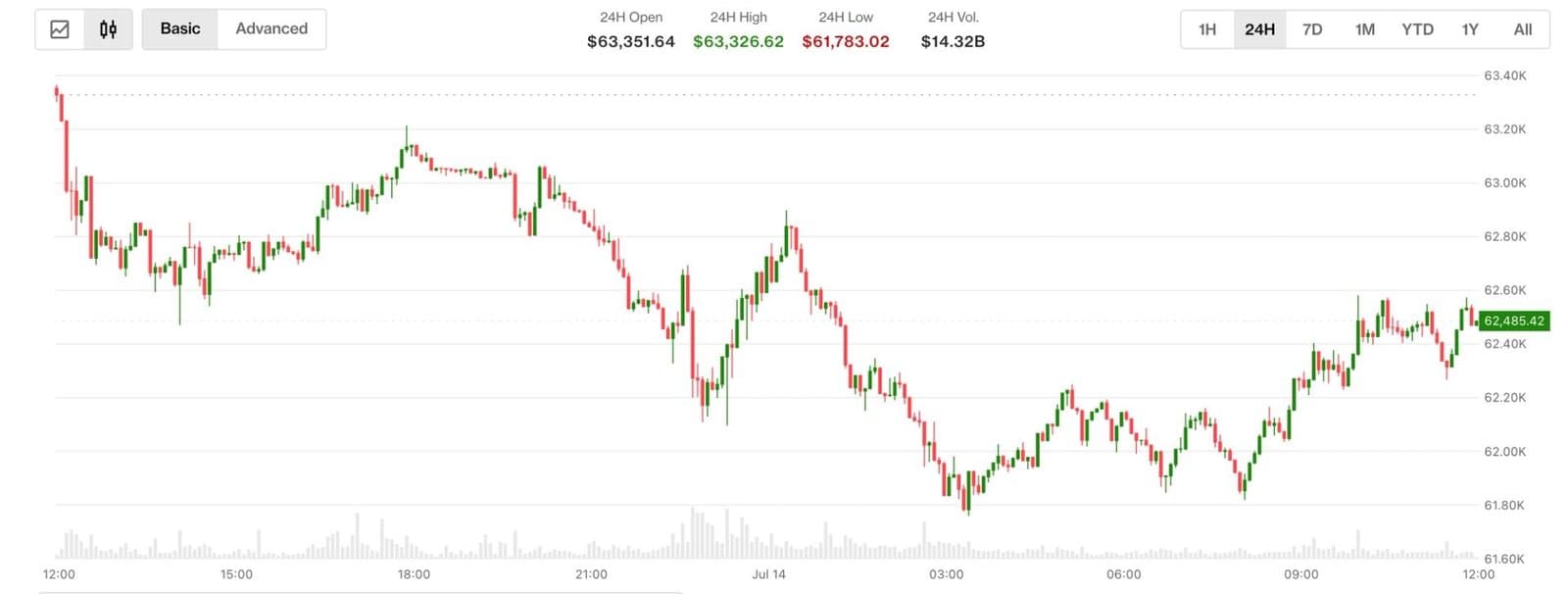
Bitcoin's value has fallen by over 2% in the last 24 hours, currently trading at $62,380, as traders heighten expectations for a potential interest rate hike from the Federal Reserve in July. This decline reflects broader market trends impacting major cryptocurrencies, including Ether and XRP, which have also experienced similar losses.
Market Reactions and Economic Indicators
The shift in market sentiment follows comments from Fed Governor Christopher Waller, suggesting that a rate increase may be necessary to manage inflationary pressures. Consequently, the probability of a rate hike this month has surged to approximately 50%, a significant rise from just 10% earlier in the week, as reported by Bloomberg.
Additionally, the yield on the two-year U.S. Treasury has increased to 4.29%, marking its highest level since early last year. This part of the yield curve is known for its sensitivity to changes in short-term policy expectations, indicating a reactive market environment driven by economic indicators and geopolitical tensions.
Current geopolitical developments, particularly escalating tensions between the U.S. and Iran, have further influenced market dynamics. President Donald Trump reinstated a blockade on Iranian vessels in the Strait of Hormuz, coupled with a demand for a reimbursement fee on cargo passing through this vital shipping route. As a result, oil prices have surged, with West Texas Intermediate crude futures climbing to nearly $80 a barrel from $67 at the month's outset. This price increase has intensified inflation concerns.
Upcoming Economic Data and Market Focus
Investors are focusing on the upcoming consumer-price index (CPI) report, set to be released by the Labor Department on Tuesday at 8:30 a.m. ET. Economists have predicted that the headline CPI will dip below a 4% annual rate, anticipating the first declines in both headline and core inflation since January. May's figures stood at 4.2% and 2.9%, respectively.
Even if the CPI report aligns with expectations, it might be perceived as outdated considering the recent spike in oil prices. Should inflation persist, the economic data could heighten concerns regarding the Federal Reserve's approach to monetary policy moving forward, especially in light of the ongoing geopolitical tensions affecting oil supply.
This material is for informational purposes only and should not be considered financial advice.