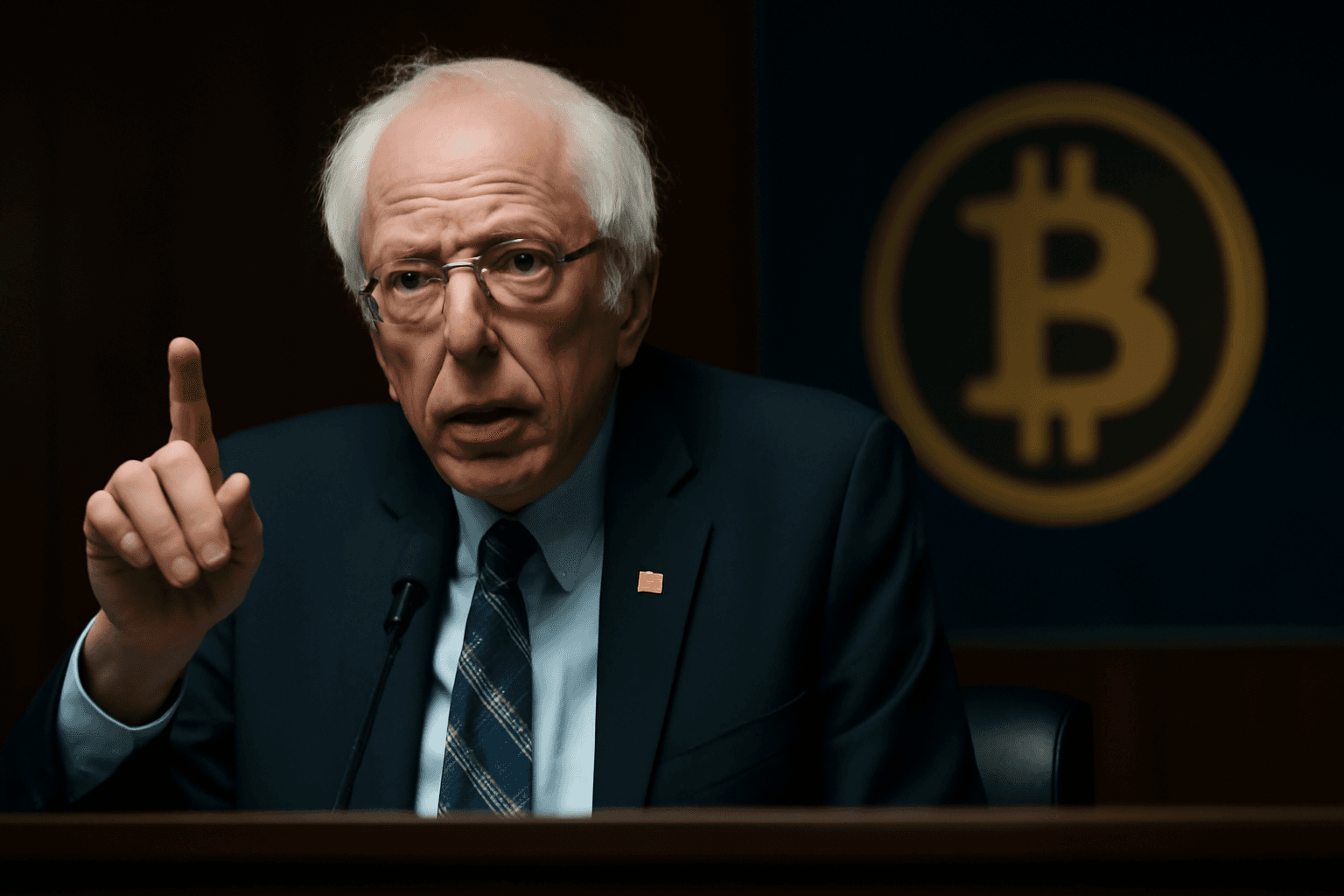
Bernie Sanders declared he will confront the crypto industry’s political influence during a campaign event for Minnesota Senate hopeful Peggy Flanagan. He grouped crypto alongside major political action committees and industries with substantial financial power, aiming to counterbalance their role in shaping elections.
Crypto's Rising Role in Election Funding
In a July 21 post on X, Sanders named crypto, the AI sector, and groups like AIPAC as billionaire-backed super PACs wielding outsized electoral influence. His remarks focused on the deployment of funds in political contests rather than the technology behind cryptocurrencies or blockchain.
This statement coincided with his rally appearance alongside Flanagan in Minneapolis, where he emphasized the need to challenge these well-financed groups to secure Flanagan’s Senate seat.
The timing reflects recent data revealing the crypto sector's growing election expenditures. Public Citizen estimated that crypto-backed groups had contributed roughly $189 million by late June during the current election cycle. Prominent organizations supported by Ripple and Coinbase, such as Fairshake, continue to finance numerous campaigns.
Fairshake and related entities have funneled more than $8 million into competitive primary races across Maryland, New York, and Utah. These contributions often support candidates who advocate for clearer regulation of digital assets. Ripple, Coinbase, and venture firm Andreessen Horowitz have been consistent funders of this network through multiple election cycles.
This funding has already influenced electoral outcomes. For example, crypto-linked groups backed Adrian Boafo’s successful Democratic primary bid in Maryland, signaling the tangible impact of industry political spending on congressional races.
The material is informational and does not constitute financial advice.