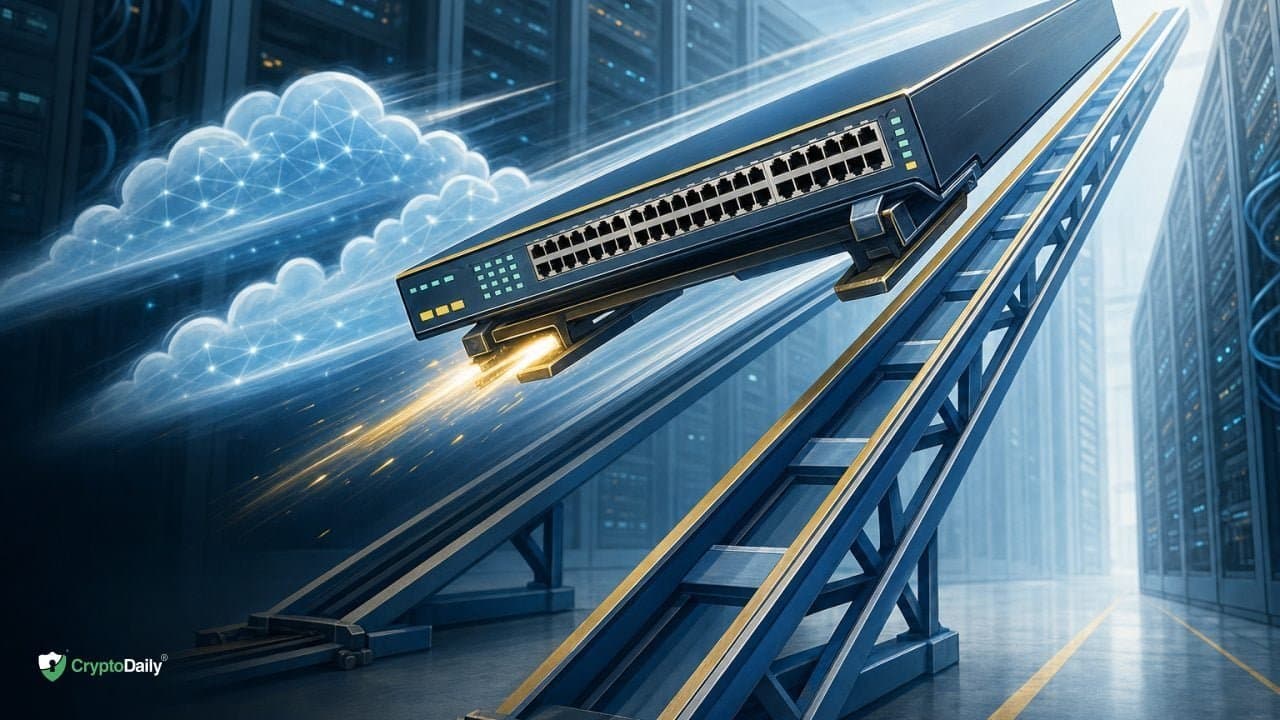
Arista Networks stock jumped this week on fresh analyst upgrades and a new product play aimed squarely at AI infrastructure. The catalyst: hyperscalers are shifting from pilot clusters to production-scale training and inference, which means they need faster, more reliable networking fabric underneath it all.
The story isn't complicated. AI workloads at scale demand one thing from the plumbing layer: more ports, more bandwidth, fewer bottlenecks. Ethernet has quietly become the backbone of that shift. Where proprietary fabrics once dominated high-performance clusters, Ethernet is now winning ground because it offers what operators actually want, cost-effective consistency and vendor flexibility across thousands of nodes.
Why Ethernet is eating into specialized fabrics
InfiniBand still holds its place in the most demanding training pods, but Ethernet has moved fast. As clusters scale out to massive deployments, raw speed matters less than operational simplicity, tooling, and cost. Arista's switch portfolio and software stack target exactly those pain points in spine-leaf topologies where telemetry and predictable performance are critical for stability.
On July 21, Arista announced an AI-driven Edge Threat Management addition to its VeloCloud SD-WAN platform, set for availability in Q4 2026, positioning itself as a client-to-cloud play for AI-era networks. Days earlier, TD Cowen reiterated a Buy rating and raised its target to 210, citing hyperscaler AI demand directly. Erste Group also upgraded to Buy on July 15 on the same thesis.
Hyperscalers are accelerating capital expenditure, but they're also getting practical. They want speed, predictable supply chains, and software that can scale across tens of thousands of switches without manual configuration. Arista's pitch is straightforward: deterministic performance without vendor lock-in.
This article is informational and does not constitute financial advice. Always conduct your own research before making investment decisions.